
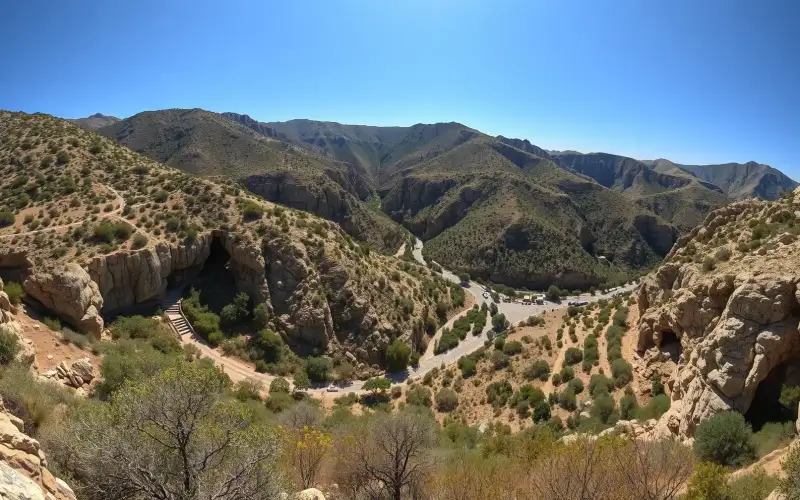
The first time I walked Avakas Gorge, I was wearing canvas plimsolls and carrying a single 500ml bottle of water. It was late May, already thirty degrees by nine in the morning, and I'd been told by the owner of a taverna in Polis that it was "just a little walk." Three hours later, having scrambled over a boulder the size of a small car and waded through ankle-deep water that turned out to be knee-deep by the third crossing, I emerged sunburned, soaked and completely besotted. I've walked it six times since. Each time I've learned something new about it, and each time I've watched other visitors underestimate it in exactly the way I once did.
This is not a trail that punishes carelessness catastrophically — but it does punish it consistently. Twisted ankles, dehydration, mild heatstroke in summer and the occasional stuck party who've run out of daylight: these are the routine consequences of treating Avakas like a beach promenade. It deserves better than that, and so do you.
What Avakas Gorge Actually Is
Avakas Gorge sits within the Akamas Peninsula, roughly eight kilometres south of Polis and about twenty-five kilometres north of Paphos town. The gorge was carved by the Avakas River through Cretaceous limestone over millions of years, and in places the walls close to just two or three metres apart while rising fifteen to twenty metres above your head. It's genuinely spectacular — the kind of landscape that makes you put your phone away and simply look.
The standard route runs approximately three kilometres one way, from the car park at the southern trailhead to the point where the gorge opens out into scrubland. Most people turn around there and return the same way, making it a six-kilometre round trip. The total walking time for the average fit adult is between two and a half and four hours, depending on pace, the number of boulder scrambles required (this varies with seasonal water levels) and how long you spend standing with your neck craned back, staring at the rock walls.
The gorge is also home to the rare endemic plant Phlomis cypria, the Cyprus sage, and you'll frequently see Bonelli's eagles riding thermals overhead in the early morning. In spring, the walls are streaked with wildflowers. In August, it's a furnace with shade.
Honest Difficulty Assessment
The official classification is "moderate," which is accurate in the way that describing a rough sea crossing as "lively" is accurate. It tells you something, but not quite enough.
The path begins easily — a wide, flat track through low maquis scrub that lulls you into a false sense of what's coming. Within the first kilometre, the gorge walls begin to close and the river bed becomes your path. This is where things change. You are no longer walking on a path. You are navigating a riverbed made of loose, water-smoothed boulders of varying sizes, some stable, many not. There is no continuous dry route. In winter and spring (roughly November through April), you will get wet feet. In summer, the river may be reduced to pools, but the boulders remain.
There are three sections I'd describe as genuinely demanding:
- The first major boulder field, approximately 800 metres in, where you'll scramble over and between large rocks for about 150 metres. Requires use of hands.
- The narrow squeeze at roughly the halfway point, where the walls converge and the passage narrows to less than a metre. Anyone with significant claustrophobia should know this is coming.
- The final approach to the gorge exit, which involves a sustained section of uneven rocky terrain and can feel relentlessly tiring on the return leg when you're already tired.
Children over about ten can manage it well with supervision. I wouldn't take younger children without serious thought. The elderly and anyone with knee or hip problems should be candid with themselves about whether this is the right day out.
When to Go: Seasons and Timing
Timing matters enormously here, more than on almost any other walk in the Paphos region.
| Season | Conditions | Recommendation |
|---|---|---|
| October–November | Warm, dry, low crowds, some wildflowers returning | Excellent |
| December–February | Cool, possible rain, river running, wet crossings likely | Good with waterproof footwear |
| March–April | Spring flowers, mild temperatures, busiest season | Outstanding — go early |
| May–June | Heating up fast, drying out, still manageable | Start before 8am |
| July–August | Extreme heat, 35°C+ inside the gorge, dangerous midday | Dawn only, or avoid entirely |
| September | Still hot, beginning to cool late month | Early morning only |
My own preference is mid-October through to early April. The light in the gorge in late afternoon in October has a quality I've not seen replicated anywhere else in Cyprus — amber and warm, bouncing off the pale limestone in a way that makes the whole place glow. March brings the wildflowers and the Bonelli's eagles in their most active period. If you're staying in Polis or anywhere on the Akamas coast, you can be at the trailhead by seven-thirty without any great effort.
Kit and Preparation: What You Actually Need
I'll be direct about this, because I've seen people arrive at the trailhead in flip-flops clutching a can of Fanta and I've watched the consequences.
Footwear is the single most important factor. You need shoes or boots with ankle support and a grippy sole — trail runners are excellent, hiking boots perfectly good. Sandals, regardless of how sturdy they look, are inadequate on wet, uneven boulders. Water shoes are sometimes recommended for the river crossings in spring, but I'd argue that a decent pair of trail runners that you accept will get wet is more practical than carrying a second pair of shoes.
Water: carry a minimum of two litres per person in summer, 1.5 litres in cooler months. There is no water source in the gorge and no facilities of any kind. The nearest café is back at the car park area, and it keeps irregular hours.
Beyond those two essentials:
- Sun protection — hat, high-factor cream, light long sleeves in summer
- A small first aid kit including blister plasters and a bandage
- Trekking poles if you use them — genuinely useful on the return descent over boulders
- A fully charged phone with the trail downloaded offline (Maps.me or Wikiloc both carry it)
- Snacks — the walk takes longer than people expect and hunger is a morale problem
You don't need specialist equipment. You don't need a guide, though hiring one from one of the Polis-based operators (Neo Chorio has two reputable outfits) adds context and safety for first-timers. What you need is honesty about your own fitness and the right footwear.
Hazards Worth Knowing About
The gorge is generally safe, but there are specific hazards that deserve clear mention rather than being buried in small print.
Flash flooding is the most serious. The Avakas catchment area extends well inland, and heavy rain in the Troodos foothills can send a surge of water through the gorge with little warning even on a clear day at the trailhead. The Cyprus Meteorological Service website publishes rainfall alerts, and the rule is simple: if there's significant rain forecast anywhere in the region, don't enter the gorge. If you're inside and hear a sudden roaring sound from upstream, move immediately to high ground on the gorge walls. This is not a theoretical risk — it has caused fatalities in similar gorges across the eastern Mediterranean.
Heat exhaustion in summer is almost as serious. The limestone walls trap and amplify heat, and the gorge can be five to eight degrees hotter than the surrounding landscape by midday. The symptoms — dizziness, nausea, confusion — can develop faster than people expect. Turn back early if anyone in your party starts to flag.
Loose rock: the gorge walls shed material, particularly after rain. Don't linger directly beneath overhangs, and if you're in a group, avoid spreading out directly above and below each other on the boulder sections.
"The gorge doesn't care about your fitness app or your Instagram grid. It has its own pace and its own conditions, and the walkers who enjoy it most are the ones who accept that from the moment they leave the car park."
Who This Walk Is For — and Who Should Think Twice
Avakas Gorge is genuinely wonderful for reasonably fit adults who are comfortable with uneven terrain and don't mind getting their feet wet. It's one of the finest half-day walks in the whole of Cyprus, and I'd put it in the top tier of accessible gorge walks in the entire Mediterranean. The drama of the rock walls, the silence inside the gorge (which is remarkable given how close it sits to the Coral Bay tourist belt), and the sense of genuine wildness make it worth every scramble.
It is not suitable for pushchairs or wheelchairs. It's a serious undertaking for anyone with significant mobility issues. Families with young children under eight should be realistic — the boulder sections are tiring and potentially dangerous for small legs, and a child who needs to be carried over obstacles adds considerably to the physical demand on parents.
Dog owners: dogs can manage the walk, but the boulder scrambles are difficult for some breeds and the heat in summer is a real risk. Keep dogs on a lead — the gorge is within the Akamas National Park and wildlife disturbance is an issue.
"I've brought first-time visitors here who've walked the Dolomites and the Scottish Highlands, and they've all said the same thing: they didn't expect Cyprus to feel this wild."
Getting There and Practical Logistics
The trailhead car park is signposted from the road between Coral Bay and Polis, turning inland near the village of Kathikas. The road is passable in a standard car but narrow in places — drive slowly. The car park itself is free and unsurfaced, and fills quickly on spring weekends. Arrive before eight if you want a space without anxiety.
There is no public bus to the trailhead. A taxi from Paphos town costs roughly €35-45 one way in 2026; from Polis, around €15-20. Several operators in Coral Bay and Polis offer minibus transfers specifically for the gorge walk, typically departing at 7am and returning mid-afternoon — worth considering if you're without a car.
The nearest toilets are at the car park (basic, sometimes locked out of season). There are no facilities inside the gorge. The nearest proper café and taverna facilities are in Neo Chorio, about four kilometres back towards Polis, and in Polis town itself.
One final thing: the gorge is at its absolute best in the two hours after first light, when the shadows are long and the rock takes on colour. If you can arrange an early start, do. The version of Avakas that most tourists see — mid-morning, already warm, the car park full — is a lesser version of itself. The gorge at dawn, with mist still sitting in the upper sections and the first eagles just beginning to circle, is something else entirely.
Comments (4 comments)