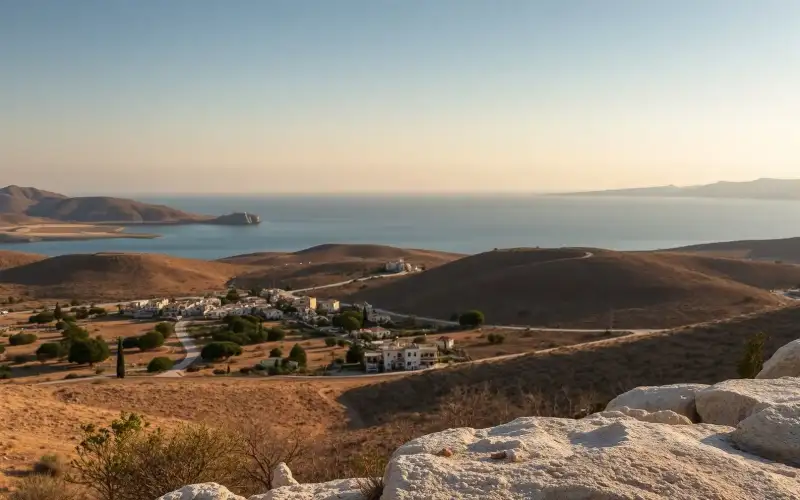
The first time I led a group onto the Aphrodite Trail at half past seven in the morning, one of my walkers — a retired headmistress from Shropshire — stopped dead on the ridge above the Baths of Aphrodite and said nothing for a full minute. Below us, the Akamas headland rolled westward in a tangle of Phoenician juniper and golden oak, and beyond it the sea was the particular shade of lapis lazuli that only appears on this stretch of coast before the tourist boats arrive. She turned to me eventually and said, "I had absolutely no idea Cyprus looked like this." Most people don't. That's rather the point of the Akamas Peninsula.
Covering roughly 230 square kilometres of the northwest tip of Cyprus, the Akamas is the island's last significant wild landscape — a place where loggerhead turtles still haul themselves onto beaches at night, where Eleonora's falcons hunt the thermals in September, and where the road simply stops and the goat tracks begin. It was designated Cyprus's first national park in 2019, though the area has been protected in various forms since the 1980s, partly because the British military used the southern fringes as a firing range, which inadvertently kept developers away for decades.
This guide is the one I wish I'd had when I first started leading walks here. It covers geography, access, the main trails, the beaches everyone comes for, jeep safaris, boat trips, wildlife and the practical details that make the difference between a memorable day and a frustrating one.
Understanding the Akamas: Geography and Why It Matters
The peninsula juts northward from the coast between Latchi and Agios Georgios, forming the westernmost point of Cyprus. Its spine is the Akamas ridge, reaching just over 370 metres at its highest point near Moutti tis Sotiras. The landscape is remarkably varied for such a compact area: dense maquis scrubland of lentisk, cistus and rockrose on the lower slopes; stands of Calabrian pine and golden oak higher up; and along the coast, dramatic sea cliffs, sheltered coves and the long sandy arcs of Lara Bay.
Three river gorges — the Avakas, the Petratis and the Kannaviou — cut through the limestone and chalk geology, creating the kind of dramatic ravine scenery more associated with the Troodos foothills. The Avakas Gorge in particular is extraordinary: a slot canyon barely four metres wide in places, with walls rising twenty metres on either side, draped in maidenhair fern and wild fig.
The Akamas sits within the Mediterranean biodiversity hotspot. Of Cyprus's 1,800 plant species, around 530 are found here, including 35 plants found nowhere else on Earth. On a single spring morning walk, I've identified 40 flowering species before reaching the first viewpoint.
Understanding this geography matters for planning. The peninsula has no through road. Access from the east (Latchi side) and the west (Agios Georgios side) leads to different experiences, different trails and different beaches. You cannot drive from one side to the other without returning to the main road.
Getting There: Access Points and Practicalities
The Akamas is approximately 45 kilometres north of Paphos town centre. The B7 road runs along the coast through Coral Bay and Agios Georgios to the southern approaches. From Paphos, allow 50 minutes by car to Latchi, which sits on the eastern edge and serves as the main gateway for boat trips to the Blue Lagoon and the northern trails.
Key Access Points
- Latchi Harbour — the main hub for boat trips, the starting point for the Aphrodite and Adonis trails, and the nearest village with restaurants, a small supermarket and fuel. Parking is free in the harbour car park.
- Baths of Aphrodite — 3km west of Latchi along a well-surfaced road, this is the trailhead for the two main marked hiking routes. There is a café (open 9am–5pm most of the year), toilets and a small car park. Arrives crowded by 10am in summer.
- Agios Georgios — on the southwest coast, this fishing hamlet gives access to the Avakas Gorge (a 10-minute drive inland to the gorge car park) and to Lara Bay further north. The road north from Agios Georgios becomes an unmade track beyond the first kilometre.
- Lara Bay — accessible by 4WD from Agios Georgios (roughly 12km of rough track, allow 30 minutes) or by boat from Latchi. This is where the turtle hatcheries are. There is no café, no shade structure and no phone signal.
- Neo Chorio and Droushia — the inland villages above the peninsula, connected by good roads, offer the best base for multi-day exploration and several good tavernas.
There is no public bus service into the Akamas itself beyond the stop at Latchi. If you're travelling without a hire car, the most practical options are a guided jeep safari (most Paphos operators run daily departures), a boat trip from Latchi, or a taxi to the Baths of Aphrodite trailhead and a pre-arranged return.
Step-by-Step: How to Plan Your Akamas Day
The Akamas rewards early starts and clear intentions. Turning up at noon in July without water, wearing sandals, hoping to "just see what's there" is how people end up in difficulty. Here is how I structure a visit for different types of traveller.
Step 1: Choose Your Entry Point Based on Your Interest
Decide first what draws you. The Blue Lagoon and boat trips depart from Latchi — book these the evening before in high season (June to September), as the reputable operators fill up. The Aphrodite Trail begins at the Baths of Aphrodite and suits walkers who want structured paths and the best ridge views. The Avakas Gorge suits those who want drama without significant elevation — it's largely flat but involves scrambling over boulders and wading through a shallow stream in winter. Lara Bay is for anyone prioritising a remote beach or the turtle conservation experience.
Step 2: Time Your Arrival
Arrive at your trailhead or harbour by 8am at the latest in summer. By 10am, the Baths of Aphrodite car park is full, the boat queues are long, and the temperature on exposed trails is already punishing. In spring (March to May) and autumn (September to November), a 9am start is perfectly comfortable. I personally prefer October, when the light is amber and low, the crowds have thinned, and the migrant birds are moving through — hoopoes, rollers and short-toed eagles are all possible.
Step 3: Pack Properly
This sounds obvious, but the Akamas catches people out because it looks manageable from the car park. The trails are rocky, the sun is intense, and there is no water source once you leave the Baths of Aphrodite café. For a half-day walk, carry at least 1.5 litres per person. Wear closed shoes with ankle support — the Aphrodite Trail has loose limestone sections that turn ankles in flip-flops. Sun protection, a hat and a small first aid kit complete the basics.
Step 4: Walk the Aphrodite Trail (The Benchmark Route)
The Aphrodite Trail is a 7.5km circular route from the Baths of Aphrodite, gaining around 300 metres of elevation before returning along the ridge. Allow three to four hours at a comfortable pace with stops. The first section climbs steeply through Calabrian pine and golden oak — this is where you're most likely to see Cyprus wheatear and short-toed treecreeper. The ridge section offers the best views across to the Turkish coast on clear days. The descent loops back through dense maquis where bee-eaters nest in the sandy banks in summer.
The Adonis Trail is a shorter alternative at 5km, sharing the first section of the Aphrodite Trail before branching east. It's better suited to those who want a two-hour outing rather than a full morning.
Step 5: Visit the Blue Lagoon (by Boat, Not by Road)
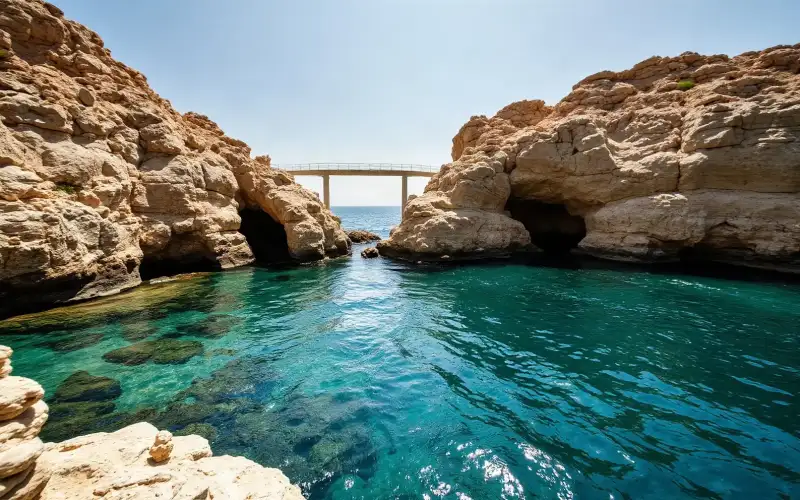
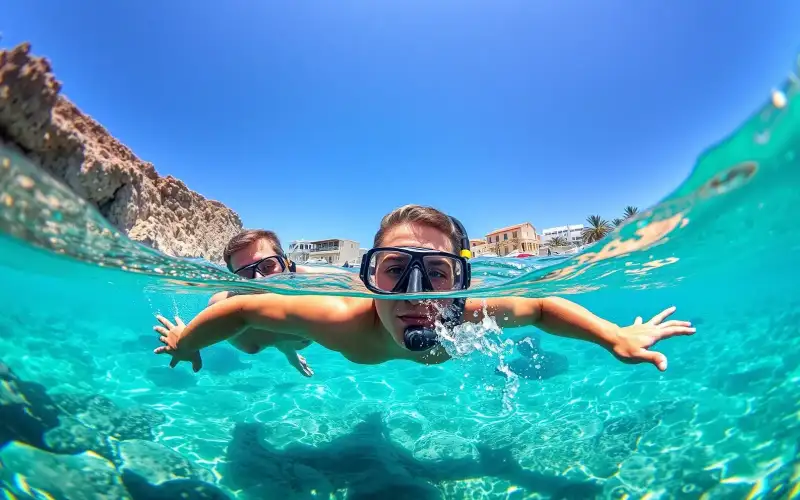
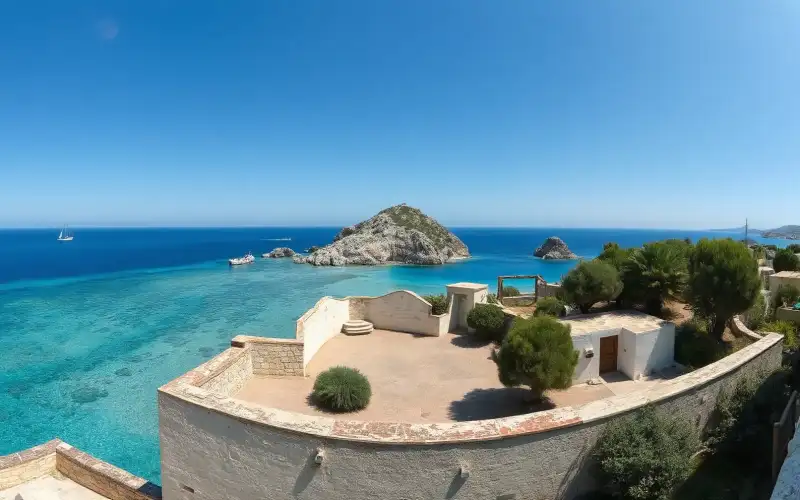
The Blue Lagoon — locally called Kounoupa — sits on the northwestern tip of the peninsula and is one of those places that genuinely lives up to its photographs. The water is a luminous turquoise over white sand, sheltered by a rocky islet. You can reach it by boat from Latchi in about 40 minutes; a return trip with a two-hour stop costs around €20–25 per adult in 2026, depending on the operator. Some trips continue to the sea caves at Fontana Amorosa, which is worth the extra time.
Driving to the Blue Lagoon is technically possible via a rough track from the north, but it requires a serious 4WD, takes considerably longer, and deposits you at the top of a cliff rather than the beach. The boat is simply the right way to do it.
Step 6: Lara Bay and the Turtle Hatcheries
Lara Bay is a two-kilometre arc of pale sand divided into two beaches by a rocky headland. It is one of the most important loggerhead turtle (Caretta caretta) nesting sites in the Mediterranean, and also hosts a smaller population of green turtles (Chelonia mydas). The Cyprus Department of Fisheries and Marine Research runs a hatchery programme here from June through August, protecting nests from vehicle damage and predation.
If you visit during nesting season, stay on the marked paths behind the hatchery fencing and do not approach any nests. Night visits to watch turtles nesting are not permitted independently — the only legitimate way to do this is through an organised conservation tour run by licensed guides. These typically cost around €35 per person and depart from Latchi at dusk.
Outside nesting season, Lara is simply one of the finest wild beaches in Cyprus — completely undeveloped, no sunbeds, no café, no noise except the wind and the waves. Bring everything you need.
Step 7: The Avakas Gorge
Drive from Agios Georgios inland along the Pegeia–Agios Georgios road and turn off at the signed gorge car park (there's a small sign, easy to miss — look for it roughly 2km past the Toxeftra Beach turning). From the car park, the gorge walk takes about 90 minutes return, covering 3km. The gorge itself begins gently through oleander and plane trees before the walls close in dramatically. In winter and spring, there is a shallow stream to wade — waterproof sandals are useful then. In summer, it's dry underfoot.
The gorge is home to griffon vultures, which nest on the upper cliff faces. Look up — they're often visible riding the thermals above the canyon walls in the morning hours.
Jeep Safaris: What to Expect
Jeep safaris are the most popular way to see the Akamas for visitors who aren't keen walkers, and when done well, they're genuinely worthwhile. Most operators run half-day and full-day tours from Paphos, Coral Bay and Latchi, typically using open-top Land Rovers or similar vehicles carrying eight to twelve passengers.
A full-day safari (around €65–75 per adult in 2026) usually covers the Avakas Gorge, a stop at Lara Bay, the track along the western coast, and a swim stop at the Blue Lagoon or a nearby cove. Lunch is typically included, usually at a taverna in Neo Chorio or Droushia.
Choose your operator carefully. The best guides carry binoculars, know the plant names, and slow down when there's something worth seeing. The worst treat it as a fairground ride. Ask when booking whether the guide is a licensed nature guide — in Cyprus, this requires a formal qualification from the Deputy Ministry of Tourism.
Half-day options (around €35–45) cover less ground but are perfectly adequate if you're combining the safari with a morning hike or afternoon boat trip.
Wildlife Calendar: When to See What
| Month | Wildlife Highlight | Notes |
|---|---|---|
| March–April | Spring wildflowers, migrant birds arriving | Best for orchids — 28 species recorded on the peninsula |
| May | Bee-eaters nesting, Cyprus warbler singing | Ideal hiking weather, trails quiet before school holidays |
| June–August | Loggerhead turtles nesting at Lara Bay | Hot; start walks before 8am, carry extra water |
| September | Eleonora's falcons hunting migrants | Spectacular aerial hunting visible from the ridge |
| October | Migrant raptors, hoopoes, rollers | My favourite month — golden light, empty trails |
| November–February | Griffon vultures, winter raptors | Avakas Gorge stream running; quietest period |
Practical Troubleshooting
"The car park at the Baths of Aphrodite was full"
This happens by 10am on any summer weekend. Drive back 1.5km towards Latchi and park on the verge near the start of the access road — it adds ten minutes to your walk but is perfectly safe. Alternatively, park in Latchi harbour and walk the coastal path west to the Baths (about 3km, flat and pleasant).
"The jeep track to Lara Bay was too rough for our hire car"
Standard hire cars — including small SUVs — are not insured for unmade tracks in Cyprus, and the Lara track will genuinely damage a low-clearance vehicle. Take a boat from Latchi instead, or join a jeep safari that includes Lara Bay. It's not worth the risk.
"We got too hot on the trail"
Turn back. The Aphrodite Trail has no shade on the ridge section, and heat exhaustion is a real risk above 30°C. The trail will still be there tomorrow morning at 7am. The Avakas Gorge, by contrast, stays cool even in midsummer because the walls block direct sun — a useful alternative on very hot days.
"We couldn't find the Avakas Gorge car park"
Use what3words: the car park entrance is at roughly ///shelf.grand.crisp — or simply search "Avakas Gorge" in Google Maps, which now locates it accurately. The road sign is small and brown, easy to pass at speed.
"Boat trips to the Blue Lagoon were fully booked"
Book the evening before, not the morning of. In July and August, the reputable operators — Latchi Watersports, Blue Lagoon Cruises and several independent skippers — fill their morning departures by 8pm the previous day. If you're stuck, ask at the harbour for afternoon departures, which are less popular but still offer a two-hour swim stop.
Staying Near the Akamas: A Few Honest Suggestions
Neo Chorio and Droushia are the two inland villages closest to the peninsula's heart, and both have small guesthouses and agrotourism properties that suit the slower pace this landscape demands. Droushia in particular sits at 700 metres with views across the peninsula to the sea — on autumn evenings, watching the light go off the Akamas from a taverna terrace with a glass of local Commandaria is one of those experiences that stays with you.
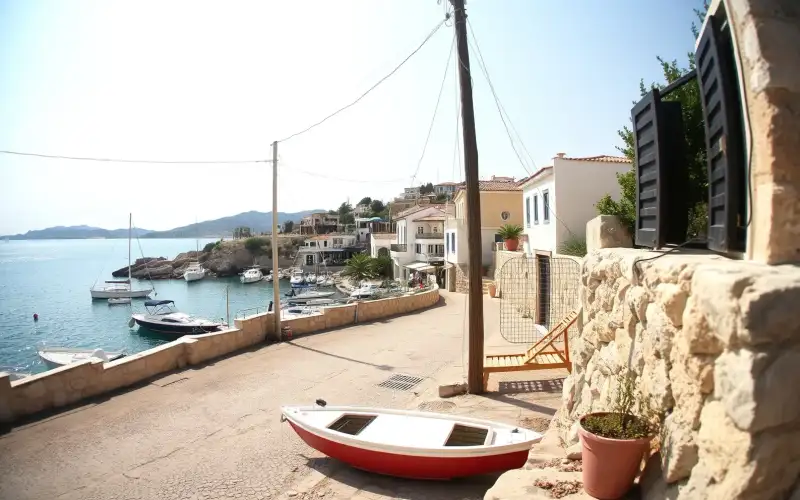
Latchi itself has several apartment complexes and a handful of small hotels. It's convenient for early boat departures and has the best fish tavernas in the area — the harbour restaurants serve fresh-caught sea bream and octopus that has no business being as good as it is at those prices (expect to pay around €18–22 for a main course in 2026).
For those based in Paphos or Coral Bay, the Akamas is entirely manageable as a day trip. The drive from Coral Bay to the Baths of Aphrodite takes about 35 minutes via the coast road through Agios Georgios — a beautiful drive in itself, past the sea stacks at Cape Drepanum and the Roman harbour ruins at Agios Georgios.
The Akamas is not a place that rewards rushing. Give it a full day if you can — better still, two. Walk something in the morning, swim somewhere wild in the afternoon, and watch the sun go down from Droushia with a cold Keo in hand. That's the pace this peninsula was made for.
Comments (4 comments)