
The Square Where Time Moves Differently
I arrived in Polis on a Tuesday morning in late September, the kind of day when the Mediterranean light turns everything honey-coloured and the summer crowds have finally evaporated. The central square—officially Plateia Iroon—was doing what it does best: absolutely nothing urgent. An elderly man in a linen shirt sat reading Phileleftheros, his coffee untouched for what looked like three hours. A woman swept the same ten metres of pavement twice. Two teenagers on a moped drifted past, no destination apparent.
This is not the Cyprus you see in the brochures. There are no foam parties, no shot girls, no British stag nights in matching t-shirts. What you get instead is something increasingly rare in Mediterranean Europe: a town that hasn't calcified into either a museum or a theme park.
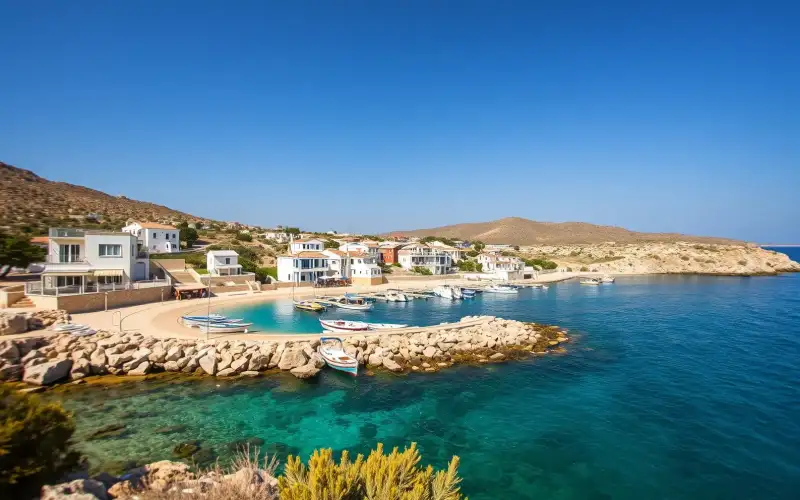
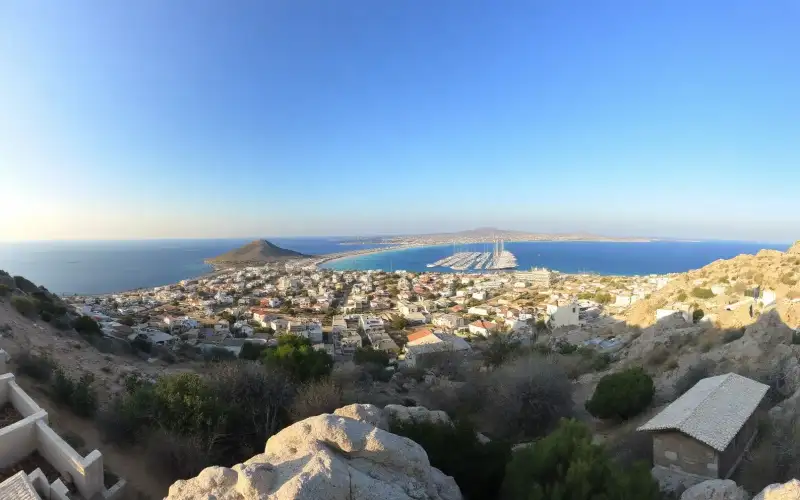
Polis Chrysochous sits roughly 40 kilometres north of Paphos town, nestled between the Akamas Peninsula and the Tillyria mountains. Population around 2,500 year-round, swelling to perhaps 4,000 in summer. The town square is ringed by tavernas, kafeneia (traditional coffee houses), and a handful of wine bars that actually know what they're doing. There's a small archaeological museum, a marina where fishing boats still outnumber tourist vessels, and streets narrow enough that you can walk the entire town centre in twenty minutes without hurrying.
For British travellers in their 50s and 60s—the ones who've already done Ibiza, already done Ayia Napa, already done the all-inclusive resort shuffle—Polis offers something their younger selves wouldn't have appreciated: permission to be bored in the best possible way.
Option A: The Nightlife Narrative (Why Polis Isn't What You'd Expect)
The Absence of Manufactured Fun
Let's be direct: Polis has no nightclubs. No laser shows, no foam cannons, no promoters handing out flyers at the marina. The closest thing to a proper club is probably the seasonal beach bar at Latchi, 15 kilometres away, which operates more like a sophisticated taverna with decent music than anything you'd find in Limassol's Germasogeia strip.
This absence is precisely the point. The nightlife in Polis isn't something you consume; it's something you participate in. On a Friday or Saturday evening, the square fills with locals and visitors alike—families, couples, groups of friends—sitting outside tavernas until 11 or midnight, eating grilled fish or lamb, drinking local wine or retsina, talking. The volume rises naturally as the night progresses. Someone might have a bouzouki. The proprietor of Taverna Latchi will probably wander over to chat. By 1 a.m., half the square has dissolved into smaller conversations, and you're left with the core group of people who actually live here, still talking at a table near the church.
Compare this to a Friday night in Paphos town's Posidonio district, where bars pump electronic music into the street, where the clientele is 80% British or Eastern European, where the drinks menu is designed to get you drunk quickly and cheaply. A pint of lager in Paphos Old Town runs to €4.50–€5.50. A glass of Ktima Gerolemo's white wine in Polis, at a proper wine bar, costs €5.00 and tastes like something worth remembering.
The Wine Bar Alternative
This is where Polis actually punches above its weight. Three wine bars have opened in the last six years, and they're not tourist traps. Oenos, tucked into a converted stone house on Leoforos Makarios, stocks over 200 Cypriot wines and has a sommelier (yes, an actual trained sommelier) who will spend an hour discussing terroir if you let him. A flight of three wines—say, a Ktima Gerolemo Xinisteri, a Vasilias Papantoniou rosé, and a Keo Reserve red—runs €16. In London, that same flight would be €35.
The clientele is mixed: locals, expats who've lived in Polis for 15–20 years, the occasional tourist who's stumbled off the Akamas hiking trail. Conversation happens naturally. Last September, I found myself in a three-hour discussion about the 2015 vintage with a retired surgeon from Bristol and a Polis native who'd worked in Bordeaux for a decade. No one was performing. No one was trying to impress.
The other two bars—Symposium and Thalassa—operate on similar principles. They're open until 1 or 2 a.m., but they're not designed to keep you drinking past the point of sense. The music is low enough to talk over. The food is real: mezze platters, local cheeses, proper cured meats from the butcher two doors down.
The Marina Culture
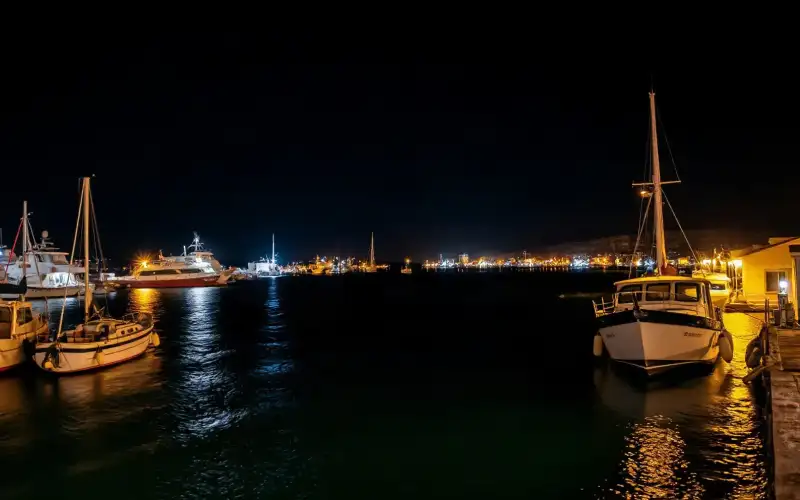
If you want to see Polis at its most social, come to the marina around 7 p.m. on a summer evening. The fishing boats are being prepared for the night's work. A few tourist boats are returning from afternoon trips. The tavernas along the waterfront are setting tables. The light is beginning to turn amber. Locals drift down for a coffee or a drink, and they're not there to be entertained—they're there because this is where their community gathers.
Latchi, the neighbouring port village 15 kilometres away, has more formal nightlife infrastructure: a couple of clubs that operate seasonally, more tourist-oriented restaurants. But even Latchi maintains a dignity that's absent from Paphos. The beach bars close at 2 a.m., not 4. The music is audible but not assaultive. You can still hear the sea.
What You Won't Find
There are no British pub chains in Polis. No sports bars showing Premier League matches on 12 screens. No karaoke venues. No lap-dancing clubs. No shots for €1. No promoters. No queue to get in anywhere. This is either a feature or a bug, depending on what you're after. For the 55-year-old from Sussex who spent his 30s in Magaluf and has no desire to repeat the experience, it's a feature.
Option B: The Authenticity Argument (Why Polis Wins on Every Other Metric)
The Town That Hasn't Been Packaged
Paphos—the resort area, not the archaeological sites—has been aggressively marketed to British and Russian tourists since the 1980s. The result is a kind of cultural homogenisation: the same hotel chains, the same restaurant franchises, the same beach bars playing the same playlist. You can get a full English breakfast in Paphos. You can watch EastEnders in your hotel room. The infrastructure is excellent, but the authenticity is essentially zero.
Polis, by contrast, still feels like a real town where real Cypriots live. The school is still the social hub. The church still matters. The square is still where you bump into people you know. The tavernas are family-run, often by the same family for 20–30 years. Taverna Latchi has been run by the same two brothers since 1989. Taverna Akti, on the waterfront, is on its third generation of the same family.
This isn't nostalgia or tourism board marketing. It's observable fact. Walk through Polis at 8 a.m. on a weekday, and you'll see schoolchildren in uniforms, pensioners at the kafeneion, shopkeepers opening their stores. Walk through Paphos at 8 a.m., and you'll see cleaning staff, delivery vans, and very little else.
The Slow Travel Infrastructure
Polis has developed, almost by accident, into the perfect slow-travel hub. The town itself is small enough to explore on foot, but positioned perfectly for day trips: Akamas Peninsula (20 minutes by car), Latchi (15 minutes), the wine villages of Tillyria (30 minutes), Paphos archaeological sites (45 minutes), even Troodos mountains (90 minutes).
The accommodation is deliberately boutique. There are no 500-room mega-hotels. Instead: family-run hotels with 20–40 rooms, converted stone houses rented as apartments, a handful of small guesthouses. Prices run €80–€150 per night for a decent double room, compared to €120–€200 in Paphos. The Polis Chrysochous Hotel, right on the square, charges €95 for a room with views. The same standard room in a comparable Paphos hotel would be €140.
Restaurants are affordable without being cheap. A full mezze dinner for two—fish, lamb, vegetables, bread, wine—runs €35–€45. In Paphos, the same meal is €55–€70. You're not paying for brand or marketing, just for good food cooked by someone who's been doing it for decades.
Wine as a Genuine Pursuit
This is where Polis has a genuine advantage over every other town in Cyprus. The Tillyria wine region—the villages of Panagia, Fyti, Kritou Terra, Mesana—sits directly inland from Polis. These are small, high-altitude vineyards producing wines that are barely known outside Cyprus. Ktima Gerolemo, Vasilias Papantoniou, Keo, and smaller producers like Tsiakkas are all within 45 minutes' drive.
More importantly, the wine bars in Polis actually know these wines. The sommelier at Oenos trained in Bordeaux and Burgundy but chose to come back to Cyprus. He can tell you why a 2019 Gerolemo Xinisteri from the higher slopes tastes different from a 2019 from the lower slopes. He can recommend a Vasilias Papantoniou rosé that costs €6 and tastes like it costs €15.
This is not available in Paphos. The resorts have wine lists, but they're generic. The tavernas have house wine, but it's industrial. Polis has genuinely educated wine culture, which is remarkable for a town of 2,500.
The Akamas Factor
The Akamas Peninsula—Cyprus's largest protected natural area—is accessible from Polis in 20 minutes. From Paphos, it's 60 minutes. From Limassol, it's two hours. Polis is the obvious base for anyone interested in hiking, birdwatching, or simply spending time in unspoiled Mediterranean landscape.
The peninsula has 50 kilometres of hiking trails, a sea turtle nesting beach (Lara), and villages like Drouseia that feel like they've existed unchanged for 50 years. The light at sunset, looking west from the higher trails toward the sea, is worth the entire trip to Cyprus.
Comparison Table: Polis vs. Paphos vs. Limassol
| Factor | Polis Chrysochous | Paphos Resort Area | Limassol |
|---|---|---|---|
| Population (year-round) | 2,500 | ~30,000 | ~240,000 |
| Average hotel room (double, mid-range) | €95–€120 | €140–€180 | €110–€150 |
| Dinner for two (mezze, wine) | €35–€45 | €55–€75 | €50–€70 |
| Nightclubs | 0 | 8–12 | 20+ |
| Wine bars with trained sommeliers | 3 | 0 | 2 |
| Distance to Akamas | 20 min | 60 min | 120 min |
| Feeling of authenticity (subjective) | High | Low | Medium |
| British tourists (summer) | ~5% | ~40% | ~15% |
The Recommendation: Why Polis Is Actually the Better Choice
Here's the thing about nightlife in Cyprus: if you're over 40 and you want nightlife, you're probably not actually looking for nightclubs. You're looking for social space. You want to sit with other people, eat good food, drink something worth drinking, and have conversations that don't revolve around how drunk you can get.
Polis delivers this. Paphos and Limassol don't, not really. They offer nightclubs and bars, which is a different thing entirely.
The British traveller in his 50s or 60s who chooses Polis over Paphos isn't settling for less nightlife. He's choosing a different kind of nightlife—one based on genuine social connection rather than manufactured entertainment. The square on a Friday evening, the wine bar conversation, the marina at sunset, the taverna where you eat fish that was caught this morning: these are the nights you'll remember.
Paphos will give you louder nights. Polis will give you better ones.
The question isn't whether Polis has enough nightlife. It's whether you've evolved past the point where you need nightclubs to have a good time. If you have, Polis Chrysochous isn't underrated. It's exactly the right rating. Everyone else has just been looking in the wrong direction.
Comments (4 comments)