
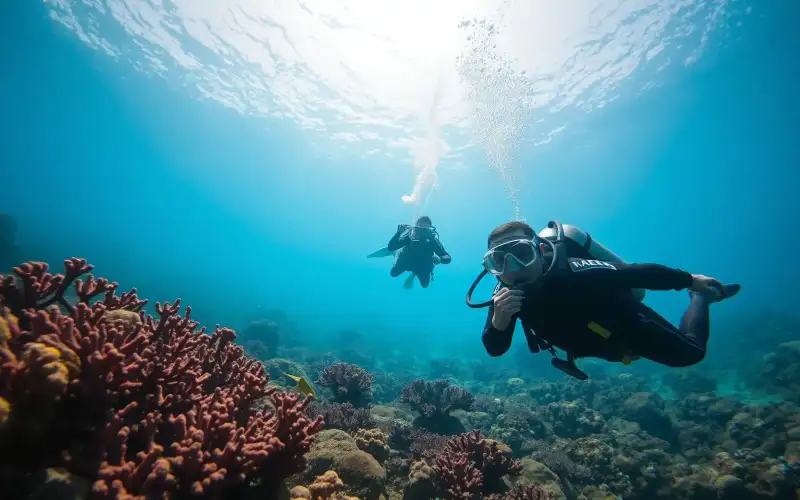
Last October, I watched my twelve-year-old daughter descend past a school of amberjack near Coral Bay, her eyes wide behind her mask as a grouper the size of a football drifted past. That moment – watching her discover an entire world just forty metres offshore – crystallised something I'd been thinking about Paphos for years: this corner of Cyprus isn't just about beaches and village tavernas. Beneath the surface, it's genuinely exceptional.
The waters around Paphos hold some of the Mediterranean's most accessible diving, from nursery reefs where absolute beginners find their confidence to technical wall dives that challenge experienced divers. Water temperature ranges from 16°C in February to 28°C in August, and visibility swings from 15 metres in winter to 40+ metres in summer. Getting the timing and site selection right makes all the difference.
1. Beginners: Coral Bay Reef and Shallows
Coral Bay itself is where most people start, and for good reason. The sandy bottom slopes gently from the shore, bottoming out at 12 metres, with scattered rocks and a small artificial reef that's been colonised by wrasse, bream and the occasional cuttlefish. The entry is straightforward – you wade from the beach – and the reef sits maybe 50 metres from the shore.
What makes Coral Bay work for absolute beginners is the psychology of it. You're never far from the surface, the water's clear enough to see the shore the entire time, and the marine life is curious rather than intimidating. I've seen nervous first-timers relax within minutes once they realise the fish aren't interested in them. The reef itself is modest – don't expect the coral density of the Red Sea – but it's enough to hold attention and build confidence.
Most dive centres run a Discover Scuba programme here, which costs €60–€80 and includes basic instruction, equipment and a supervised 20-minute dive. If you want to commit properly, the PADI Open Water course runs three days and costs €280–€350. You'll need to budget another €40–€60 for the certification card and theory materials.
Best months: May to October. Winter swells can make the beach entry awkward, and visibility drops to 15–20 metres between November and March.
2. Beginner-Intermediate: Akamas Reef and Lara Beach Shallows
Moving slightly along the coast toward the Akamas Peninsula, Akamas Reef sits in 15–20 metres and is accessed by boat from Coral Bay (about 10 minutes). The reef here is more substantial – limestone formations with small caves and overhangs – and the fish life is noticeably richer. You'll see dentex, grouper, octopus in the crevices and, if you're lucky, moray eels.
This is the sweet spot for divers who've done a few dives and want something with a bit more structure. The current can pick up depending on the season, but it's generally manageable. The dive takes 40–50 minutes, and most centres charge €45–€60 per person on a group dive, or €120–€150 for a private guide.
Lara Beach, further up the peninsula, offers shallow wreck diving (the remains of a small fishing boat in 8–12 metres) and is also good for intermediate divers wanting to build wreck experience without the complexity of deeper sites. The boat ride is longer – 30 minutes from Coral Bay – but the isolation appeals to people who want fewer tourists and clearer water.
Best months: May to October, though June and September often have the calmest seas.
3. Intermediate: The Wreck of the Evangelos
The Evangelos is a 40-metre fishing vessel that sank off Paphos in 1981 and now rests in 42 metres of water. It's the most famous wreck dive on the Paphos coast and a genuine highlight if you have 30–50 logged dives and are comfortable with deeper water and nitrogen narcosis.
The wreck is largely intact – you can swim through the wheelhouse and engine room – and it's colonised by grouper, amberjack and smaller fish that use the structure for shelter. The viz needs to be good to make this dive worthwhile; in poor conditions (winter, after storms), you'll struggle to see more than 20 metres and the wreck becomes frustrating rather than thrilling.
Dive centres typically charge €65–€85 per person for a guided wreck dive, including equipment. A private guide for the Evangelos runs €140–€180. Most reputable operators won't take you down without seeing evidence of adequate training – ask for your PADI Advanced Open Water or equivalent.
The dive itself is about 45 minutes bottom time, and you'll need to manage decompression carefully. Most operators build in a safety stop at 5 metres for 3–5 minutes. Nitrogen narcosis is real at this depth – you'll feel slightly drunk, your thinking slows, and your air consumption increases. It's manageable if you're aware of it, but it's why this isn't a beginner dive.
Best months: June to September. Winter storms churn up sediment and reduce visibility to 15–20 metres, making the wreck harder to navigate safely.
4. Intermediate-Advanced: Poseidon Reef and Amphora Reef
These two sites sit in 25–35 metres and are accessed by boat from Paphos harbour (about 15 minutes). Poseidon Reef is a natural limestone formation with caves and swim-throughs, while Amphora Reef is named for the ancient pottery scattered on the seabed – evidence of Bronze Age shipwrecks that occasionally yield artefacts (which you absolutely must not touch; they're protected).
Both sites reward careful diving. The reefs are home to grouper, dentex, barracuda and, in summer, occasional rays. The current can be strong, so buoyancy control matters. Visibility is typically 25–30 metres, though it can reach 40 metres in August and September.
These are the dives where you start to feel like you're actually exploring rather than following a guide. The limestone formations create natural corridors, and there's enough depth and complexity to keep experienced divers interested. A guided dive costs €55–€75 per person; private guides charge €130–€160.
You don't strictly need an Advanced certification, but it helps. At minimum, you should have 20+ dives logged and be comfortable with deeper water and stronger currents.
Best months: May to October, with July and August offering the clearest water but also the warmest conditions and most tourists.
5. Advanced: Akamas Wall and the Pinnacles
The Akamas Wall is where Paphos diving gets serious. This site is a vertical limestone wall that drops from 20 metres to beyond 60 metres, and it's only suitable for divers with Advanced Open Water certification and genuine experience with deep diving and strong currents.
The wall itself is spectacular – sheer, colonised by soft corals, sponges and anemones, with grouper and barracuda patrolling the blue water beyond. In summer, you might see pelagic fish – tuna, jacks – moving through deeper water. The current here is often strong, and you need to be confident with drift diving and navigation.
Most operators won't take you to the wall without seeing an Advanced certification card. A guided dive costs €75–€95 per person; private guides charge €160–€200. You'll typically spend 40–50 minutes in the water, with bottom time split between the wall itself (30–40 metres) and a shallower safety stop on the reef above.
The Pinnacles, a cluster of limestone towers rising from 45 metres to 25 metres, sit nearby and offer similar conditions – deep, exposed, and genuinely challenging. This is where technical diving becomes relevant; some operators offer nitrox fills (€8–€12 per tank) to extend bottom time and reduce nitrogen narcosis.
Best months: June to September. Winter conditions make the wall dangerous – visibility drops, surge increases, and currents become unpredictable.
6. Technical and Advanced: The Caves of Akamas
If you've done deep wall dives and want the next challenge, the submerged caves near the Akamas Peninsula offer genuine technical diving. These aren't beginner cave dives – they require cave-specific training (PADI Cavern or Full Cave certification) and proper equipment.
The caves themselves are limestone formations, some of which extend 30–40 metres into the cliff face. Visibility inside can be excellent (30+ metres) or poor (5 metres) depending on surge and sediment disturbance. The wildlife is sparse – mostly small fish and crustaceans – but the geological formations are remarkable.
Only a handful of operators in Paphos offer cave diving, and they're selective about who they take. Expect to pay €120–€150 per dive, and you'll need to present cave training certification. This isn't a recreational dive; it's exploration.
Best months: July and August only. Any other time, the conditions are too unpredictable.
7. Seasonal Considerations and Visibility
Water temperature in Paphos ranges from 16°C in February to 28°C in August. Most recreational divers wear a 5mm wetsuit year-round, though summer visitors often use 3mm or even shorties. Winter divers should consider 7mm or a hooded vest.
Visibility is the biggest variable. Summer (June to September) typically offers 30–40 metres visibility, with August often the clearest. May and October are transitional – still good (25–30 metres), with fewer tourists and calmer seas than mid-summer. Winter (November to March) sees visibility drop to 15–20 metres due to runoff and storm surge, and conditions become unpredictable.
If you're planning a diving holiday around Paphos, June or September offer the best compromise: warm water, good visibility, and fewer crowds than July and August. October is underrated – water's still warm (24°C), visibility is 25–30 metres, and the summer rush has passed.
8. Choosing a Dive Centre: What to Look For
Paphos has a dozen or more dive operators, ranging from small independent shops to larger chains. The best ones share certain characteristics: PADI-affiliated instructors, well-maintained equipment, small group sizes (maximum 4–6 divers per guide), and honest conversations about your experience level.
Reputable centres include Coral Bay Diving (based in Coral Bay itself, €45–€75 per dive), Paphos Diving Centre (near Paphos Harbour, €50–€80), and Akamas Diving (specialising in Akamas sites, €60–€90). All three maintain current PADI credentials and have instructors with 10+ years' experience. Smaller operators sometimes offer better value and more personalised service, but always check credentials – ask to see instructor cards and equipment maintenance logs.
Equipment rental costs €15–€25 per dive (full set) or €8–€12 for individual items. Most centres offer nitrox fills for an extra €8–€12. Tank fills are included in dive packages but cost €5–€8 if you bring your own equipment.
Book dives in advance during summer; walk-ins are risky when centres are busy. Most operators offer discounts for multi-day packages (e.g., €200–€250 for three dives vs. €60 per single dive).
9. PADI Certification Costs and Timeline
If you're starting from scratch, here's what you'll spend:
- Discover Scuba (one day, €60–€80): Introduction to diving with a single supervised dive. No certification issued.
- PADI Open Water (three days, €280–€350): Full certification allowing dives to 18 metres with a buddy. Includes theory, confined water training, and four open water dives. Certification card valid for life.
- PADI Advanced Open Water (two days, €200–€280): Takes you to 30 metres and includes five dives covering deep diving, navigation, and other specialties. Requires Open Water certification first.
- PADI Rescue Diver (three days, €300–€400): Advanced rescue and emergency management training. Requires Advanced certification and 40+ logged dives.
- Specialty courses (one–two days, €100–€200): Wreck diving, nitrox, navigation, deep diving, etc. Mix and match depending on your interests.
If you're staying for a week and want to get certified, the Open Water course is doable in three days, leaving you four days to explore better sites. The total cost (course + four recreational dives) runs €400–€500, which is reasonable value.
10. Safety Considerations and Responsible Diving
The Mediterranean isn't as dangerous as tropical diving – no sharks, no stonefish, no aggressive marine life – but it demands respect. Strong currents, cold water in winter, and nitrogen narcosis at depth are genuine hazards.
Always dive with a buddy, never dive alone. Check weather and sea conditions before booking – if the forecast shows strong winds or storms, reputable operators will cancel. Respect depth limits based on your certification, and don't be pressured into dives beyond your experience. If a guide seems reckless or dismissive of safety protocols, find another operator.
Marine protection is serious in Cyprus. The Akamas Peninsula is a Natura 2000 protected area, which means certain zones are off-limits to diving. Operators know the rules, but understand that some sites you might read about online are no longer accessible due to conservation efforts. Respect protected areas and never collect anything – shells, rocks, artefacts – from the seabed.
Nitrogen narcosis becomes noticeable below 30 metres. Plan dives accordingly, manage your air consumption, and don't push depth limits on a whim. The Mediterranean is beautiful, but it's unforgiving to careless divers.
11. Getting There and Logistics
Most dive centres are clustered around Coral Bay and Paphos Harbour. If you're staying in Paphos town, a taxi to Coral Bay costs €12–€18. Car rental is advisable if you're diving multiple sites – expect €35–€50 per day for a basic hatchback. Parking at dive centres is free.
Flights into Paphos International Airport are direct from the UK (three hours from London). The airport is 40km from Coral Bay (45-minute drive). Book accommodation within walking distance of a dive centre if you're planning daily dives – it makes logistics simpler.
12. What to Bring and What to Rent
If you're a regular diver, bring your certification card, logbook, and personal gear (mask, fins, wetsuit). Rental equipment is available but personal gear fits better and feels more comfortable. If you're hiring everything, budget €15–€25 per dive.
Bring a small underwater torch even for daytime dives – it reveals colours and wildlife that sunlight misses. A dive computer is essential; most centres provide them as part of rental packages, but if you own one, bring it.
Don't bring expensive camera equipment unless you're experienced with underwater housings. The cost of a decent underwater camera (€300+) plus housing (€400+) makes it an investment. Many dive centres offer GoPro rental (€15–€25 per dive) if you want to capture memories without the expense.
13. Best Times for Specific Conditions
Planning matters. Here's the breakdown:
| Period | Water Temp | Visibility | Crowds | Best For |
|---|---|---|---|---|
| May–June | 22–24°C | 25–30m | Moderate | Beginners, intermediate divers |
| July–August | 26–28°C | 35–40m | High | Advanced dives, clear water |
| September–October | 24–26°C | 25–35m | Low–Moderate | All levels, best value |
| November–March | 16–18°C | 15–20m | Low | Experienced divers only |
14. Beyond the Dive: Exploring Paphos Above Water
Paphos isn't just a diving destination – the towns and villages around it are worth exploring. Coral Bay village has tavernas serving fresh fish and local wine at reasonable prices (€12–€18 for a main course). The Akamas Peninsula itself is a nature reserve with hiking trails, secluded beaches and Byzantine chapels.
If you're taking a day off from diving, walk the coastal paths near Lara Beach or visit the Tombs of the Kings archaeological site near Paphos town. Many divers find that mixing diving with walking and cultural exploration makes for a richer holiday than just doing dives every day.
15. Planning Your Paphos Diving Holiday
A week-long diving trip works like this: arrive on a Saturday, do a Discover Scuba dive on Sunday to acclimatise, then three days of Open Water certification (Monday–Wednesday), leaving Thursday–Friday for recreational dives on better sites. Total cost: €400–€550 for certification plus €250–€350 for four recreational dives. Add accommodation (€60–€120 per night for a decent hotel or apartment), food (€30–€50 daily), and car rental (€35–€50 daily), and you're looking at €1,200–€1,800 for a week all-in.
If you're already certified, a week of daily dives (seven dives at €55–€75 each) plus accommodation and food runs €900–€1,400. September and October offer the best value – lower accommodation prices, fewer tourists, and still-excellent diving conditions.
Book dives in advance during summer; walk-ins work in shoulder seasons. Most dive centres take payment via card or cash, though some offer discounts for cash bookings.
16. Final Thoughts on Paphos Diving
Paphos isn't the world's most famous diving destination – that honour belongs to places like Egypt or Thailand – but it's genuinely good, accessible, and often overlooked by British divers who assume the Mediterranean is just shallow reefs. The truth is more nuanced. The Evangelos wreck is a proper dive, the Akamas Wall challenges experienced divers, and the beginner reefs build confidence without boredom.
The water's warm in summer, the operators are professional, and the wider Paphos region offers enough above-water appeal to make it a complete holiday rather than just a diving trip. If you're 40–70, looking for something slower-paced than a typical package holiday, and curious about what lies beneath, Paphos deserves serious consideration.
The best dive is the one you actually do, not the one you read about online. Book something within your level, listen to your guide, and enjoy the moment. The fish aren't going anywhere.
Comments (5 comments)