The Morning Light at Akamas: Why This Peninsula Still Feels Undiscovered
I arrived at Lara Bay on a Tuesday in May, the kind of morning when the Akamas Peninsula seems to exist in a different time zone entirely. The sun hadn't yet burned off the mist that clung to the limestone cliffs, and the water—that famous Cypriot blue—was so clear I could see the sandy bottom from the shore, fifteen metres out. A pair of loggerhead turtles had nested here the night before. The tracks were still visible in the sand, leading from the waterline up to the protected nesting area cordoned with rope.
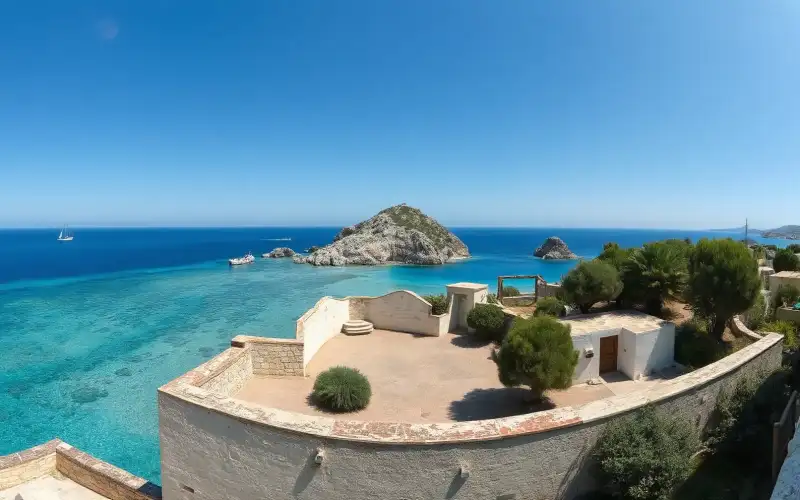
This is what draws people back to Akamas year after year. Not the infrastructure, not the convenience, but the sense that you're swimming in a place that hasn't been entirely domesticated. The peninsula, which juts northwest from Paphos towards the Turkish coast, remains stubbornly wild. There are no hotels on its coastline. No beach bars serving cocktails with paper umbrellas. Just limestone cliffs, Aleppo pines, and water so clean it makes you want to stay underwater longer than your lungs will allow.
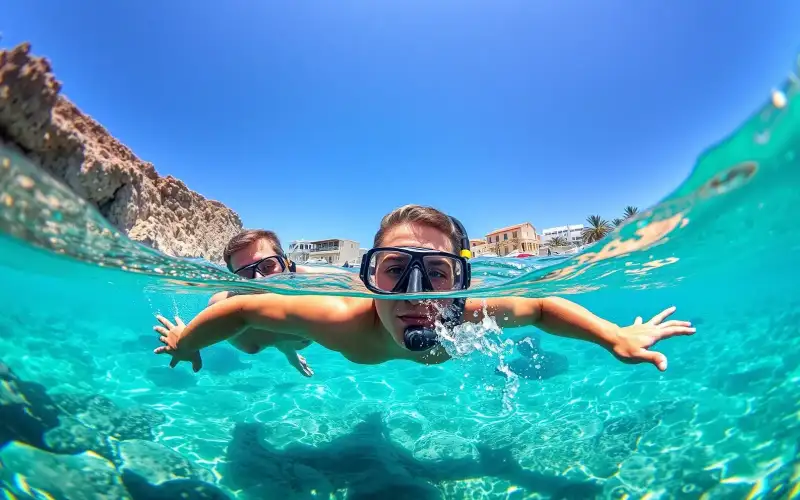
For snorkellers, Akamas offers something rare in Mediterranean tourism: genuine discovery. The marine life here isn't concentrated in one Instagram-famous spot. It's scattered across a dozen coves and underwater caves, each with its own character and resident species. You won't find crowds. You will find groupers, octopuses, sea urchins, and occasionally—if you're patient and quiet—the flash of a dusky amberjack cruising past the rocks.
Option A: The Blue Lagoon and Nearby Shallow Coves
Why the Blue Lagoon Matters (And Why It's Not What You Think)
The Blue Lagoon sits between the islands of Akamas and Chrysochousa, about 45 minutes' drive from Paphos town centre. The journey itself is part of the experience: you'll wind through villages like Polis Chrysochous, where old men still play backgammon in the plateia, then onto increasingly narrow roads that eventually become little more than compacted earth. The last three kilometres require a proper car—not a hire-car saloon, but something with actual ground clearance.
The lagoon itself is roughly 300 metres across, sheltered on three sides by low rocky outcrops. The water temperature sits around 22°C in May and June, rising to 26°C by August. The depth rarely exceeds four metres in the lagoon proper, making it ideal for snorkellers who prefer to stay in the shallows. The sand is pale and fine, the visibility typically 20-30 metres on clear days. On the rare occasions when the wind comes from the south, it can drop to 10-15 metres, but even then, you're looking at excellent conditions compared to most Mediterranean snorkelling spots.
What makes the Blue Lagoon special isn't the water itself—it's what lives in it. The shallow sandy bottom is home to several species of seagrass, including Posidonia oceanica, the Mediterranean's most important marine plant. This seagrass acts as a nursery for fish. Young groupers, wrasse, and bream shelter here. In summer, you'll regularly see schools of barracuda moving through the deeper channels. The rocky outcrops on the north side host more dramatic marine life: moray eels, octopuses, and the occasional spider crab that looks prehistoric enough to justify its name.
Getting There and When to Go
The Blue Lagoon is accessible year-round, but there are significant seasonal variations. May through September is the obvious choice: water temperature is warm enough that a thin wetsuit suffices, visibility is excellent, and the weather is reliably settled. However, if you can visit in April or October, you'll encounter far fewer people. I've snorkelled the Blue Lagoon in late October and found the water still warm enough (around 21°C) and the light so clear that underwater visibility felt almost supernatural.
From Paphos town, take the E701 north towards Polis. The drive takes about 45 minutes. Once you reach Polis, follow signs towards the Blue Lagoon—it's well-marked. There's a small car park at the lagoon entrance, currently free, though this may change as tourism infrastructure develops. The walk from the car park to the water is roughly 200 metres, mostly downhill on a well-maintained path. If you're visiting in high summer (July-August), arrive by 8 a.m. The lagoon can become crowded by 10 a.m., particularly with day-trip groups from Paphos.
What to Expect Underwater
The Blue Lagoon's snorkelling experience divides into two zones. The first is the shallow sandy area in the centre and south of the lagoon, where visibility is excellent and the water is calm. Here you'll see small fish, the occasional cuttlefish (they're shy but curious), and plenty of sea urchins—black ones, primarily, so wear reef shoes. The second zone is the rocky northern edge, where the water deepens to 5-8 metres. This is where the more interesting marine life congregates.
In the rocky zone, you'll find small caves and crevices. Moray eels are common here, but they're not aggressive—they're actually quite timid. If you see one, it's likely because it's retreated into a crevice as you approached. Groupers are more confident. The dusky groupers here are substantial fish, easily 40-50 centimetres long, with distinctive spotted markings. They seem to recognize that humans aren't a threat and will often stay in place as you swim past. Octopuses are harder to spot but present. They're masters of camouflage, but if you look carefully at the rocky crevices, you might catch sight of one shifting colour as it moves.
Sea urchins are the real constant. The black sea urchins are everywhere, particularly in the shallow sandy areas. They're not dangerous if you're careful—just don't touch them or step on them barefoot. Their spines are sharp and can cause infection if they break off in your foot. Reef shoes or neoprene socks are essential, particularly in summer when the urchin population is at its peak.
Practical Considerations and Safety
The Blue Lagoon is generally very safe for snorkellers. The water is sheltered, the bottom is sandy or rocky but without significant drop-offs, and there's no significant current. The main hazard is sun exposure. The water is so clear that you lose track of time underwater, and the Mediterranean sun is brutal. Use high-SPF sunscreen, reapply every two hours, and consider a rash guard or thin wetsuit for UV protection.
Equipment-wise, you'll need a snorkel, mask, and fins. Most visitors bring their own, but if you don't have them, there are rental shops in Polis that charge €10-15 per day for a basic set. The quality varies, so if you're planning a full week of snorkelling, it's worth bringing your own from the UK. The water is cool enough (even in August) that a thin 3mm wetsuit is comfortable, though not strictly necessary in peak summer.
Option B: The Lara Bay Caves and the Eastern Akamas Coastline
The Hidden World of Underwater Caves
Lara Bay is famous for its loggerhead turtle nesting site, but most visitors never venture into the water. Those who do discover something extraordinary: a series of underwater caves and rock formations that rival anything you'll find in the Mediterranean. The caves aren't deep—the deepest penetration is perhaps 8-10 metres—but they're spectacular. The rocks are pale limestone, sculpted by millennia of wave action into shapes that feel almost architectural.
The main cave system lies about 50 metres offshore from the northern end of Lara Bay, accessible from the beach. The entrance is roughly 2-3 metres below the surface, and the cave extends back about 15 metres before narrowing to impassable cracks. The interior is dimly lit by sunlight filtering through crevices, creating an otherworldly blue-green glow. Fish congregate here in abundance: small groupers, wrasse, and occasionally larger predatory fish hunting in the shadows.
What makes the Lara caves special is the sense of exploration they provide. You're not snorkelling a marked reef or a designated marine park. You're discovering something that most tourists never see, something that requires a bit of effort and local knowledge to find. This is snorkelling as adventure rather than passive recreation.
Reaching Lara: The Journey and the Season
Lara Bay is roughly 50 kilometres from Paphos town, a drive that takes about 90 minutes via the E701 north towards Polis, then inland towards Lara. The road narrows considerably as you approach—it's a single-track dirt road for the last 10 kilometres, suitable only for cars with reasonable ground clearance. There's a small car park at the bay entrance, and from there, it's a 20-minute walk down to the beach itself. The walk is easy enough, though it can be hot in summer.
Lara is best visited between April and October. In winter (November to March), the bay can experience significant swell, and the underwater visibility drops considerably due to winter storms stirring up sediment. May and June are ideal: the water is warm enough for comfortable snorkelling, the visibility is excellent (typically 25-35 metres), and the nesting turtles are still active, adding an extra layer of magic to a visit.
The bay is protected as part of the Akamas National Forest, so there are regulations. You must not disturb the turtle nesting areas, marked with rope barriers. You're not allowed to collect shells, rocks, or any marine life. Fishing is prohibited. These rules exist for good reason—Lara is one of the last significant loggerhead nesting sites in the Mediterranean, and the protection measures have been remarkably successful.
The Marine Life of Lara and Beyond
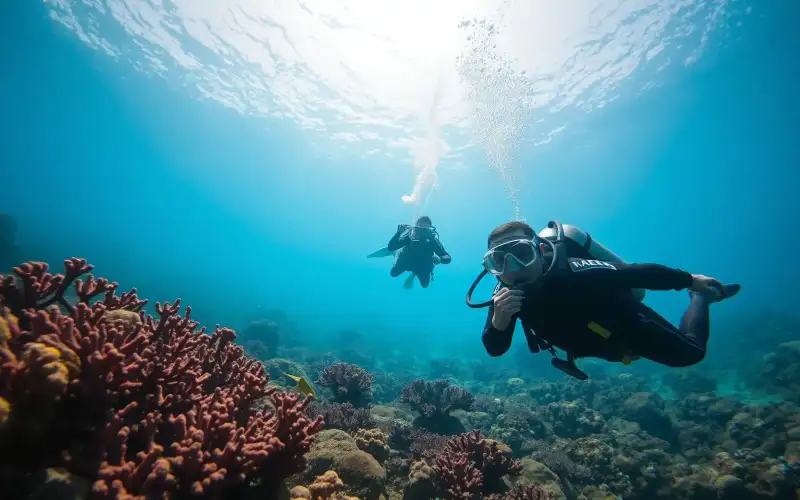
Lara's marine ecosystem is more dramatic than the Blue Lagoon's, partly because the water is deeper and more exposed. The rocky formations here drop away quickly—you'll find yourself in 6-8 metres of water within 50 metres of shore. This deeper water attracts larger fish. Dusky groupers are common, but you'll also see amberjacks, large wrasse, and occasionally barracuda. The caves themselves are home to moray eels, spider crabs, and various species of rockfish that are perfectly camouflaged against the limestone walls.
Sea urchins are present but less densely packed than at the Blue Lagoon. The rocky bottom means fewer urchins overall, though you'll still encounter them. The real difference is the presence of larger predatory fish. If you're patient and quiet, you might see dusky amberjacks cruising the deeper channels, or even a grouper large enough to give you a moment of respectful hesitation.
One particular species worth mentioning is the dusky grouper, Epinephelus marginatus. These are substantial fish, sometimes exceeding 60 centimetres in length. They're curious about humans but not aggressive. If you encounter one, the best approach is to remain still and let it investigate you. They're intelligent fish and seem to understand that humans aren't a threat, at least not immediately.
Beyond Lara: The Akamas Coastline
If you're willing to explore beyond Lara itself, the Akamas coastline offers numerous smaller coves and snorkelling spots, each with its own character. Toxeftra Beach, about 5 kilometres south of Lara, is accessible by car and offers excellent snorkelling in a more sheltered setting. The water here is slightly warmer and shallower than at Lara, making it ideal for less experienced snorkellers. The rocky outcrops on the south side of the beach host the same marine life as Lara, but in a more compact area.
Further south, towards Akamas village itself, are several small unnamed coves accessible only on foot or by boat. These spots are rarely visited by tourists and offer the most authentic Akamas snorkelling experience. The downside is access: you'll need to park at Akamas village and hike 30-45 minutes along coastal paths to reach them. The upside is solitude and the sense of genuine discovery.
Comparison: Blue Lagoon vs. Lara and the Eastern Coast
| Factor | Blue Lagoon | Lara & Eastern Akamas |
|---|---|---|
| Accessibility | Good road access, 45 mins from Paphos, car park available | Dirt road, 90 mins from Paphos, more remote |
| Water Depth | Shallow (0-5m), ideal for beginners | Deeper (4-8m+), better for experienced snorkellers |
| Visibility | 20-30m typical, excellent in summer | 25-35m typical, often superior |
| Marine Life Diversity | Small fish, octopuses, seagrass beds | Larger groupers, amberjacks, caves |
| Crowds | Moderate to heavy in summer | Very light, rarely crowded |
| Best Season | May-September (April-October possible) | May-October (April and October best) |
| Safety Rating | Very safe, sheltered water | Safe, but more exposed, requires confidence |
| Equipment Rental | Available in nearby Polis | None available, bring your own |
Seasonal Timing and What You'll Actually See
The Akamas coast transforms dramatically with the seasons, and understanding these changes is crucial for planning a successful snorkelling trip. May is arguably the best month. The water temperature sits at around 22°C, the visibility is exceptional (typically 25-35 metres), and the tourist season hasn't yet peaked. The marine life is active but not yet stressed by summer heat. Wildflowers are still blooming on the clifftops, adding colour to the landscape above water.
June and July bring warmer water (24-26°C) but also increasing crowds, particularly at the Blue Lagoon. The visibility remains excellent, and the marine life is abundant. However, if you're seeking solitude, these months are less ideal. August is the peak season—warmest water, heaviest crowds, and the most intense sun. It's still excellent for snorkelling, but the experience is decidedly less intimate.
September and early October are underrated. The water is still warm (around 23-24°C), the visibility remains excellent, and the crowds have thinned considerably. The autumn light has a particular quality that makes underwater photography stunning. Late October is possible but requires a bit of faith—the water is cooling (around 20-21°C), and occasional autumn storms can reduce visibility. However, if you get a clear day, the experience is magical.
April is similarly viable but less predictable. Water temperature hovers around 19-20°C, which requires a proper 3mm wetsuit for comfort. The visibility is good but not exceptional, and the weather can be changeable. However, if you're seeking absolute solitude, April offers that in abundance.
Practical Essentials and Final Considerations
Before you venture into Akamas waters, a few practical matters deserve attention. First, equipment. If you're serious about snorkelling, bring your own mask, snorkel, and fins from the UK. Rental equipment exists in Polis and Paphos, but quality is variable. A decent mask costs £30-50, fins £40-70, and a snorkel £15-25. It's worth the investment if you plan to snorkel more than a couple of times during your stay.
Second, sun protection. The Mediterranean sun is unforgiving, and the water's clarity means you lose track of time underwater. Use SPF 50+ sunscreen and reapply every two hours. Consider a rash guard or thin wetsuit for UV protection. Reef shoes are essential—the rocky bottoms and sea urchins demand them.
Third, fitness and confidence. Both the Blue Lagoon and Lara are suitable for reasonably fit snorkellers with basic swimming ability. Neither spot requires technical diving skills. However, Lara does involve deeper water and more exposure than the Blue Lagoon. If you're not a confident swimmer, start at the Blue Lagoon and work your way up to Lara.
Fourth, timing your visit. Arrive early, particularly at the Blue Lagoon. The morning light is superior, the water is calmest, and you'll encounter fewer people. Bring water and snacks—there are no facilities at either location. A small backpack with sunscreen, water, and a light lunch is essential.
The Akamas Peninsula remains one of the few places in Cyprus where you can snorkel and feel like you're discovering something. The marine life is abundant, the water is clean, and the sense of adventure is genuine. Whether you choose the sheltered shallows of the Blue Lagoon or the dramatic caves of Lara, you're snorkelling in a landscape that has changed little in decades.
Plan your visit carefully, respect the protected areas, and you'll understand why people return to Akamas year after year. The water remembers.
Comments (5 comments)