
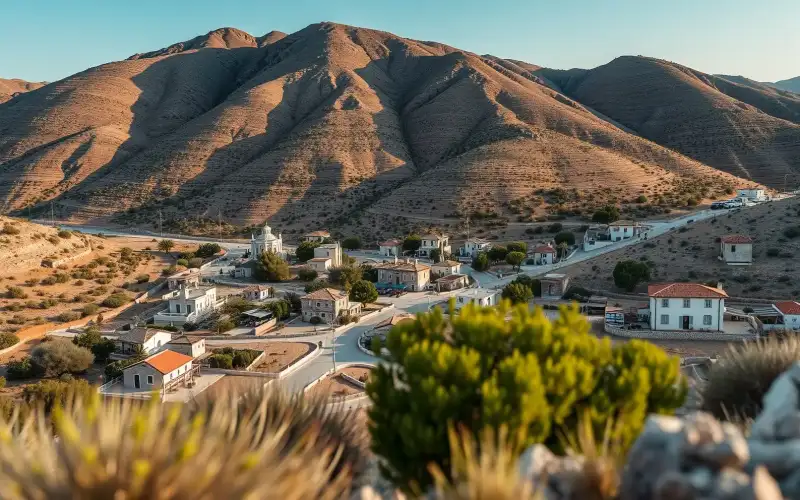
The Morning I Got Lost in Diarizos
I was supposed to meet my family at Coral Bay by noon. Instead, at 10:47 a.m., I was standing knee-deep in a limestone gorge, phone battery at 12%, staring at what I thought was a marked trail but was actually a seasonal watercourse. My daughter had warned me: "Mum, you always underestimate these walks." She was right. But she was also wrong about one thing—I wasn't lost. I was exactly where I wanted to be, in the heart of the Diarizos Valley, surrounded by towering ochre cliffs and the sound of nothing but my own breathing.
Most visitors to Paphos stick to the obvious circuit: Coral Bay, the Akamas, maybe a boat trip to Lara Beach. The Diarizos and Xeros valleys, by contrast, remain properly hidden. You won't find Instagram crowds here. What you will find is raw geology, archaeological layers spanning millennia, and a silence so complete it makes you question why you ever bothered with guidebooks.
Understanding the Two Valleys
Diarizos: The Deeper Gorge
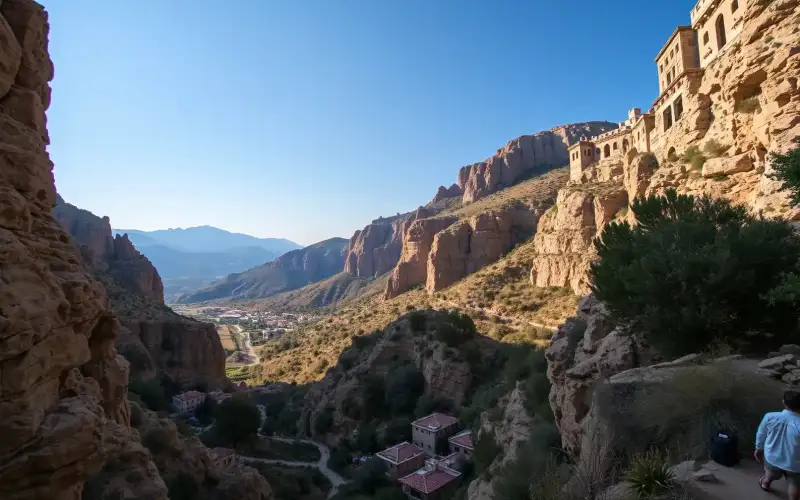
The Diarizos Valley cuts through the Paphos Mountains like a knife wound, running roughly north-south for about 18 kilometres. The valley's most dramatic section lies between the villages of Pano Panagia and Kato Panagia, where the gorge narrows and the walls rise to over 200 metres. The river itself—the Diarizos—flows only seasonally, but the valley's structure is ancient. Geologically, you're walking through Cretaceous and Paleocene limestone, the same formation that created the sea caves near Lara.
What makes Diarizos special for hikers is the combination of accessibility and wildness. Unlike some Cypriot gorges that require scrambling expertise, the main Diarizos trail is manageable for anyone with reasonable fitness. The path follows the valley floor for much of its length, with only occasional steep sections. But the setting—sheer cliffs, pine forest, and the occasional Byzantine chapel tucked into alcoves—creates a sense of genuine exploration.
Xeros: The Gentler Alternative
The Xeros Valley runs parallel to Diarizos, roughly 5 kilometres to the east. It's wider, less dramatic, and—crucially—less crowded. The Xeros is better for botanical interest. The valley's microclimate supports species you won't find on the exposed ridges: wild orchids in spring, endemic cyclamens, and a population of Aleppo pines that have survived longer than most of their cousins elsewhere on the island.
The Xeros also has better winter water flow, meaning you're more likely to encounter pools and cascades if you visit between December and March. The trail is slightly easier than Diarizos, with less elevation gain, making it ideal if you're hiking with teenagers or less experienced walkers.
Planning Your Route: Which Valley, When
Seasonal Timing Matters More Than You'd Think
I made my first Diarizos attempt in July. Mistake. The heat at midday reaches 38°C in the gorge bottom, and there's virtually no shade. I lasted two hours before retreating to Coral Bay for a swim and a rethink. The valleys are genuinely different places depending on season.
October to November is ideal. Temperatures drop to 22–25°C by late morning, the summer crowds have vanished, and the light has that amber quality that makes limestone glow. The valleys are dry enough to walk comfortably but wet enough that you'll find water in the Diarizos riverbed for refilling bottles.
December to February brings rain, sometimes heavy. The Xeros becomes a proper stream with pools; the Diarizos can flood after storms. If you go in winter, check local weather and start early. The upside is that the valleys are genuinely lush, and wildflowers—particularly early orchids—start appearing in late February.
March to April is the sweet spot for botanists. The valleys are full of flowering plants, temperatures are mild, and water is still flowing. By May, the heat returns and the flowers fade.
June to September is possible but requires serious heat management: start at 6:30 a.m., carry 3 litres of water minimum, and plan to be off the trail by noon. Many locals don't recommend it.
Trail Difficulty: What You Actually Need to Know
Online hiking databases often rate these trails inconsistently. Here's what I've learned from multiple visits:
- Diarizos Main Gorge (Pano Panagia to Kato Panagia, 9 km one way): Moderate. You're walking mostly on flat or gently descending terrain, but the path is often rocky and occasionally requires scrambling over boulders. Altitude gain is minimal (roughly 200 metres descent over the full route). Expect 4–5 hours of actual walking time, plus stops. Suitable for anyone who regularly walks 15+ km on flat ground.
- Xeros Valley Loop (from Kato Panagia, 8–10 km): Easy to Moderate. Less technical than Diarizos, with better-defined paths. Good for families with teenagers. 3–4 hours walking time.
- Diarizos Upper Section (Pano Panagia to Agia Irini, 6 km): Moderate to Challenging. This section is steeper, with more scrambling and occasional exposure. Only do this if you're comfortable with hands-on-rock movement. 3–4 hours.
What You'll Actually See: Flora, Fauna, and History
The Botanical Reality
The Diarizos Valley supports a surprising diversity of plants, given its rocky setting. The dominant trees are Aleppo pine and carob, with occasional cypress and oak. In spring, the understory explodes with colour: wild cyclamen (endemic to Cyprus), various orchid species, and the distinctive pink flowers of Cistus creticus.
The Xeros is better for endemic species. Look for Ophrys apifera (bee orchid) in March and April, and the Cyprus cyclamen (Cyclamen repandum) in late winter. There's also a healthy population of the Cyprus cypress, a species found almost nowhere else in the world.
One practical note: bring a wildflower guide or a smartphone app like iNaturalist. The identification adds a layer of engagement to the walk, and you'll spot things you'd otherwise miss.
Fauna: What Moves in the Shadows
You're unlikely to see large animals. Cyprus has no predators bigger than a wild cat, and most mammals are nocturnal. But birds are everywhere: golden eagles (genuine raptors, not the tourist-board kind), Eurasian jays, and various warblers. In the Xeros, listen for the distinctive call of the Cyprus warbler, a species found only on this island.
Reptiles are common. You'll see Cypriot wall lizards regularly, and if you're lucky, a Greek tortoise plodding through the scrub. Neither will bother you. Snakes exist but are genuinely rare to encounter; in 15+ visits to these valleys, I've seen one (a grass snake, harmless).
The Hidden Chapels
Both valleys contain Byzantine chapels, small structures built between the 9th and 12th centuries. The most accessible is Agia Irini, tucked into a cliff alcove in the Diarizos. The chapel is tiny—barely 4 metres wide—and its interior walls still show traces of frescoes, though they're fading. The setting is extraordinary: you're standing in a space carved into the living rock, with a view down the gorge that hasn't changed in 800 years.
Finding these chapels requires attention. There are no signs. The approach to Agia Irini involves leaving the main trail and scrambling up a side gully; it's easy to miss. This is where a local guide becomes genuinely useful. Several hiking companies in Paphos offer guided Diarizos walks that include chapel visits (expect to pay €35–50 per person for a half-day group tour).
Navigation, Mapping, and Practical Realities
Don't Rely on Your Phone
I learned this the hard way. Mobile signal in the Diarizos is spotty at best, non-existent in the gorge bottom. Google Maps will mislead you—the satellite imagery is old, and the road network shown doesn't always reflect current reality.
What works: Komoot and AllTrails both have reasonable route data for these valleys. Download the offline maps before you start. OpenAndroMaps is also reliable. But the best option is a physical map: the 1:50,000 Cyprus topographic sheets (sheets 30 and 31 cover the Paphos region) are accurate and don't require batteries.
Trail marking is inconsistent. The main Diarizos gorge has occasional red and white blazes, but they're sporadic. The Xeros is slightly better marked. In both cases, assume you'll need to navigate partly by terrain reading—following the valley floor, looking for the obvious path—rather than relying on markers.
Starting Points and Logistics
For the Diarizos, the most practical starting point is Pano Panagia village (roughly 35 km northeast of Paphos town, 45 minutes by car). Park near the village church. The trail begins at the valley's northern edge and descends into the gorge.
For the Xeros, Kato Panagia (the lower village) is the usual start. Both villages are small and quiet; there are no facilities, so bring everything you need.
If you're staying in Coral Bay (as my family does), the drive is roughly 50 minutes to either starting point. Plan for 7–8 hours total time: drive, walk, drive back. Start early.
Practical Checklist and Final Lessons
What to Bring
Beyond standard hiking kit (sturdy boots, sun protection), these valleys demand specific items:
- At least 2 litres of water (3 if it's warm). There's water in the Diarizos riverbed, but it's not reliably potable.
- Offline maps, even if you have a GPS device.
- A headtorch or headlamp, even for daytime walks. The gorge gets dark, and you might want to explore the chapel alcoves.
- A wildflower guide or smartphone app.
- Insect repellent (mosquitoes near water).
- A basic first aid kit. The terrain is rocky, and twisted ankles are possible.
The Real Reward
My daughter still reminds me about the day I got lost in Diarizos. "You were gone for six hours," she says, as if I'd vanished into another dimension. In a way, I had. The valleys have a quality—a slowness, a geological patience—that makes normal time feel irrelevant. You walk for what feels like an hour and discover three hours have passed. You see a chapel built 1,000 years ago and realise how recent your own life is.
These aren't the most dramatic gorges in the Mediterranean. They're not the most difficult hikes. But they're quiet in a way that's becoming rare, and they reward attention. If you're the type of traveller who comes to Cyprus for the slower side of things, for villages and nature rather than resorts, the Diarizos and Xeros valleys are exactly what you're looking for. Just start early, bring water, and ignore your phone.


Comments (3 comments)