
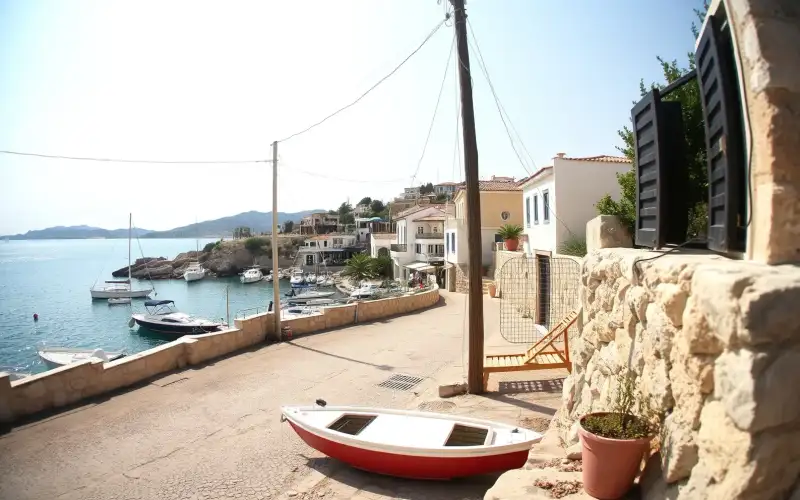
It was half past eight on a July morning when my wife turned to me over breakfast at our Paphos beachfront hotel and said: "I've counted seventeen sunbeds being arranged since we sat down." She wasn't exaggerating. The beach bar staff were moving with military precision, claiming prime real estate with towels and plastic loungers before guests had finished their coffee. Our children—then six and nine—were already restless, eyeing the water while we waited for the crush to thin out enough to find space. This was our third consecutive summer in Paphos town, and something had shifted. We weren't enjoying it anymore.
That afternoon, sitting in traffic on the main drag heading back to our hotel, I made a decision that would change how we travelled with our kids. We needed to find somewhere different. Somewhere that didn't require military strategy to enjoy a beach morning. Somewhere the rhythms of summer didn't revolve around peak hours and package tour schedules. Within a week, I'd rented a small house in Polis Chrysochous, a village thirty kilometres north of Paphos town, tucked against the Akamas forest. That decision—made almost impulsively—turned out to be the best family holiday choice we've made in a decade of Cyprus visits.
The Weight of Paphos Town in High Summer
I need to be fair here. Paphos town isn't a bad place. The archaeology is genuine, the harbour is charming at sunset, and the tavernas along the seafront serve decent grilled fish. But somewhere around 2019, it crossed a threshold. What had been a manageable resort destination became a bottleneck of tour groups, hire cars, and competing attractions all fighting for the same piece of waterfront real estate.
The beaches closest to town—Ktima Beach, Tombs of the Kings—fill by nine in the morning during July and August. Restaurants that once took walk-ins now require bookings three days ahead. The water sports operators have multiplied, so the sea itself is crowded with parasails and jet skis. For families with young children, this creates a specific problem: you're spending your holiday managing logistics rather than enjoying time together. You're negotiating with your kids about why they can't go swimming at three in the afternoon because the beaches are too crowded. You're sitting in your hotel room during peak hours because the town is too chaotic to navigate with a pushchair.
I'm not suggesting Paphos is overcrowded by Mediterranean standards. It's not Mykonos or the Costa del Sol. But for families accustomed to the slower pace of Cyprus—the real Cyprus, not the resort version—it feels claustrophobic. And if you're paying good money for a holiday, claustrophobic shouldn't be part of the deal.
Why Polis Works for Families: The Practical Case
Polis Chrysochous sits on the northwestern coast, roughly forty minutes' drive from Paphos airport depending on traffic. The village itself is home to perhaps 2,500 permanent residents, swelling to maybe 4,000 during peak summer when holiday homes fill up. It has one main street, a small supermarket, a handful of tavernas, a few hotels, and several family-run guesthouses. There's no nightlife to speak of. There are no water parks or theme attractions. There's no beach club culture.
What there is, instead, is space. Real, breathing, uncluttered space.
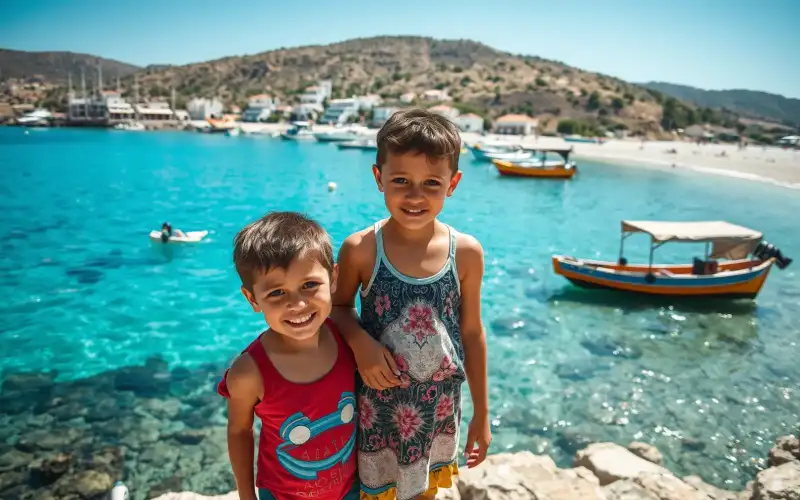
The beaches near Polis are nothing like the postcard Mediterranean you might imagine. The sand is pebbly rather than sandy—which sounds like a negative until you realise that pebble beaches warm differently, drain faster, and are easier to keep clean of sand when you're living out of a suitcase. Latchi Beach, five minutes' drive from the village centre, gets busy by ten in the morning, but never reaches saturation point. Even at peak times, you can find a spot with a clear view of the water. The sea is sheltered, which matters enormously when you're managing children. The water temperature in July and August reaches 27 degrees Celsius—warm enough that children will stay in for hours without complaint.
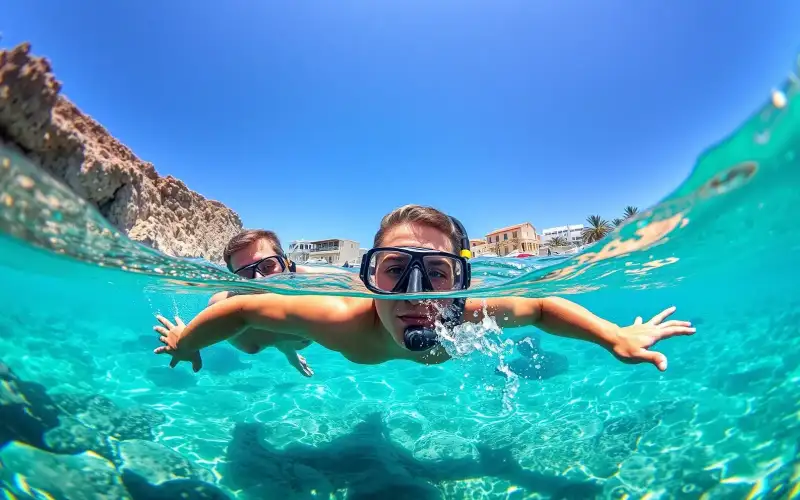
Last summer, my daughter spent an entire morning learning to snorkel in water so clear she could see the rocks on the bottom. There were maybe thirty people on the beach. Thirty. Not three hundred.
Accommodation That Doesn't Require Compromise
The hotel and guesthouse situation in Polis is fundamentally different from Paphos town. There are larger establishments—the Polis Chrysochous Hotel, the Akamas Studios—but most accommodation is family-run. Many are apartments rather than hotel rooms, which changes the holiday dynamic completely.
We rented a two-bedroom house through a local owner, Yiorgos, who lives in the adjacent cottage. The rent was 850 euros per week in July—less than half what we'd been paying for a three-star hotel room in Paphos. The house had a kitchen, so we could buy groceries from the supermarket, make breakfast without queuing for a buffet, and let the children eat on their own schedule rather than restaurant timings. There was a small courtyard where they could play safely while we had coffee. There was a washing machine, which sounds mundane until you're managing the laundry for a family of four over three weeks.
Yiorgos appeared on day two with fresh tomatoes from his garden and recommendations for where to find the best fish. He knew the plumber and the electrician and the doctor. He knew which taverna made proper moussaka and which one was just tourist-oriented. This kind of local knowledge—casual, freely given, earned through staying in one place rather than moving hotels—is worth more than any guidebook.
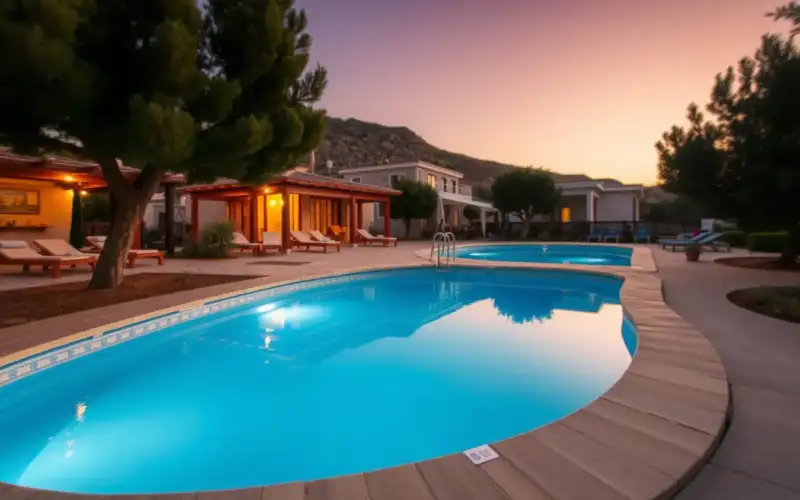
The accommodation options in Polis range from budget guesthouses at 40-50 euros per night for a double room to upmarket villas at 200-plus. The Polis Chrysochous Hotel offers proper hotel services at around 90 euros per night with breakfast included. The Akamas Studios provide apartments with cooking facilities from 70 euros. None of these are luxury options, but they're all clean, functional, and designed for people who want to stay put rather than treat accommodation as merely a place to sleep before heading out to attractions.
The Forest, the Quiet, and What Children Actually Remember
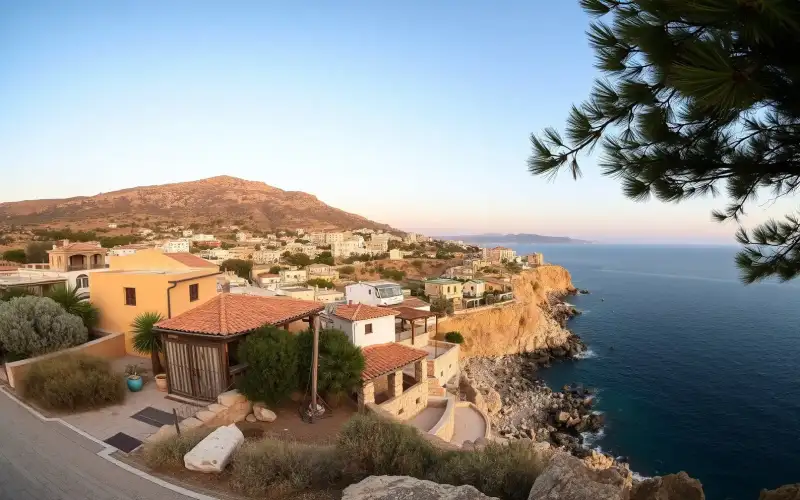
Behind Polis rises the Akamas Peninsula, a protected nature reserve covered in pine forest. This isn't incidental to the village's appeal—it defines it. The forest creates a natural boundary, a buffer against development and commercialisation. It also provides something increasingly rare in Mediterranean tourism: genuine, unhurried time in nature.
We took the children on three forest walks during our four-week stay. Nothing strenuous—the Akamas trails are well-marked and manageable for young walkers. But the experience of walking through pine forest in the cool of the early morning, stopping to watch lizards and listen to birdsong, is fundamentally different from sitting on a crowded beach. My son, who is ordinarily glued to screens, asked to go back twice. My daughter sketched trees and rocks in a notebook she'd brought. My wife and I walked without the background anxiety of managing crowds.
The quiet is the thing you notice most. Not silence—there's birdsong, wind in the pines, the sound of the sea—but an absence of commercial noise. No jet skis. No parasail boats. No music from beach bars. Just the ambient soundtrack of a place that hasn't been entirely engineered for entertainment.
The Practical Rhythm: How Days Actually Unfold
Here's how a typical day worked for us in Polis, which is quite different from Paphos town:
- Breakfast at home, seven to eight in the morning. We made coffee, the children had juice and bread from the local bakery. No queuing for a buffet. No negotiating table space. Thirty minutes of calm before the day properly started.
- Beach by eight-thirty. Latchi Beach at this time had maybe a dozen families. The water was still cool from the night. We'd stay for two hours, the children swimming while we read or watched the fishing boats. This was the quality time—undistracted, unhurried.
- Late morning errands. Walking to the supermarket, the post office, the bakery. This sounds mundane, but it's where you encounter the village. You see the same faces. The baker remembers your children's names. The supermarket owner asks how the water was. These micro-interactions create a sense of belonging that package holidays can't replicate.
- Lunch and rest, one to four in the afternoon. Back at the house. Sandwiches or leftovers. The children napped or played quietly. We had actual downtime—not the forced downtime of a crowded hotel lobby, but genuine rest.
- Late afternoon activity, four to six. Either another beach visit, a forest walk, or exploring a different part of the village. The heat had dropped enough to be comfortable. The beaches were clearing. We'd stay out until sunset, then head for dinner.
- Dinner at a taverna, eight in the evening. We'd eat at one of four or five tavernas within walking distance. All were family-friendly. All served proper Greek food. All cost less than half what equivalent meals cost in Paphos town. We'd sit outside, the children would play with other children, and we'd linger over food and wine without feeling rushed.
This rhythm—beach in early morning, rest in midday heat, activity in late afternoon, dinner in evening—is how Mediterranean summers should work. It's not revolutionary. It's not exotic. But it's fundamentally different from the Paphos town experience, where peak crowds force you into odd hours and compromise.
The Comparison: Polis Versus Paphos Town, Head to Head
| Factor | Polis Chrysochous | Paphos Town |
|---|---|---|
| Beach crowding (July-August, 10am) | Moderate, manageable | Heavy, challenging with kids |
| Accommodation cost (per night, family room/apt) | 60-100 euros | 120-200 euros |
| Restaurant booking requirement | Rarely needed | Often required 2-3 days ahead |
| Parking difficulty | Minimal | Significant in town centre |
| Ambient noise level (evening) | Quiet | Moderate to loud |
| Sense of local community | Strong, accessible | Diluted by tourism |
| Distance to quality beaches | 5-15 minutes drive | 15-30 minutes drive |
| Quality of taverna food | Traditional, family-run | Mixed, tourist-oriented |
This comparison isn't meant to suggest Paphos town is bad. It's meant to illustrate that Polis offers a fundamentally different kind of holiday experience. If you're seeking nightlife, archaeological attractions, and resort infrastructure, Paphos town delivers. If you're seeking space, quiet, family time, and authentic village life, Polis wins decisively.
What You're Not Getting in Polis (And Why That's Okay)
Full disclosure: Polis lacks certain things that appeal to some families. There's no water park. There are no mini-golf courses or bowling alleys or entertainment centres. There's one small supermarket, so if you're accustomed to choice, you'll adapt your shopping habits. The nightlife is nonexistent—there's no clubbing, no late-night bars, no live music venues. The beaches are pebbly rather than sandy. The wifi can be patchy depending on your accommodation.
For families who want activity-based holidays with scheduled entertainment, these absences matter. But for families like ours—parents in their forties and fifties, children who are reasonably self-entertaining, seeking genuine rest rather than constant stimulation—these aren't absences. They're features.
My wife put it perfectly on our final evening: "We haven't checked a single attraction off a list. We haven't done any of the things guidebooks say we should do. And we've had the best holiday we've had in years." That's the Polis difference. It's not about doing more. It's about being more present.
Practical Advice for Families Considering the Move
If you're thinking about trying Polis instead of Paphos town, here's what we learned:
- Book accommodation early. Even though Polis is quieter, the decent family-run places fill up by May for July and August. Guesthouses and apartment rentals go quickly. Hotels have more availability but less character.
- Rent a car. This is non-negotiable. Public transport in the Polis area is minimal. You'll need a vehicle to reach different beaches, do shopping, and explore. A small hire car costs 25-35 euros per day.
- Arrive with flexible expectations. You'll have less choice in restaurants, shops, and services. This isn't a problem; it's an adjustment. Come prepared to work with what's available rather than expecting everything to be available.
- Plan for genuine rest. This sounds obvious, but many families travelling to Mediterranean destinations pack their days with activities. In Polis, the appeal is having space not to do that. Plan for beach days where you do nothing but swim and read.
- Connect with locals. Stay in accommodation run by local owners if possible. Eat at family-run tavernas. Walk to the supermarket rather than driving. These interactions are where the real value of Polis emerges.
- Budget properly for food. Supermarket groceries are cheaper than restaurant meals. If you're renting accommodation with a kitchen, buy groceries for breakfasts and some lunches. This cuts your food costs significantly while giving you flexibility.
- Consider shoulder seasons. June and September are quieter than July-August, warmer than earlier spring months, and offer better value. The sea is still warm, the weather is stable, and the village isn't at capacity.
What This Means for Your Next Family Holiday
The choice between Polis and Paphos town isn't really about geography. It's about what kind of holiday you're actually seeking. If you want to see and do everything, if you want structured activities and entertainment infrastructure, if you want to say you've visited major attractions, then Paphos town delivers that. But if you want to actually rest, if you want your children to remember time together rather than time spent queuing, if you want to experience something of the real Cyprus rather than the resort version, then Polis offers something rare: space to breathe.
Three years on from that morning when my wife counted seventeen sunbeds being arranged, we've spent every summer in Polis. We've rented the same house twice—Yiorgos now saves the dates for us. Our children have favourite spots on the beach and favourite tavernas. We have rhythms and routines that feel genuinely restful. We're not ticking off attractions or managing crowds. We're simply spending time as a family in a place that doesn't demand anything from us except that we show up.
That's worth more than any resort promise, and it costs less too.
"We haven't checked a single attraction off a list. We haven't done any of the things guidebooks say we should do. And we've had the best holiday we've had in years." — A family's reflection on their Polis summer
Comments (4 comments)