
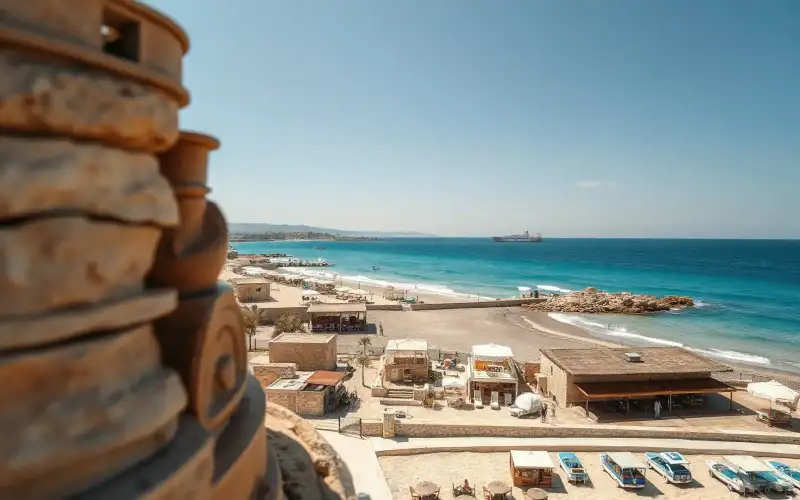
Last April, I watched a coach full of package tourists unload at Coral Bay's north end while a solitary couple with a dog wandered the quieter stretch near Paphos town's municipal beach half a kilometre away. Same sea, same limestone cliffs, entirely different experience. This is the choice facing most visitors to Paphos in 2026—and it's not a trivial one.
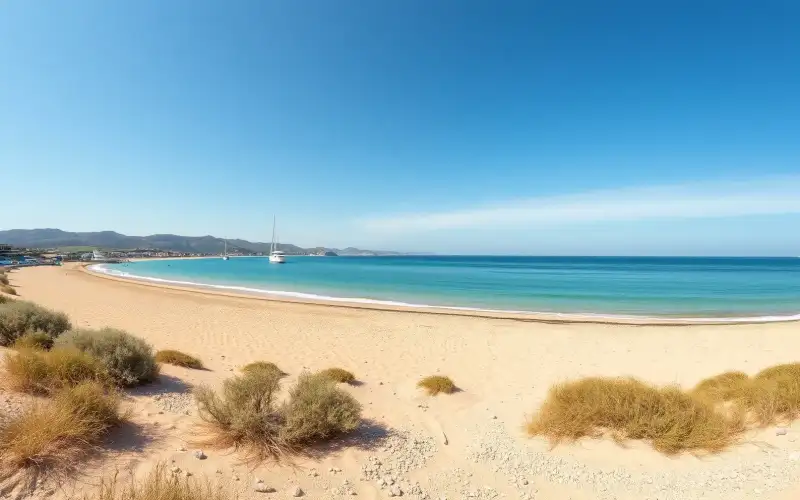
The two shores sit just 3 kilometres apart, yet they've evolved into entirely different propositions. Coral Bay has become the region's flagship beach: wide, organised, backed by tavernas and sunbed operators. Paphos town's beaches—there are actually three distinct stretches along the seafront—remain closer to what Paphos was before the boom: quieter, more local, less manicured. Neither is objectively better. But they suit radically different kinds of traveller.
The Headline Numbers: What the Data Shows
Let's start with the raw facts, because they matter when you're planning a day by the sea.
Coral Bay receives approximately 15,000–18,000 visitors on a peak summer day (July–August). The beach itself spans 600 metres of sand at high tide, narrowing to about 300 metres at low tide. The car park holds 800 spaces and typically fills by 10:30 a.m. on weekends. Peak season runs May through September, with July and August being genuinely rammed.
Paphos town beaches collectively see around 3,000–5,000 daily visitors in peak season, spread across three separate areas: the main municipal beach (150 metres), the Lighthouse Beach (200 metres), and the quieter eastern stretch near the old harbour (250 metres). Parking is free and abundant—there are at least 400 spaces within a 5-minute walk, and I've rarely seen them full, even in August.
Temperature and water conditions are identical—both sit in the same bay, after all. Sea temperature peaks at 28°C in August and drops to 16°C in February. Both beaches face south-west, so afternoon wind can kick up a chop by 4 p.m. in summer.
Facilities and Infrastructure: What You Actually Get
Here's where the two shores diverge most sharply.
Sunbeds, Umbrellas, and Organised Space
Coral Bay operates a formal sunbed system. Expect to pay €6–8 per sunbed, €4–5 for an umbrella, or €12–15 for a double lounger with shade. Most of the beach is divided into sections run by different operators, and they're fairly strict about boundaries. You cannot simply plonk yourself down; you either rent or find the small free zones (usually the far north or south end, where sand quality drops). On a hot July day, renting a bed and umbrella for two people costs roughly €25–30 for eight hours.
Paphos town beaches operate differently. There are sunbeds available—usually €5–6 per bed, €3–4 for umbrella—but they're not mandatory. Large stretches of sand, particularly the eastern beach and parts of the municipal beach, remain completely free and unmanaged. You can bring your own towel, sit where you like, and pay nothing. This matters more than you might think if you're on a tighter budget or simply prefer not to be corralled.
Facilities: Showers, Toilets, Cafes
Coral Bay has well-maintained public facilities. There are two main beach bars/tavernas (Coral Bay Taverna and Blue Lagoon), both with proper kitchens serving mains from €12–18. Toilets are clean, showers are hot, and there's a small kiosk selling sunscreen, snacks, and beach toys. Lifeguards are present daily in summer. The beach is EU Blue Flag accredited, which means water quality is regularly tested and standards are enforced.
Paphos town beaches are less formally provisioned. The municipal beach has a single taverna (Pambos) with decent food but limited menu—mostly grilled fish and souvlaki, €8–14. Toilets exist but are basic; showers are cold (or absent on the eastern beach). No lifeguards in 2026, though the water is shallow and generally calm. The Lighthouse Beach has a small café-bar, good for coffee but not meals. This is genuinely a slower, less-serviced experience.
Parking and Access
Coral Bay: €2–3 per day in the main car park, which fills early. Once full, you're directed to an overflow lot 400 metres away. No paid parking enforcement on Sundays, so locals often fill spaces then. Wheelchair access is reasonable—there's a ramp and accessible toilets.
Paphos town: Free parking, as mentioned. The municipal beach has a small lot right beside it; Lighthouse Beach has street parking; the eastern beach is a 5-minute walk from the old harbour car park. No wheelchair ramps on any of the three, though the municipal beach is flat and easy to access on foot. This is a significant factor if mobility matters to you.
Crowds, Noise, and Atmosphere: The Experiential Difference
Numbers don't capture everything. Let me describe what you actually encounter.
Coral Bay in Peak Season
On a Saturday in July, Coral Bay is busy in the way a popular British seaside resort is busy. Sunbeds are packed tightly. Children play in shallow water while parents recline. Taverna staff weave between loungers taking orders. Music from competing beach bars creates a low-level soundtrack. The water itself is clean and warm, but you're sharing it with 200–300 other swimmers at any given moment. Snorkelling is possible—the bay has decent rocky outcrops—but you'll be doing it alongside others.
The vibe is holiday-camp: sociable, energetic, family-oriented. Lots of package tourists, school groups in June, retirees from Northern Europe. Conversation happens in German, Dutch, Russian, and English. It's fun if you want company and entertainment. It's exhausting if you want solitude.
The beach empties significantly after 4 p.m. when the afternoon wind picks up and people head for dinner. By 6 p.m., it's half-full. This is actually a golden window if you can time it—the light is beautiful, the water is still warm, and the crowds have thinned.
Paphos Town Beaches: A Different Rhythm
The municipal beach, even in August, never feels crowded. You might see 40–50 people across its 150-metre span. Conversations are quieter. Families are present, but so are couples, solo travellers, and locals who pop down for a swim on their lunch break. There's a genuine mix of ages and nationalities, but no sense of being herded.
The Lighthouse Beach is quieter still—perhaps 20–30 people on a summer day. It's a good spot if you want to read undisturbed. The eastern beach near the old harbour is the slowest: locals sometimes outnumber tourists. You'll hear Greek being spoken, smell the catch from the fishing boats, and feel like you've stumbled into something real rather than a curated experience.
Noise levels are dramatically lower. No competing music, no shouted drink orders. The dominant sound is waves, wind, and the occasional scooter from the seafront road. This matters profoundly if you're seeking what I call the
Comments (5 comments)