
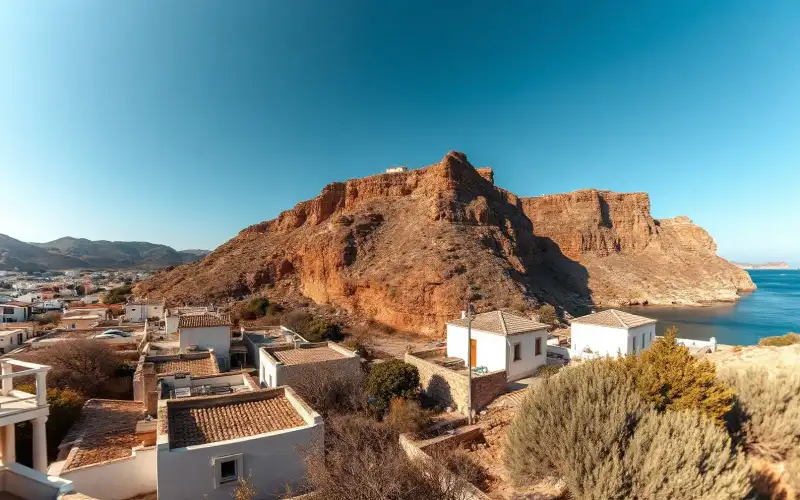
I drove past Pomos for the first time in 2014 and didn't stop. The road north from Paphos climbs steadily, the landscape becomes wilder, and most visitors simply press on toward Akamas or turn back toward the resorts. That was the moment I realized I'd found something the tour operators hadn't yet packaged.
Twelve years later, Pomos remains exactly what it was then—a working fishing village with a handful of tavernas, a primary school, and a population that genuinely prefers it that way. Pachyammos, another 8 kilometres northeast along the coastal road, is even quieter: essentially a collection of stone houses, a church, and an uninterrupted view of the Aegean. Together, these two settlements represent what the Paphos coast looked like before mass tourism arrived. They're not undiscovered—locals have always known—but they remain refreshingly unmanicured.
1. Getting There Without the Tourist Trail
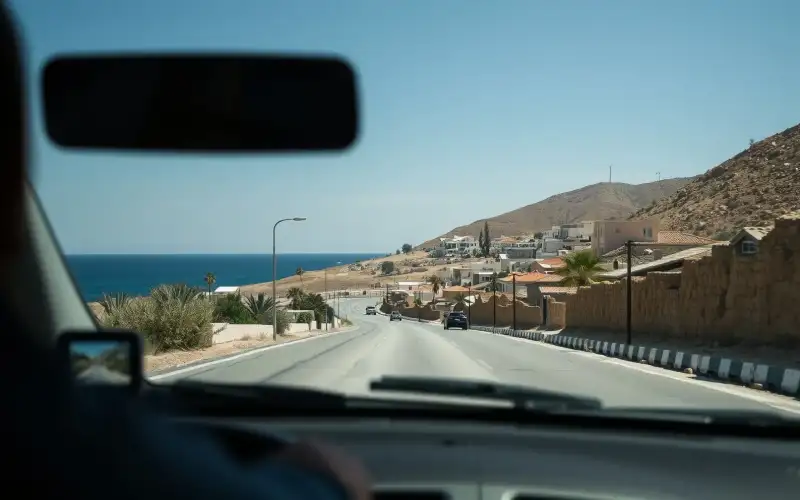
The drive from Paphos town takes roughly 45 minutes to Pomos, depending on traffic leaving the city. You'll climb through Stroumbi and Kannaviou, past almond and carob groves, before the landscape opens into scrubland and Mediterranean pine. The road is well-maintained but narrow in places; a standard hire car handles it easily, though the journey feels remote enough that you'll understand why most visitors never make it.
Public transport exists but runs infrequently. The OSYPA bus service operates a route from Paphos, but schedules are sparse—typically two departures daily—and journey times stretch to 90 minutes with stops. If you're staying in Coral Bay or the Akamas peninsula, Pomos becomes a natural waypoint rather than a detour; it's roughly 20 kilometres northeast from Coral Bay, accessible via the coastal road that winds through Peyia.
Parking in both villages is straightforward. There's no formal car park in Pomos, but spaces line the waterfront and the small square near the tavernas. Pachyammos has even fewer vehicles; you'll likely be alone in whatever spot you choose. The absence of parking chaos is itself a relief after navigating Paphos harbour.
2. Pomos: The Working Village That Hasn't Changed the Script
Pomos's identity is entirely bound to fishing. The small harbour holds perhaps a dozen working boats, and you'll see nets drying on the waterfront most mornings. The village has no resort infrastructure, no beach clubs, no parasol rentals. What it has is authenticity that money can't manufacture.
The main taverna cluster sits directly on the water. Taverna Akti, the largest, serves straightforward meze and fresh fish at prices that feel almost guilty—a full meal with wine for two rarely exceeds €35. The kitchen sources from the boats you see outside; order whatever was caught that morning rather than consulting the menu. I've had octopus here that was grilled within hours of being landed, a textural and flavour difference that makes most restaurant seafood taste processed by comparison.
A smaller operation, Taverna Poseidon, occupies a quieter spot slightly set back from the water. It's family-run, operating since the 1980s, and the owner's daughter sometimes works the tables. The wine list is deliberately limited—a house white from a local producer near Tillyria, a Cypriot red, and whatever the owner felt like buying that week. This lack of choice is oddly liberating. You drink what's there, it pairs perfectly with grilled fish, and you move on.
The village church, dedicated to Agios Georgios, sits on a small rise above the harbour. It's modest, whitewashed, and open most afternoons. The interior contains a handful of icons and a visitor's book where previous travellers have left notes in a dozen languages. There's no entrance fee, no donation box pressure, just the quiet of a working place of worship that predates tourism by centuries.
3. Pachyammos: Where the Road Nearly Ends
Pachyammos sits 8 kilometres further along the coast road, and the journey feels like leaving the inhabited world. The settlement consists of perhaps 20 houses, most occupied only seasonally. There's a small taverna—Taverna Pachyammos—that operates erratically; call ahead if you're planning to eat there, as the owner sometimes closes for weeks at a time. The food, when available, is exceptional: home-cooked meze, grilled fish, and wine that tastes like it was made for that specific table.
The real attraction here is the landscape and the sense of isolation. The coastline north of Pachyammos becomes increasingly dramatic—limestone cliffs rise 200 metres or more, and the water below is crystalline enough that you can see 15 metres down on calm days. There are no organized water sports, no jet-skis, no banana boats. What you have is silence, the sound of waves, and occasionally a fishing boat moving slowly past.
A rough path leads north from Pachyammos toward Cape Drepano, following the cliff edge. It's not maintained, and sections require careful footing, but the walk takes you through landscape that feels genuinely untouched. The flora changes as you climb—low scrub gives way to taller pine, and in spring, wildflowers create pockets of colour against the brown earth. This is the Paphos that existed before the airport expanded.
4. Water Access Without the Circus
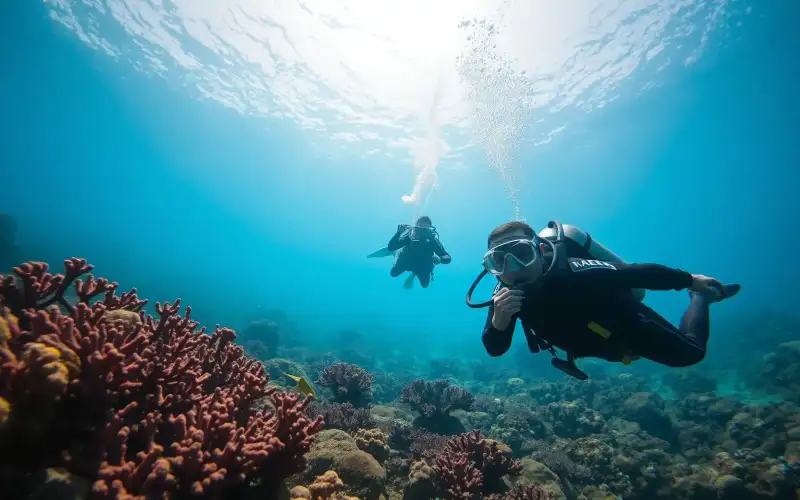
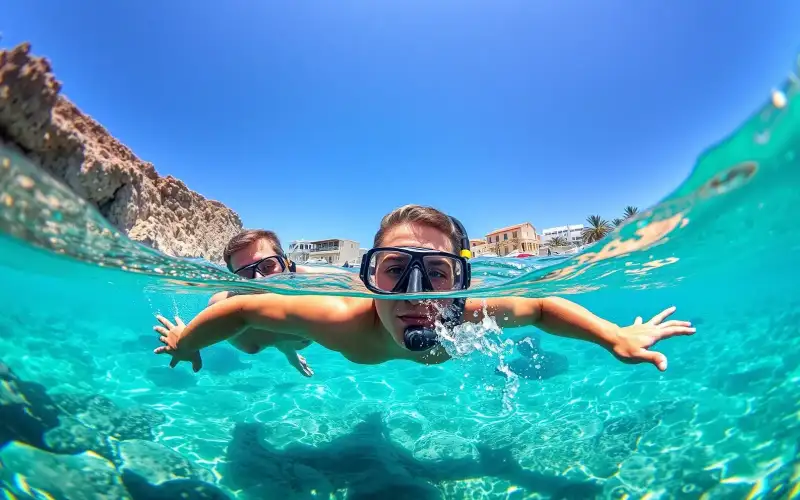
Neither village offers organized water sports in the conventional sense. There are no dive shops, no parasailing operators, no jet-ski rental facilities. If you're seeking that kind of activity, Coral Bay and Paphos harbour remain your destinations. But both Pomos and Pachyammos offer something increasingly rare: unsupervised access to genuinely clean water, with the option to swim or snorkel without an audience.
Pomos harbour itself is swimmable, though the bottom is rocky and you'll want water shoes. The water temperature ranges from 16°C in winter to 27°C in August; even in shoulder seasons, it's bearable. The small beach east of the village, beyond the last taverna, is sandier and offers gentler entry. Local fishermen swim here regularly, which is a reasonable proxy for water quality.
Pachyammos offers a more dramatic swimming experience. A small cove immediately below the village has a pebble beach and deep water just metres offshore. The approach involves scrambling down a steep path, but once you're in the water, you're genuinely isolated. I've swum here in late May when the water was still cool but the sun was intense enough that you dried within minutes of leaving the sea. The solitude is almost unsettling after years of crowded resort beaches.
For serious diving or snorkeling, you'll need to arrange transport to better-known sites. But both villages sit within reach of some of Paphos's less-dived reefs. A private boat operator from Pomos—ask at Taverna Akti—can arrange morning trips to nearby sites for around €60 per person, including basic snorkeling equipment. These are informal arrangements, not commercial dive operations, which means smaller groups and more flexibility.
5. The Wine Connection: Terroir at the Edge
This is where my sommelier background becomes relevant. The north Paphos coast sits within the broader Tillyria wine region, though few commercial producers operate this far north. The villages themselves don't produce wine, but they're surrounded by vineyards that do, and the terroir is distinctly different from the warmer, lower-altitude areas around Paphos town.
Elevation, proximity to the sea, and the particular limestone composition of the soil create wines with more acidity and mineral character than their counterparts 20 kilometres south. The white wines—primarily Xynisteri, a traditional Cypriot variety—have a salinity that's almost oceanic. I've had producers from Tillyria describe it as

Comments (5 comments)