
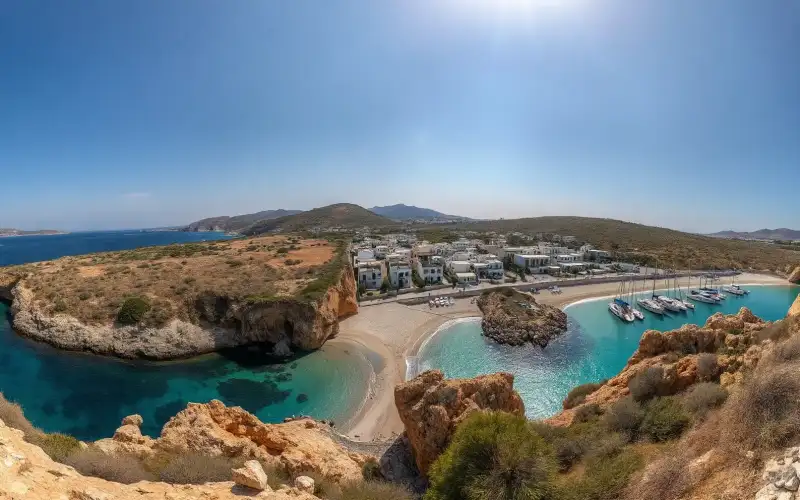
I first drove to Lara Bay in 1997 in a hired Hyundai Accent, which was a mistake of spectacular proportions. The vehicle made it about two kilometres before the undercarriage began singing a song it was never designed to sing. I abandoned it, walked the remaining eight kilometres, and discovered something that's stayed with me for nearly three decades: a beach so untouched it felt like trespassing on someone's private memory.
Lara Bay hasn't changed much since then, except that now you need to plan your visit with considerably more care. In 2026, access to this remote corner of the Akamas peninsula is tightly controlled, the tracks are rougher than ever, and the turtle nesting season carries legal weight. But if you're willing to do the homework, Lara Bay rewards you with something increasingly rare on the island: genuine solitude, crystalline water, and the chance to witness one of the Mediterranean's most important sea turtle breeding grounds.
The Access Reality: Four-Wheel Drive is Non-Negotiable
Let's start with the uncomfortable truth: you cannot reach Lara Bay in a standard hire car. The Cypriot authorities know this. The rental companies know this. Yet every summer, tourists show up in Nissan Micras and Peugeot 207s, looking confused and disappointed.
There are two established routes to Lara Bay, both requiring genuine 4WD capability and a driver comfortable with rough terrain. The journey isn't technically difficult—there are no river crossings or vertical climbs—but it demands respect.
Route One: Via Androlikou (The Northern Approach)
This is the most popular route, starting from the village of Androlikou in the Paphos foothills. From Paphos town centre, head north towards Stroumbi, then inland towards Androlikou. The drive takes roughly 45 minutes on paved road. Once you reach Androlikou, you'll find a small parking area where locals gather—this is your last point of conventional access.
From here, the track descends steeply towards the coast. The surface is predominantly limestone and compacted earth, with sections of loose stone that shift under acceleration. In summer 2025, after particularly dry months, the track was passable in two-wheel drive vehicles with high clearance, but this was the exception rather than the rule. In 2026, expect winter rainfall to have created ruts and washouts that demand proper 4WD engagement.
The descent takes roughly 90 minutes in good conditions, covering approximately 12 kilometres. Your average speed will be 8-10 kilometres per hour. There are no water crossings, but there are several steep sections where traction matters. The final two kilometres flatten out as you approach the beach, and you'll reach a small parking area just above the sand.
Route Two: Via Akamas (The Southern Approach)
The southern route enters the Akamas peninsula from the direction of Neo Chorion, following the coastal track that also serves Lara Bay's southern sister beach, Toxeftra. This approach is longer—roughly 70 kilometres from Paphos—but the track condition is marginally better and the descent less steep.
Starting from Paphos, head south towards Latchi, then follow signs for Akamas. The paved road ends at a small settlement, after which you'll join the main Akamas track. This route is popular with organised 4WD tours, so you may encounter other vehicles. The track quality varies significantly depending on recent maintenance; in early 2026, the Akamas Authority had begun repairs to sections damaged by winter storms.
The southern route offers one advantage: you can break the journey by stopping at Lara Bay's southern access point, which provides an alternative parking area if the main beach car park is full. However, the extra distance and time make this route less popular with independent travellers.
Vehicle Requirements and Rental Logistics
Not all 4WD vehicles are equal. You need a vehicle with genuine low-range gearing, adequate ground clearance (minimum 200mm), and tyres with proper tread depth. A Jeep Wrangler, Toyota Land Cruiser, or similar will handle the tracks comfortably. A Range Rover Sport will manage it, though the luxury suspension setup feels slightly out of place on a limestone track in the Akamas.
Rental companies in Paphos do offer 4WD vehicles, but availability is limited and prices reflect demand. In summer 2026, expect to pay €80-120 per day for a proper 4WD Jeep or similar. Several companies offer daily hire with unlimited mileage, which is essential for this journey. Budget car companies rarely stock 4WD vehicles; the specialist hire firms near Paphos airport are your best bet.
One critical detail: most rental agreements include a clause prohibiting use on unmaintained tracks. Technically, the Lara Bay tracks fall into this category. In practice, the authorities and rental companies maintain a quiet understanding that the route exists and is used. However, you should be aware that if your vehicle sustains damage on the track, your rental insurance may not cover it. Several travellers have faced disputes with rental companies over suspension damage following Lara Bay visits.
Essential Vehicle Checks Before Departure
- Tyre tread depth and pressure (underinflate slightly—5-10% below standard—for better traction on loose surfaces)
- Fluid levels: engine oil, coolant, brake fluid, and power steering
- Spare wheel, jack, and tyre repair kit
- Full tank of fuel; there are no petrol stations within 30 kilometres of Lara Bay
- Spare water and a basic tool kit
- Mobile phone fully charged; signal is patchy but present on both routes
Turtle Season: Dates, Restrictions, and Why They Matter
Lara Bay is one of the most important loggerhead and green turtle nesting sites in the eastern Mediterranean. Between May and August, female turtles emerge from the sea at night to lay eggs in the sand. This isn't a tourist attraction—it's a critical ecological process, and Cyprus treats it with appropriate seriousness.
From June 1st to August 31st, 2026, access to Lara Bay is severely restricted. The beach is closed to visitors between sunset and sunrise. Daytime visits are permitted, but only within specific zones marked by signs, and you must remain above the tide line. Artificial lighting is prohibited; if you're still on the beach at dusk, you must leave immediately. These rules are enforced by environmental officers who patrol the beach regularly.
The reasoning is straightforward: hatchlings emerge from nests at night and navigate towards the sea using the natural light of the horizon. Artificial light disorients them, causing them to wander inland where they perish. Even a mobile phone torch can be lethal to hundreds of hatchlings if used near nesting areas.
Outside nesting season—September through May—the beach is accessible without these restrictions, though the weather becomes considerably less predictable. Winter storms can make the access tracks treacherous, and the sea temperature drops below 16°C by December.
Nesting Season Timeline for 2026
| Period | Activity | Visitor Restrictions |
|---|---|---|
| June 1–July 15 | Peak nesting activity; 60–80 nests active | Daytime only; marked zones only; no lights after dusk |
| July 16–August 31 | Hatchling emergence; nests hatching nightly | Daytime only; marked zones only; strictly enforced; expect environmental patrols |
| September–May | No nesting activity | Full beach access; no restrictions |
I've visited Lara Bay during late August, when hatchling season is at its peak. The experience is surreal: you walk the beach in daylight, seeing dozens of marked nesting sites, imagining the thousands of eggs buried beneath your feet. Then, as the sun drops towards the horizon, you're ushered away by an environmental officer. It's a reminder that some places matter more than our desire to photograph them at sunset.
The Optimal Visit: Timing, Logistics, and What to Bring
The best time to visit Lara Bay depends on your priorities. For turtle-watching, late June through early August offers the highest probability of seeing hatchlings at night—but you can't stay after dark. For solitude and comfort, May and September are ideal: warm enough for swimming, minimal crowds, no turtle restrictions, and the tracks are generally in better condition than in winter.
Plan your visit for a full day. The drive from Paphos takes 2.5 to 3 hours each way, plus the time spent on the beach. Most visitors allocate 6-8 hours total, including the drive. Arrive early—ideally by 9:00 AM—to secure a parking space. The car park holds roughly 20-25 vehicles, and it fills quickly in peak season.
What to Pack: The Realistic Checklist
Lara Bay offers no facilities. There are no cafes, no toilets, no shade structures, and no fresh water. You are entirely self-sufficient from the moment you leave your vehicle.
- Water: Minimum 3 litres per person. The sun reflects intensely off the pale sand, and dehydration creeps up quickly.
- Sun protection: High-SPF sunscreen, hat, and sunglasses. The UV index at Lara Bay is severe; even brief exposure causes damage.
- Food: Pack substantial meals, not snacks. The physical effort of the drive and the heat deplete energy rapidly.
- Swimwear and towel: The water is clean and refreshing, but there's nowhere to dry off except the sun.
- Footwear: The sand is fine but hot. Flip-flops are essential for the walk from the car park to the water.
- Waste bags: There are no bins. Everything you bring, you must carry out. This isn't optional.
- First aid kit: Minor cuts and scrapes are common on the tracks. Include blister treatment and pain relief.
- Mobile phone power bank: Signal is intermittent, and a fully charged phone is essential for navigation and emergencies.
The Reality on Arrival: What the Beach Actually Offers
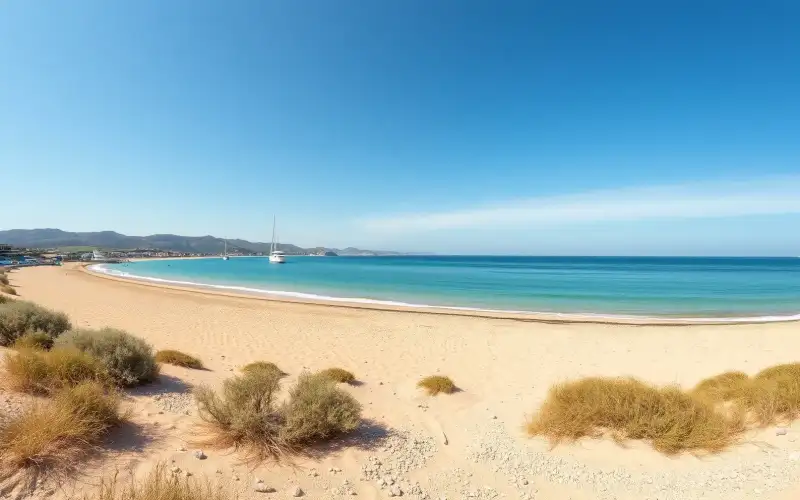
Lara Bay is genuinely beautiful, but it rewards honesty about what it is and isn't. It is not a postcard beach with turquoise water and white sand. The sand is pale beige, fine, and extensive—the beach stretches roughly 900 metres along the coast. The water is clear and clean, ranging from deep blue in deeper sections to pale turquoise near the shore. In calm conditions, visibility extends 15-20 metres underwater.
What makes Lara Bay distinctive is the sense of genuine remoteness. You're standing on a beach where fewer than 100 people have stood that day, in a landscape that hasn't been significantly developed in decades. The cliffs behind the beach are dramatic limestone formations, largely barren except for hardy scrub vegetation. There's no music from beach bars, no vendors, no noise except wind and waves.
The beach shelves gradually; you can wade out 50 metres and still be waist-deep. This makes it safe for swimming, but also means the water remains cool—typically 19-21°C in summer, dropping to 16°C by autumn. The sea floor is sand, occasionally rocky, but generally forgiving.
What to Actually Do There
Lara Bay isn't designed for activity tourism. There's no snorkelling infrastructure, no water sports, no organised entertainment. What you do is: swim, read, think, observe the landscape, and occasionally spot wildlife. In late afternoon, kestrels hunt the cliffs above the beach. Occasionally, you'll see cormorants diving offshore. During turtle season, environmental officers sometimes give impromptu talks about nesting activity.
Many visitors arrive expecting the beach to be more dramatic than it is. They photograph it, spend an hour in the water, eat lunch, and leave. That's valid. But the travellers who stay longer—who sit quietly for several hours, watching the light change on the cliffs and the water patterns shift—tend to understand why the effort to reach Lara Bay is worthwhile.
Track Conditions and Seasonal Variations
The Lara Bay tracks change significantly with seasons. In summer, after months of dry weather, the limestone surface hardens and can be navigated by vehicles with reasonable ground clearance and careful driving. By late summer 2025, some sections of the Androlikou route were passable in high-clearance two-wheel-drive vehicles, though this isn't recommended.
Winter rainfall transforms the tracks. From November through March, expect deep ruts, loose stone, and sections where water drainage creates temporary streams. The Androlikou route becomes genuinely challenging; the southern Akamas route is marginally more stable but still demanding. In 2026, the heaviest rainfall occurred in February, and track conditions remained difficult until May.
Spring (April-May) offers a balance: the tracks have dried enough to be manageable, but winter damage is still visible. Summer (June-August) is optimal for track conditions, though crowds increase and turtle restrictions apply. Autumn (September-October) is pleasant, with warming water and drying tracks, though occasional storms can make conditions unpredictable.
Practical Logistics: Timing Your Journey
The drive to Lara Bay should never be rushed. Plan to leave Paphos by 7:00-7:30 AM if you want to arrive by 10:00 AM. This allows buffer time for navigation, vehicle checks, and unexpected delays on the track. Driving in the dark is possible but inadvisable; the tracks offer no lighting, and navigation becomes genuinely difficult.
The return journey should begin by 4:00 PM at the latest, ensuring you're back on paved roads before dusk. The final kilometres of the Androlikou track are steep and require daylight visibility for safe driving. Several accidents have occurred when drivers attempted the descent in poor light.
Mobile signal is patchy but generally available. Both routes pass through areas with Cyprus Telecommunications Authority (CyTA) coverage, though signal strength varies. Download offline maps before departure; GPS navigation apps like Maps.me work well, but relying on live data is risky.
The Honest Assessment
Lara Bay is worth the effort if you value solitude, natural beauty, and the experience of reaching a genuinely remote location. It's not worth the effort if you're seeking comfort, facilities, or dramatic scenery that photographs well on Instagram. The beach is beautiful in a subtle way—the light, the scale, the emptiness—rather than in a striking, obvious way.
The drive is manageable for anyone comfortable with 4WD vehicles and rough terrain, but it demands mechanical sympathy and attention. The tracks aren't dangerous if treated with respect, but they're unforgiving of carelessness.
And the turtles: they're the real reason the place exists as it is. The restrictions, the difficulty, the remoteness—they're all there because this beach matters to a species struggling to survive. Respecting that, understanding why you're being asked to leave at sunset or stay in marked zones, transforms the visit from a tick on a bucket list into something more meaningful.
For British travellers seeking the slower side of Cyprus, the kind of experience that justifies the journey away from the developed coast, Lara Bay delivers exactly that. Just bring water, respect the rules, and don't rent a Micra.
Comments (4 comments)