
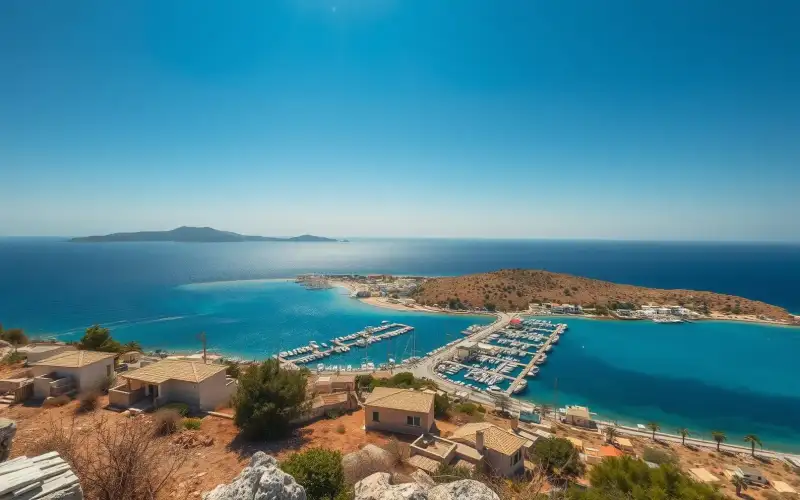
I was sitting outside a small kafeneion in Pomos last October, watching a man in his eighties argue cheerfully with a cat about the last piece of loukoumades, when it occurred to me that nobody else had walked past in forty minutes. Not a tourist, not a rental car, not even a delivery van. Just the old man, the cat, and a view of the Akamas peninsula dissolving into afternoon haze. Twelve kilometres to the east, in Polis Chrysochous, there would have been people on bicycles, a queue at the bakery, perhaps a yoga retreat checking in at one of the new boutique guesthouses. Both scenes are Cyprus. Both are the north coast. But they are not the same holiday.
For anyone planning a slow week somewhere between the Akamas wilderness and the Tillyrian hills in 2026, the choice between Polis and Pomos is worth thinking through properly. They're close enough to visit each other in an afternoon, yet far enough apart in character that picking the wrong one could leave you either understimulated or quietly overwhelmed, depending on what you came for.
Polis Chrysochous: The Sociable Slow Town
Polis — full name Polis Chrysochous, meaning City of the Golden Soil — is the largest settlement on this stretch of coast, though calling it large is generous. The population hovers around 2,000. There's a central square shaded by old trees, a small archaeological museum that takes a pleasant hour to explore, a handful of proper restaurants and a Thursday market that draws people from villages across the region. By the standards of Paphos or Limassol, it's a backwater. By the standards of the north coast, it's a metropolis.
The Beach at Polis
The beach most visitors associate with Polis is actually at Latchi, a fishing harbour about two kilometres west of the town centre. Latchi itself is a scattering of seafood restaurants along a working quay, and the beach — a mix of sand and fine shingle — stretches north from there towards the Akamas. In high summer it fills up, but outside July and August you can find a quiet stretch without difficulty. The water is exceptionally clear; the Akamas peninsula acts as a natural barrier against development, keeping the seabed clean. In May and September, which I'd argue are the best months for this coast, the sea temperature sits around 22–24°C — warm enough to swim without drama, cool enough to feel refreshing.
Eating and Drinking in Polis
The restaurant scene in Polis has improved considerably over the past few years. Arsinoe Fish Tavern in Latchi remains the benchmark for grilled fish — the tsipoura (sea bream) is usually caught locally, and the meze here runs to around €18–22 per person including house wine. In the town square itself, a couple of cafés open early and stay open late, which matters if you're the kind of traveller who wants coffee at seven in the morning and a cold Keo at ten at night. There's also a small supermarket, a pharmacy, and a baker who produces an excellent sesame-crusted loaf that I have been known to eat entirely in one sitting.
Walking from Polis
This is where Polis earns its place on any slow traveller's shortlist. The Aphrodite Trail — a 7.5km circular walk through the Akamas — starts from the Baths of Aphrodite, roughly four kilometres north of Latchi. It's waymarked, moderately challenging, and takes three to four hours at a comfortable pace. There's also a network of shorter nature trails around the Polis Forest that are largely ignored by visitors, which means you can walk for two hours in the company of nothing but cistus scrub and the occasional hoopoe. The E4 European long-distance path passes through the area, giving more ambitious walkers a route that threads all the way to the Troodos foothills.
Staying in Polis: Apartments and Villas
The rental market in Polis has matured noticeably. In 2026 you'll find a range of self-catering options from simple studio apartments (around €50–70 per night in shoulder season) to well-appointed two-bedroom villas with private pools in the surrounding countryside (€130–200 per night). For families or groups of four to six people, a villa with a pool and a kitchen makes particular sense here — you can self-cater most meals using the market and the supermarket, eat out twice, and the week becomes genuinely affordable. The Polis campsite, one of the few proper campsites left in Cyprus, is also worth knowing about if you're travelling light.
Pomos: The Village That Asks Nothing of You
Pomos sits on a small headland about twelve kilometres west of Polis, depending on which road you take through the hills. The drive itself is half the experience — the road from Polis winds up through carob and pine, drops to the coast at Gialia, then follows the clifftop into Pomos with the sea dropping away to the left in shades of green and dark blue that seem almost implausible on a clear day.
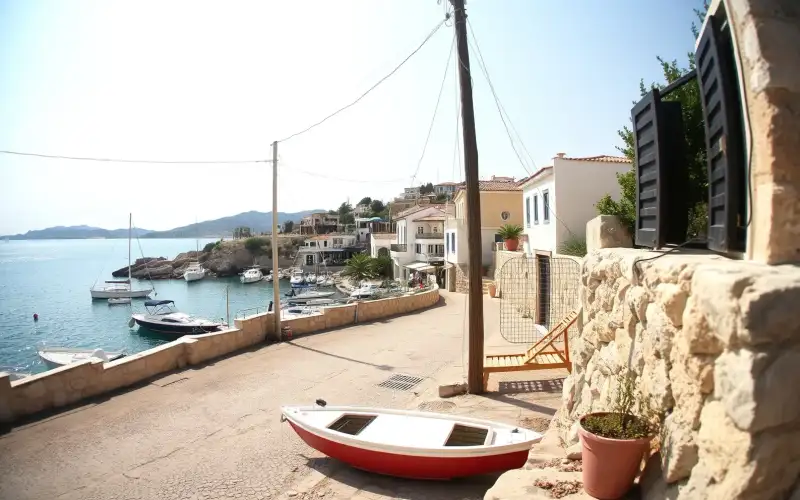
The village has a population of perhaps 200 permanent residents. There is one taverna — sometimes two, depending on the season and the owner's mood. There is a small harbour with a handful of fishing boats. There is a church, a few narrow streets, and a view from the headland that I would put against almost anything on this island for sheer, uncomplicated beauty.
The Beach at Pomos
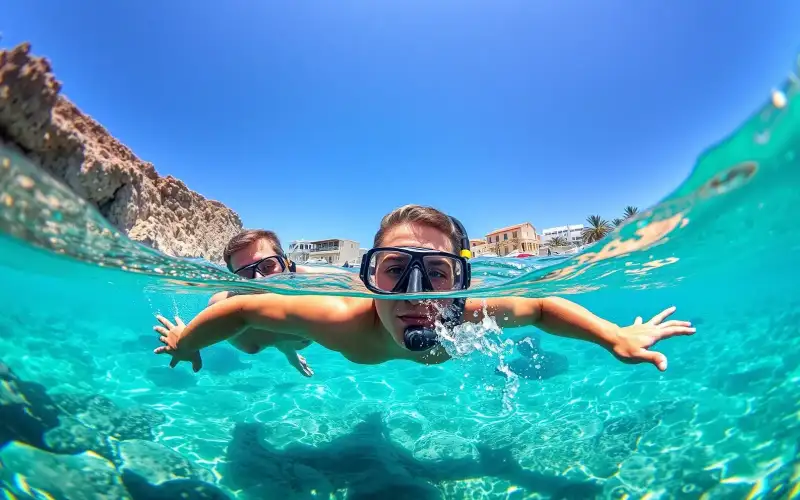
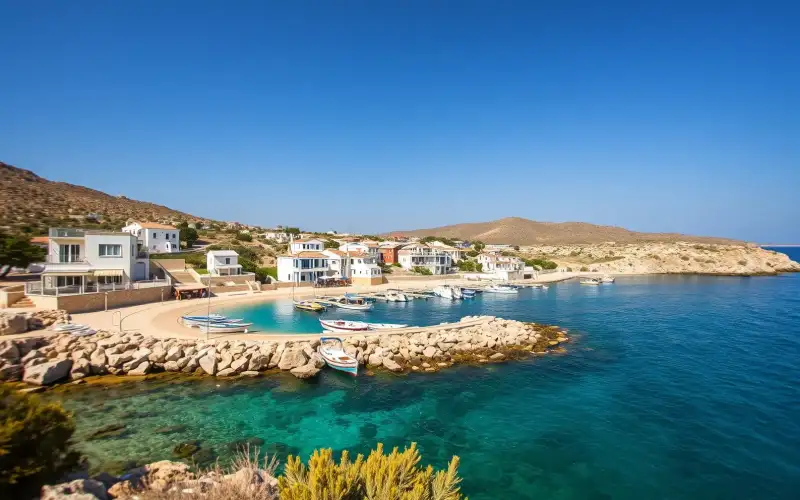
Pomos doesn't have a beach in the conventional sense. What it has is a series of small rocky coves accessible from the coast road, with water that is absurdly clear and almost entirely free of other people. The swimming is excellent if you're comfortable with rock entries — there are a couple of spots where flat ledges make getting in and out straightforward. About two kilometres east of the village, a small sandy cove at Gialia offers something closer to a traditional beach experience, though the facilities extend to a bin and a sign, and nothing more. This is not a criticism.
Eating in Pomos
The taverna situation in Pomos requires a certain flexibility of spirit. Pomos Fish Tavern (it's known by various names locally; ask for the one by the harbour) serves fresh fish, grilled meat and the kind of village salad — enormous, dressed with local olive oil, heavy on the olives — that makes you wonder why you ever eat anything else. Prices are lower than Latchi: a full fish meal with wine comes in at €14–18 per person. The catch is that it's not always open. Calling ahead, or simply accepting that you might end up eating bread and cheese on the headland, is part of the deal. The bread and cheese option, for what it's worth, is not a hardship.
Walking from Pomos
The coast path between Pomos and Pachyammos to the west is one of the least-walked stretches of coastline in the whole of Cyprus. It's rough in places — this isn't a manicured trail — but the rewards are significant: sea caves, wild thyme, views back to the Pomos headland, and the near-certainty of seeing nobody else. The round trip takes about three hours. There are also informal paths up into the Tillyrian hills behind the village, though these are best attempted with a decent map and some experience of navigating without waymarks.
Side by Side: How They Compare
| Feature | Polis Chrysochous | Pomos |
|---|---|---|
| Population | ~2,000 | ~200 |
| Beach quality | Sand and shingle at Latchi, good facilities | Rocky coves, exceptional water clarity, no facilities |
| Restaurants | 5–8 options including Latchi | 1–2, seasonal, call ahead |
| Walking trails | Waymarked, varied, Akamas access | Rough coastal path, unmarked hill tracks |
| Self-catering infrastructure | Supermarket, bakery, market (Thursdays) | Nothing in-village; nearest shops in Polis |
| Villa/apartment rental availability | Good range, €50–200/night | Very limited; a handful of properties |
| Mobile signal | Reliable 4G | Patchy; some dead zones |
| Atmosphere | Relaxed small town | Genuinely remote village |
| Best for | Families, first-timers, active walkers | Couples, repeat visitors, serious escapists |
The table makes it look like a straightforward choice between convenience and authenticity, but that framing isn't quite right. Polis is authentic too — it's just authentic in a way that accommodates visitors without making them feel like they're intruding. Pomos is a place where you are, unmistakably, a guest in someone else's ordinary life.
The Practical Question: Where to Stay
For most travellers, the accommodation decision shapes everything else. In Polis, the self-catering market is established enough that you can book with confidence through the usual channels. A two-bedroom apartment in the town itself gives you walking access to the square and the Thursday market; a villa in the surrounding countryside — places like Prodromi or Goudi, both within ten minutes by car — gives you more space and privacy while keeping Polis and Latchi easily reachable.
In Pomos, the rental options are thin. There are a handful of privately let houses and apartments, and occasionally a larger villa on the outskirts, but you need to search specifically and book early. The upside is that what exists tends to be genuinely characterful — old stone houses with terraces facing the sea, the kind of property that photographs beautifully but is really about how it feels to sit on that terrace at six in the morning with a coffee. If you find something in Pomos, take it. If you can't, consider basing yourself in Polis and driving to Pomos for the day — it's twenty minutes on a road that's a pleasure to drive.
The north coast of Cyprus has a particular quality of light in the late afternoon — amber and very still, as if the day is deciding whether to end. You notice it more in Pomos than anywhere else, because there's nothing competing for your attention.
Pace, Rhythm and What You Actually Want
The honest question to ask yourself before booking is not which village is better, but which version of slow travel you're after. Polis offers structure within slowness: there are things to do, places to eat, walks with maps and waymarks, a market on Thursdays. You can have a genuinely unhurried week and still feel like you've engaged with a place. It suits couples who want to walk in the mornings and eat well in the evenings, families who need a supermarket and a beach with calm water, and first-time visitors to the north coast who want to feel the pace drop without losing all handholds.
Pomos is for people who already know what they're doing with silence. It's for the traveller who has been to Polis, loved it, and now wants to go further — not in distance, but in depth. It rewards those who can fill a day with a long swim, a slow lunch, an afternoon walk and a glass of wine on a terrace without needing anything else to happen. That's not a criticism of anyone who finds that insufficient; it's just an accurate description of what Pomos offers and what it doesn't.
I have a small property in Polis, and I still drive to Pomos at least twice a week when I'm there. Not because Polis lacks anything, but because Pomos reminds me why I came to this coast in the first place.
Which One to Choose in 2026
If you're planning a week on the north coast of Cyprus in 2026 and you're reading this because you genuinely can't decide, here's a practical framework:
- Choose Polis if you're travelling with children, if self-catering logistics matter to you, if you want reliable access to the Akamas walks, or if this is your first time on the north coast and you want a gentle introduction to its rhythms.
- Choose Pomos if you're a couple, if you've been to Polis before, if the idea of a taverna that might not be open strikes you as charming rather than alarming, or if you actively want to be somewhere that most tourists have never heard of.
- Consider both — base yourself in Polis, rent a car, and spend two or three days driving the coast road west, stopping at Pomos, continuing to Pachyammos, and seeing how far the road goes before you feel compelled to turn back.
The north coast of Cyprus is still, in 2026, one of the least-visited stretches of Mediterranean coastline within a four-hour flight of London. Both Polis and Pomos are part of that. The difference is one of degree, not of kind. Go to either and you'll find yourself slowing down within twenty-four hours, eating better than you expected, sleeping more deeply than you have in months. Go to Pomos and you might also find yourself arguing with a cat about the last piece of loukoumades — and not minding at all that nobody is watching.

Comments (4 comments)