
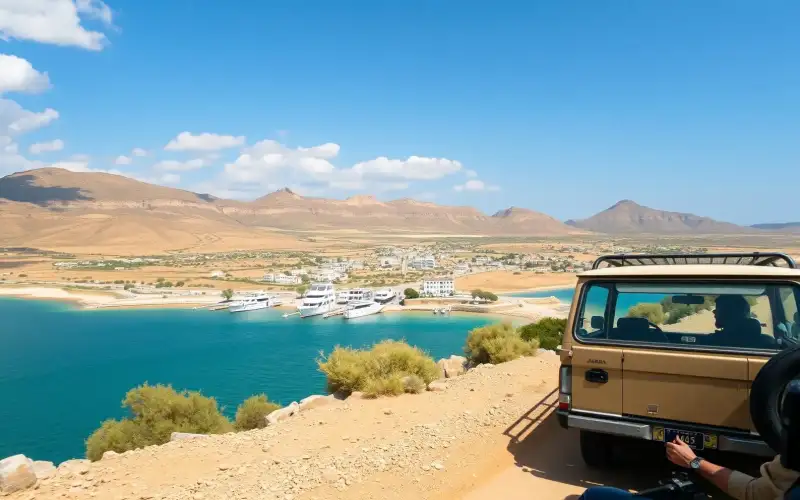
Three hours into a February morning, dust coating everything from boot-laces to eyelashes, you're negotiating a rocky creek bed in the Akamas Peninsula while a Troodos mountain hawk circles overhead. The jeep ahead has disappeared around a bend of limestone and scrub oak. Your driver—a taciturn Cypriot named Stavros who seems to communicate mainly through gear changes—points wordlessly toward a narrow gorge. This is the Akamas as most tourists never experience it: raw, demanding, genuinely wild. And it's precisely why more than 8,000 visitors a year now arrive in the Paphos region specifically to bounce across these 45 square kilometres of protected landscape.
The Akamas Peninsula has transformed dramatically since I first visited in 2019. What was then a destination for committed adventurers and geology students has become the centrepiece of Paphos tourism. But unlike the cruise-ship crowds at Petra tou Romiou or the package-holiday sprawl of Coral Bay, the Akamas has maintained its teeth. You cannot simply roll up and explore it alone—the entire peninsula is a Natura 2000 protected area, and entry is by guided tour only. That's actually a blessing. It means the landscape remains genuinely pristine, and your experience depends almost entirely on which operator you choose.
What You'll Learn: Choosing Your Akamas Adventure
This guide walks you through the current operator landscape as it stands in 2026, comparing vehicle types, route difficulties, what's actually included, and the real costs. You'll understand the difference between a morning splash through Avakas Gorge and a full-day expedition to Blue Lagoon and Lara Beach. Most importantly, you'll know which operator matches your fitness level, budget, and what kind of Cyprus story you actually want to tell when you get home.
The Akamas isn't a theme park. Jeep safaris here range from relatively gentle—suitable for anyone with basic mobility—to genuinely challenging terrain that will test your core strength and nerve. The operators themselves vary wildly in professionalism, vehicle maintenance, and guide knowledge. Some are family operations running two vehicles; others manage fleets of 20-plus jeeps coordinated through WhatsApp dispatch systems. Knowing which is which before you book could mean the difference between a memorable morning and a day spent in an uncomfortable vehicle driven by someone more interested in his phone than the landscape.
Prerequisites: What You Need to Know Before Booking
First, timing matters enormously. The Akamas in July and August becomes unbearable—temperatures regularly exceed 38°C, and the dust hangs in the air without wind to clear it. The best months are October through May, with November, December, and March offering ideal conditions: warm enough for comfort, cool enough for actual exertion, and less crowded than the Easter holidays or Christmas period. February and March bring occasional rain, which actually makes the terrain more navigable and the landscape luminous.
Physical fitness requirements vary by operator and route, but don't underestimate them. A 'moderate' route typically involves 4-6 hours of bumping over rocks, which is more physically demanding than it sounds. You'll experience G-forces that genuinely challenge your core stability. If you have back problems, knee issues, or significant arthritis, discuss this honestly with operators before booking. Some routes are genuinely unsuitable, and no operator will refund you mid-tour for undisclosed physical limitations.
Budget expectations should be realistic. The cheapest 2026 jeep safari in the Akamas runs roughly €55-65 per person for a half-day experience (typically 3-4 hours including pickup and dropoff). Mid-range full-day safaris cost €95-130. Premium operators with smaller groups and specialised routes charge €140-200. These prices typically include:
- Vehicle and fuel
- Professional guide (usually English-speaking)
- Basic liability insurance
- Pickup from central Paphos or Coral Bay hotels
What's almost never included: food, water, sunscreen, or any additional activities like horse riding or boat trips. Budget an additional €20-30 for supplies. Bring your own water bottle—most operators provide little more than a cupful at lunch.
Vehicle types matter more than you'd think. Most operators use either converted Toyota Hilux pickups (open-sided, three rows of bench seating) or purpose-built safari vehicles with suspension specifically tuned for rough terrain. The Hilux is cheaper to operate and more authentic-feeling; the purpose-built vehicles offer more comfort and stability. Neither is objectively better—it depends on your priorities.
Insurance is a grey area in the Cypriot safari industry. Most operators carry basic liability, but personal accident coverage is often minimal. If you have existing travel insurance, check whether it explicitly covers off-road activities. Many standard policies don't. Several operators now offer optional personal accident add-ons for €5-8 per person—take it.
Booking timing affects availability and sometimes price. The most established operators (see Step 3 below) fill their rosters 2-4 weeks ahead during peak season. Easter holidays, Christmas, and mid-February school breaks in the UK mean advance booking is essential. Outside these windows, you can often book 2-3 days ahead without penalty. Some operators offer 10-15% discounts for direct bookings made more than 3 weeks in advance, compared to booking through hotel concierges or online travel platforms.
Cancellation policies vary significantly. Most operators allow free cancellation up to 48 hours before departure, with 50% refunds for 24-48 hours, and no refund within 24 hours. A few (particularly the larger operators) enforce these strictly. Smaller operations are sometimes more flexible if you contact them directly rather than through a booking platform. Weather cancellations are standard—heavy rain that makes routes genuinely unsafe will trigger a postponement or full refund, not a proceeding-anyway scenario.
What to bring is straightforward but often overlooked. Wear sturdy closed-toe hiking boots or trail shoes—flip-flops or sandals will leave your feet shredded. Bring a wide-brimmed hat, sunglasses with UV protection, and reef-safe sunscreen (the Akamas feeds into a marine protected area). Wear layers—mornings in winter are genuinely cold, but midday sun is intense. Bring a small dry bag for phones and wallets; dust and occasional water crossings are real. A light camera or smartphone is fine; don't bring expensive equipment unless you're genuinely prepared to lose it to dust.
Dietary requirements should be flagged at booking. Most operators provide a basic lunch (usually a sandwich, fruit, and bottled water) on full-day tours. Vegetarian options can usually be arranged with 48 hours' notice. Vegan or other restricted diets are more challenging—bring your own food to be safe.
Step 1: Understand the Main Route Categories
The Akamas Peninsula is large enough that different operators have genuinely distinct route options. They're not all the same experience dressed up differently.
Avakas Gorge routes are the most popular and least strenuous. This route enters from the southern approach (near Corallia village) and drives through the dramatic limestone gorge, with optional swimming in the shallow pools. The road is rough but navigable by any competent driver. The scenery is spectacular—80-metre limestone walls, spring water, occasionally wild boar. Duration is typically 3-4 hours including pickup. This suits anyone with basic mobility and is genuinely suitable for families with teenagers. Cost: €55-75 per person.
Lara Beach and turtle nesting routes combine Avakas Gorge with a drive to Lara Beach, one of Cyprus's most important loggerhead and green turtle nesting sites. The road is considerably rougher—genuine boulder fields and rocky creek beds. The reward is Lara itself, a vast sandy beach backed by dunes and almost entirely undeveloped. Between May and September, you might see nesting sites or hatchlings; outside that window, the beach is simply pristine and nearly empty. Duration is 5-6 hours. This requires better fitness and costs €85-110 per person.
Blue Lagoon and Akamas Bay routes are the premium experience. These drive to the western tip of the peninsula, accessing the stunning turquoise waters of Blue Lagoon and the beaches at Akamas Bay. The terrain is challenging—rocky outcrops, sandy washes, genuine off-road sections where you feel the vehicle truly earning its keep. These routes require solid fitness and cost €120-180 per person for full-day experiences (6-7 hours). The payoff is solitude; most tourists never make it this far.
Baths of Aphrodite and forest routes are less common but offer different scenery entirely. These focus on the green heart of the Akamas rather than coastal drama—eucalyptus forests, wildflower meadows (stunning in spring), and the mythological Baths of Aphrodite. These routes suit people who want adventure but prefer landscape variety to pure adrenaline. Cost: €70-95 per person.
Step 2: Evaluate Specific Operators by Category
The Akamas safari market in 2026 includes roughly 12-15 established operators plus dozens of one-off providers working through hotels. These are the genuinely professional ones worth considering:
| Operator Name | Speciality | Group Size | Vehicle Type | Price Range (€) | Best For |
|---|---|---|---|---|---|
| Akamas Explorer | All routes; established 2008 | 6-8 per vehicle | Modified Hilux | 60-130 | Comprehensive options; reliable |
| Safari Paphos | Premium small groups | 4-5 per vehicle | Purpose-built safari vehicle | 140-200 | Comfort and expertise |
| Polis Eco Tours | Eco-focused; nature guides | 5-6 per vehicle | Modified Hilux | 75-110 | Wildlife and plant identification |
| Coral Bay Adventures | Budget-friendly; high volume | 8-10 per vehicle | Basic Hilux | 55-85 | Budget-conscious groups |
| Blue Lagoon Explorers | Speciality: Blue Lagoon focus | 5-7 per vehicle | Modified Hilux | 95-160 | Blue Lagoon enthusiasts |
Akamas Explorer is the most established operator—they've been running safaris since before the Natura 2000 designation. Their fleet is well-maintained, guides are generally knowledgeable, and they offer the widest route selection. The downside is popularity; you'll likely share a vehicle with 6-8 others, and booking during Easter or Christmas often requires 3+ weeks advance notice. Their guides vary in personality—some are genuinely engaging storytellers about Cypriot geology and wildlife; others treat it as a routine job. Their website allows route selection and you can often request a specific guide if you've had one you liked before.
Safari Paphos is the luxury choice. Groups are smaller (4-5 people), vehicles are genuinely comfortable with proper suspension and more spacious seating, and guides are typically more experienced naturalists. They charge roughly double the budget operators, but the experience is noticeably different. Guides often have geology or biology backgrounds and will spend time explaining the landscape rather than simply driving through it. Best for people celebrating something special or who've done safaris before and want more depth. Their Blue Lagoon route includes a packed lunch from a local restaurant rather than a sandwich.
Polis Eco Tours is worth considering if you're genuinely interested in the ecosystem. Their guides include a botanist and an ornithologist who work on rotation. They move slower than mainstream operators—you'll spend 20 minutes watching a hoopoe or examining wildflowers rather than rushing to cover miles. This appeals to serious nature enthusiasts but can frustrate people seeking action and adrenaline. Their pricing is mid-range, and groups are typically smaller and more nature-focused.
Coral Bay Adventures is the high-volume budget option. They run multiple vehicles daily, prioritise throughput, and keep prices low. Quality is variable—some of their drivers are excellent, others are merely adequate. Vehicle maintenance is adequate but not exceptional. This operator makes sense if you're budget-constrained and have realistic expectations. They're also good for larger groups or families who want to keep costs down.
Blue Lagoon Explorers specialises in getting people to the western peninsula. Their routes specifically target the stunning coastal areas at the Akamas tip. They're slightly pricier than mainstream operators but less expensive than Safari Paphos, and they genuinely know the western routes better than generalist operators. Their guides often include local knowledge about the best swimming spots and photography angles. Worth booking if Blue Lagoon is your specific priority.
Step 3: Assess Vehicle Condition and Safety Standards
Before booking, ask specific questions about vehicle maintenance. When was the vehicle last serviced? Do they have documented maintenance records? What's the ratio of passengers to seatbelts? This matters more than it sounds—several budget operators have faced complaints about vehicles that felt genuinely unsafe or unreliable.
Request photos of the actual vehicle you'll be in, not generic fleet images. Reputable operators will provide these. Look for rust, dents, cracked windows, and worn tyres in photos. These aren't dealbreakers—these are working vehicles in a dusty environment—but they indicate maintenance philosophy. A vehicle that's clearly well-cared-for suggests an operator who takes safety seriously.
Ask about driver experience. How long has your specific driver been operating in the Akamas? Do they have formal training or certifications? The best operators employ drivers with 5+ years of Akamas experience and provide ongoing training. Budget operators sometimes employ drivers with less than a year of experience, which shows in their vehicle handling and confidence on difficult terrain.
Confirm seatbelt availability before booking. Every passenger should have access to a functional seatbelt, even on rough terrain—especially on rough terrain. If an operator is vague about this, book elsewhere.
Step 4: Compare What's Actually Included vs. Hidden Costs
The €60-70 price tag for a budget Avakas Gorge tour seems straightforward until you account for what's not included. Most operators include fuel and insurance but nothing else. Budget an additional €20-30 per person for:
- Water (1.5 litres minimum; bring your own refillable bottle)
- Snacks (operators provide little)
- Sunscreen and lip balm
- Tips for guides (10-15% is standard if you're satisfied)
Swimming-focused routes (Avakas Gorge, Blue Lagoon) often have unofficial 'parking fees' at swimming spots—€2-5 per vehicle, supposedly for local conservation. These aren't advertised but are standard practice. Your operator may or may not include this in their quoted price; ask specifically.
Photography add-ons are becoming common. Some operators now charge €10-15 extra for drone photography or professional-grade guide services specifically for photographers. If photography is important to you, ask whether it's included or costs extra.
Lunch on full-day tours is sometimes included and sometimes costs €8-12 extra. Clarify this at booking.
Step 5: Make Your Booking Decision and Optimise
Once you've narrowed to 2-3 operators, contact them directly rather than booking through hotel concierges or third-party platforms. Direct booking sometimes allows price negotiation—operators often offer €5-10 discounts for direct bookings, particularly if you're booking a group of 4+ people or booking 3+ weeks ahead. Hotel concierges add 15-20% commission, which is baked into online platform prices.
Request specific routes and timing. Morning departures (6:30-7:00 AM) are cooler and less crowded. Afternoon tours (1:00-2:00 PM) mean later starts but sometimes less crowded roads. Full-day tours are better value than half-day if you're fit enough—you get double the experience for roughly 70% more cost.
Ask about group composition. If you're booking a couple and the operator can match you with another compatible couple (similar age, fitness level, nationality), you'll have a better experience than being randomly paired with a family with young children or a group of 20-somethings seeking purely adrenaline-focused driving.
Confirm cancellation policy in writing. Get a cancellation confirmation email that specifies the terms—this prevents confusion if plans change.
Troubleshooting: Common Issues and Solutions
The vehicle is uncomfortably crowded or loud. This is most common with budget operators running 8-10 people per vehicle. If you find yourself genuinely uncomfortable, speak to the guide immediately. Some operators will shuffle passengers between vehicles or offer partial refunds for future tours. Don't suffer silently for 5 hours.
Your guide seems uninterested or dismissive. Guides are people, and some are better than others. If your guide is genuinely disengaging—refusing to answer questions, checking his phone constantly, rushing through sites—you're entitled to complain to the operator. Most professional operators will offer a discount or free future tour if you've had a genuinely poor experience.
The vehicle breaks down. It happens. Most operators have radio communication and can send a replacement vehicle within 30 minutes. You're entitled to a partial refund or rescheduled tour at no extra cost if you've lost significant time.
You're experiencing physical discomfort mid-tour. Tell the guide immediately. Back pain, knee problems, or nausea aren't shameful, and professional guides know how to adjust driving style or offer breaks. Some routes can be modified on the fly if you're struggling.
Weather has turned bad. Heavy rain or thunderstorms warrant postponement. Some operators are more flexible about rescheduling than others—this is where direct relationships with smaller operators pay dividends. Budget operators working through booking platforms are often less flexible about rescheduling.
Making Your Final Choice
The Akamas Peninsula doesn't reward rushing. You're not ticking a box; you're spending 4-7 hours in a vehicle traversing genuinely dramatic landscape. The difference between a mediocre operator and a genuinely good one isn't always reflected in price—sometimes it's simply the driver's knowledge and enthusiasm, or the guide's willingness to stop for 20 minutes because the light is extraordinary on the limestone cliffs.
For your first Akamas experience, Akamas Explorer or Safari Paphas are reliable choices. For budget-conscious visitors, Coral Bay Adventures works fine if you have realistic expectations. For people genuinely interested in ecology or geology, Polis Eco Tours justifies its slightly higher cost. For the full experience—comfort, expertise, smaller groups—Safari Paphas is worth the premium, particularly if you're celebrating something.
Book directly, ask specific questions about vehicles and guides, and don't be swayed by the lowest price alone. The Akamas is one of the Mediterranean's last genuinely wild places. It deserves an operator who understands what that means and can translate it into an actual experience rather than simply a check-box activity.
Comments (3 comments)