
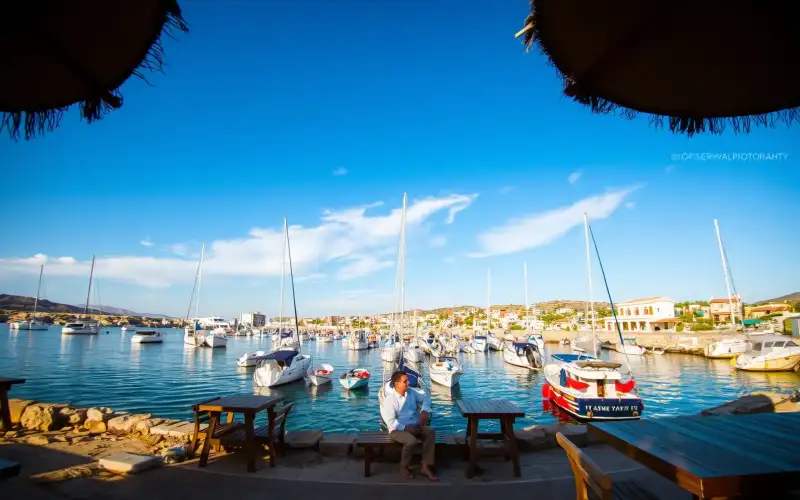
I watched a fisherman tie up his boat at Latchi Harbour one October morning, his nets still dripping with the night's catch, and walk straight past three waterfront tavernas without glancing at their menus. He turned left up a narrow side street, ducked under a bougainvillea vine, and disappeared into what looked like someone's front room. That's where the real Latchi food story begins—not on the postcard-perfect seafront, but in the places where locals actually eat.
Latchi has changed since I first guided visitors here in the early 2000s. The harbour is busier, the tavernas are slicker, and yes, there are more tourists. But beneath the varnish of modernisation, the old rhythms persist. Fishermen still land their catch before dawn. Grandmothers still make loukoumades in back kitchens. And if you know where to look, you'll find tavernas that haven't surrendered to the tourist menu formula.
The Harbour Landscape: What's Changed, What Hasn't
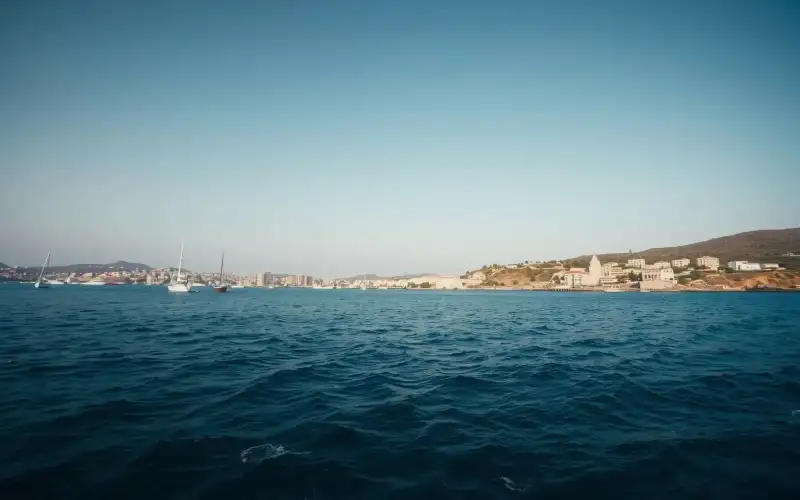
Latchi sits at the northern tip of the Akamas Peninsula, roughly 32 kilometres north of Paphos town. It's technically a working fishing village, though that definition stretches thinner each year. The main harbour road—the one all visitors photograph—has seven or eight established tavernas now, compared to four when I first came here. Most are decent enough. Some are excellent. But they're also the ones you'll find in every travel guide published in 2026.
The real distinction lies elsewhere. Latchi's food culture splits into two distinct streams: the visible economy (waterfront restaurants catering to day-trippers and tour groups) and the shadow economy (family kitchens, neighbourhood spots, places that don't need to advertise because the regulars know them). The traveller who wants to eat authentically needs to understand this divide.
The harbour itself is genuinely picturesque. Fishing boats in primary colours still work from here—you'll see them unload octopus, grouper, and the occasional sea bream in late afternoon. The light at sunset catches the water just right. But beauty and authenticity aren't always the same thing. The best taverna in Latchi isn't the one with the best view.
Five Tavernas Worth Your Time
Taverna Latchi (The Obvious Choice—But For Good Reason)
Let's start with the one everyone knows. Taverna Latchi sits right on the waterfront, impossible to miss, and yes, it's busy with tourists. But there's a reason it's survived thirty years in this spot: the kitchen genuinely cares. The kleftiko (slow-roasted lamb wrapped in paper) is excellent—tender enough to cut with a fork, flavoured with wild herbs that taste like the Akamas hillside itself. Main courses run €16–24. They do a proper saganaki (fried cheese) that arrives at your table still hissing in the pan. Service is professional without being stiff. It's not a hidden gem, but it's not a trap either.
Go at 1 p.m. on a weekday if you want to eat alongside locals rather than tour groups. The fish of the day—whatever came in that morning—is always worth asking about. They'll tell you the price per kilogram, and you can watch them grill it in front of you.
To Perivoli (The Family Secret)
This is the one where the fisherman was headed. To Perivoli sits three streets back from the harbour, in a converted house with a small courtyard shaded by a 40-year-old mulberry tree. There's no sign in English. The menu is handwritten, changes daily, and exists only in Greek. The owner, Yiannis, speaks minimal English but understands hunger and good food in any language.
The kitchen here operates on what's available that day. If the boats came in heavy with red mullet, you'll eat red mullet prepared three ways. If it's been a slow week, you'll find more meat dishes and slower-cooked vegetables. I've eaten here perhaps thirty times in the last four years, and I've never had the same meal twice. Mains cost €12–18. There are no starters as such—instead, a parade of small plates arrives: marinated octopus, grilled halloumi, wild greens sautéed with garlic, a chickpea salad that tastes like someone's grandmother made it that morning (she probably did). Wine comes from a local producer in Pano Panayia, served in unmarked bottles at €3.50 per glass.
The clientele is almost entirely Cypriot. You'll hear more Greek than English. The tables are mismatched. The cutlery doesn't match either. These are precisely the reasons to come here.
Akti Taverna (The Fisherman's Favourite)
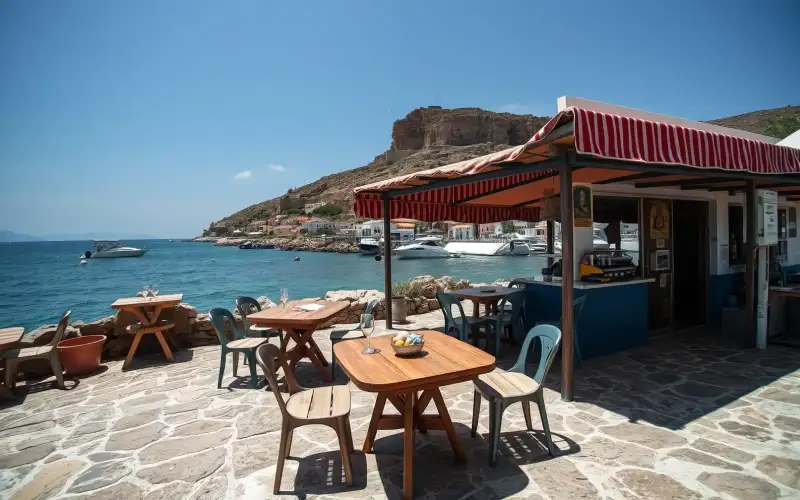
Akti occupies a middle ground—visible enough that tourists find it, but far enough from the main drag that it hasn't been colonised by coach parties. It sits on the eastern side of the harbour, with a small terrace that catches morning sun. The owner, Maria, is a former fisherman's wife who learned to cook by necessity and continued by passion.
The speciality here is whatever the boats brought in, prepared simply. Their grilled octopus (€16 for a generous portion) is textbook perfect—charred on the outside, tender within, dressed only with lemon and olive oil. The saganaki is made from halloumi sourced from a dairy in Pano Panayia, about 8 kilometres inland. They do a spectacular fava (yellow split pea dip, despite the name) that's nothing like the industrial versions served in tourist restaurants. It's creamy, subtly flavoured with cumin, and arrives with warm pitta bread.
Maria speaks English well enough to explain the daily specials without a menu. The prices are fair—mains €14–22—and portions are generous without being excessive. The wine list is short but thoughtfully chosen. Open for lunch and dinner year-round, though winter hours (November–February) are 12–3 p.m. and 7–10 p.m.
Taverna Thalassa (The Quiet Corner)
This is where I take people who want to eat well but aren't interested in the social theatre of busy restaurants. Taverna Thalassa sits at the quieter western end of the harbour, with just six tables on a narrow terrace. The owner, Dimitris, trained as a chef in Limassol but chose to come back to his family's village and cook in a small space rather than manage a large kitchen.
The menu changes seasonally. In summer (June–September), expect lighter dishes—grilled fish, fresh salads, lighter meze. In winter, the kitchen shifts toward heartier fare: stews, braised meats, slow-cooked vegetables. A winter speciality is stifado (beef stew with pearl onions and red wine), which takes four hours to prepare and tastes like it. Mains cost €15–23. The wine selection is small but excellent—Dimitris has relationships with three local producers and buys directly from them.
Booking is essential in summer and weekends. In winter, you can usually walk in. The atmosphere is quiet enough that you can hear the water lapping against the harbour wall. It's not romantic in a showy way—it's just peaceful.
Taverna Lefkos (The Wildcard)
Lefkos is the newest of the bunch—opened in 2024 by Nicos, a chef who spent fifteen years cooking in London before deciding that city food culture had nothing left to teach him. He came back to Latchi, took over a derelict building, and created something genuinely unusual: a taverna that respects traditional Cypriot cooking but isn't afraid to ask questions about it.
The menu features classic dishes—kleftiko, grilled fish, traditional meze—but prepared with unusual attention to technique and ingredient quality. Their kleftiko uses lamb from a specific farm in the Akamas foothills, wrapped in paper with wild herbs foraged from the peninsula itself. Their saganaki is made from halloumi aged for six months in a local dairy. It sounds pretentious written out, but it doesn't taste pretentious—it tastes like someone cares deeply about food.
Mains run €18–28, which is higher than the other tavernas listed here, but the portions and quality justify it. The wine list is extensive and well-curated. Service is knowledgeable without being intrusive. It's the taverna I'd recommend to someone who wants to understand what modern Cypriot cooking can be while respecting what it has always been.
The Meze Question
Most Latchi tavernas offer meze—a selection of small plates designed for sharing. It's a traditional way to eat in Cyprus, and it's worth understanding how to navigate it. A typical meze might include eight to twelve plates: grilled halloumi, marinated octopus, grilled fish, dolmades (stuffed vine leaves), tzatziki, hummus, grilled vegetables, a meat dish or two, bread, and fruit to finish. Prices range from €18–35 per person, depending on the restaurant and what's available.
Meze is ideal for groups of three or more. For two people, it can be excessive. For one person, it's impractical. At Akti Taverna and To Perivoli, meze is the default way of eating—you don't order individual dishes, you order meze and eat what arrives. At Taverna Thalassa and Taverna Lefkos, you can order meze or choose individual dishes. At Taverna Latchi, both approaches work.
Seasonality and Timing
Latchi's food culture is genuinely seasonal. Summer (June–September) brings tourists, busier restaurants, and lighter menus. The fish is excellent—sea bream, grouper, and red mullet are at their peak. Autumn (October–November) is arguably the best time to eat here. The summer crowds thin out, the fish is still excellent, and the kitchen shifts toward more complex preparations. Winter (December–February) is quiet. Some tavernas reduce hours or close for renovation. The ones that stay open serve heartier food and have a more local atmosphere. Spring (March–May) is transitional—warming weather, returning tourists, lighter menus starting to appear.
Timing within the day matters too. Lunch service runs roughly 12–3 p.m. Dinner is 7–10 p.m. (later in summer, earlier in winter). The harbour is most atmospheric at sunset, but the food is often better at lunch, when the kitchen is fresh and the fish is at its peak. Weekdays are quieter than weekends. October and November are genuinely the sweet spot for visiting—warm enough to eat outdoors comfortably, quiet enough to get a table without booking weeks in advance, and the food is at its seasonal best.
Who This Is For
This taverna crawl is designed for travellers who want to eat well but aren't interested in fine dining theatre. You should be comfortable with menus that change daily, with servers who speak limited English, with the idea that the best meal might cost €16 rather than €40. You should be curious about food—willing to ask questions, to try things you don't recognise, to eat what's in season rather than what's on a laminated menu.
You should also be comfortable with Latchi itself. It's not a resort town. It's a working fishing village that happens to have good food and a pretty harbour. The beaches are nearby but not immediately adjacent. The accommodation is modest—guesthouses and small hotels, nothing grand. If you're looking for five-star luxury or nightlife, you're in the wrong place. If you're looking for authentic food, genuine hospitality, and the slower rhythms of a real village, you've found it.
The Verdict
Latchi's taverna scene has evolved significantly since I first came here. There are more restaurants, more tourists, more polish. But the bones of the place remain authentic. The boats still fish. The kitchens still cook with seasonal ingredients. The grandmothers still make things by hand. You just need to know where to look.
Start with Taverna Latchi or Akti Taverna if you want something reliable and accessible. Move to To Perivoli or Taverna Thalassa once you're comfortable with the less-obvious choices. Try Taverna Lefkos if you want to understand where Cypriot cooking is heading. Eat lunch at least once—the light is better, the kitchen is fresher, and you'll encounter more locals. Come in autumn if you can. And skip the taverna with the biggest sign and the most English on the menu.
The fisherman I watched that October morning had it right. The best food in Latchi isn't on the postcard. It's in the small places, the family kitchens, the spots where people who actually live here choose to eat. That's where you'll find it too.
Comments (4 comments)