
Last autumn, I stood in the cellar at Vouni winery watching the 2025 vintage fermenting in temperature-controlled tanks, and the winemaker—a third-generation producer named Christos—turned to me and said something I've heard from every serious winemaker in the Paphos region: "Everyone goes to Commandaria. We're doing something different here." He wasn't boasting. The wines in front of me proved it. While Commandaria remains Cyprus's most famous wine region, three exceptional wineries in the broader Paphos area are quietly producing vintages that rival anything on the island, with less fanfare and far fewer tour buses.
Why Paphos Wineries Matter: The Data Behind the Terroir
Cyprus produced 2.1 million litres of wine in 2025, down from 2.8 million in 2015. That decline isn't a story of failure—it's a story of quality over volume. The Paphos wine region now focuses on smaller-batch, premium production. Vouni, Vasilikon, and Tsiakkas together produce roughly 180,000 bottles annually, compared to Commandaria's estimated 1.2 million. The numbers tell you something important: these are craft operations, not industrial ones.
Elevation matters here. Vouni sits at 650 metres above sea level, Vasilikon at 580 metres, and Tsiakkas at 520 metres. That altitude creates cooler nights and slower ripening cycles, which means more complex flavour development and higher acidity—the backbone of wines that age well. Compare that to lower-lying regions, and you're looking at fundamentally different chemistry.
| Winery | Elevation (m) | Annual Production (bottles) | Primary Grape Varieties | Established |
|---|---|---|---|---|
| Vouni | 650 | 65,000 | Xynisteri, Maratheftiko | 1992 |
| Vasilikon | 580 | 55,000 | Cabernet Sauvignon, Xynisteri | 2001 |
| Tsiakkas | 520 | 60,000 | Lefkada, Mavro | 1997 |
Tourism patterns confirm what the numbers suggest. Commandaria receives roughly 45,000 wine-related visitors annually. The three wineries covered here combined attract perhaps 8,000—mostly serious enthusiasts, wine professionals, and travellers seeking something beyond the standard wine-bar experience. That's not a weakness. That's precisely why they're worth your time.
Vouni Winery: Altitude and Ancient Varieties
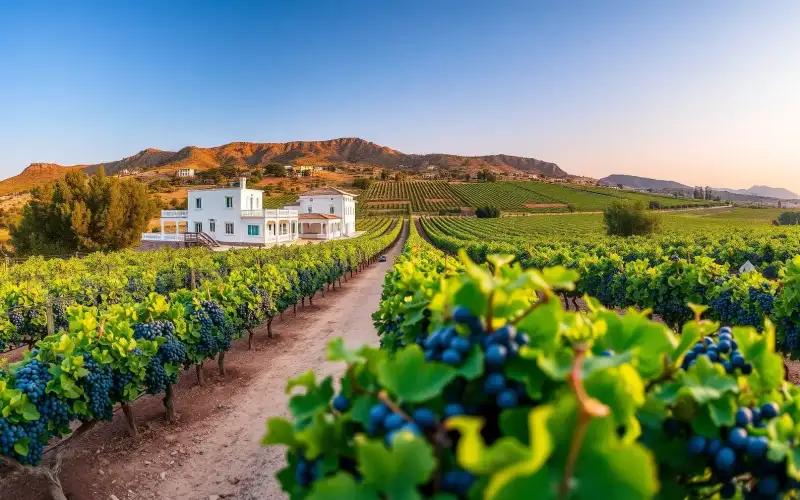
Vouni sits in the Akamas foothills, accessible via the B7 road heading inland from Coral Bay. The drive takes forty minutes from Paphos town centre, climbing through pine forests and past abandoned stone villages. The winery itself occupies a restored nineteenth-century stone building with views across three valleys. On clear mornings, you can see the Troodos Mountains from the tasting room.
The story here centres on Xynisteri, a white variety native to Cyprus that most tourists never encounter because it doesn't travel well and doesn't age dramatically. Vouni treats it like a serious wine. Their 2023 Xynisteri Reserve (€18 per bottle, €12 at cellar door) spends eight months in French oak and develops a mineral complexity that surprises people expecting something light and simple. The nose carries white stone fruit and a faint salinity—a signature of high-altitude vineyards where minerals concentrate in the grape.
Christos explained the philosophy over a tasting. "Xynisteri disappeared from serious winemaking because it's difficult. It oxidises easily, it needs careful handling, and it doesn't fit modern marketing." His 2022 vintage proved the point—a wine that opens with citrus and herb notes, then develops a waxy texture and subtle bitterness on the finish. Not everyone loves it immediately. That's the point. It makes you think.
The red programme focuses on Maratheftiko, another indigenous variety. Vouni's 2019 Maratheftiko (€22, €15 cellar door) shows dark cherry and leather notes with tannins that grip without overwhelming. It's a wine that improves with food—try it with grilled lamb or aged cheese. The 2020 vintage is still in barrel; tastings by appointment only. Production runs to just 8,000 bottles annually of their Maratheftiko, making it genuinely hard to find outside the region.
Visiting Vouni requires advance booking. Contact them via their website or call +357 2663 2121. Opening hours are Tuesday to Sunday, 11:00 to 17:00 (closed Mondays and major holidays). Tastings cost €8 per person, waived if you purchase bottles. Allow ninety minutes minimum. The cellar tour includes a walk through the vineyard, which is worth the time alone—the terracing and microclimate variations become visible once someone explains what to look for.
Vasilikon Winery: International Grapes, Local Expression
Vasilikon takes a different approach. Located near the village of Kannaviou, roughly thirty-five kilometres southeast of Paphos town, this winery embraces Cabernet Sauvignon and Merlot alongside indigenous varieties. The philosophy isn't fusion or compromise—it's rigorous selection of the best-performing grapes for each microclimate.
The 2021 Cabernet Sauvignon Reserve (€24, €16 at cellar door) demonstrates why. Aged eighteen months in French oak, it displays the structure you'd expect from the variety, but with a distinctly Mediterranean warmth. Black plum, graphite, and a hint of garrigue (wild herbs) on the finish. It's not trying to be Bordeaux. It's trying to be excellent Paphos wine made from Cabernet grapes, which is a different proposition entirely.
What sets Vasilikon apart is their commitment to sustainable viticulture. They've reduced irrigation by forty percent since 2018 through improved soil management and canopy control. That stress on the vines concentrates flavours but requires constant attention. During August and September, the team monitors soil moisture daily and adjusts practices accordingly. It's labour-intensive and expensive, which is why fewer wineries do it.
Their white programme centres on Xynisteri and a small allocation of Lefkada, a variety most visitors won't recognise. The 2023 Lefkada (€16, €11 cellar door) offers surprising complexity—green apple, white flowers, and a mineral edge that reflects the limestone soils. Production runs to just 2,400 bottles, making it nearly impossible to find in shops.
Vasilikon is open Wednesday to Sunday, 12:00 to 18:00 (closed Mondays and Tuesdays). Tastings are €10 per person, including three wines and a small cheese plate. No advance booking required for groups under six; larger groups should call +357 2663 2847 ahead. The tasting room overlooks the vineyard, and on clear days you can see the sea from the terrace. Budget two hours for a proper visit.
Tsiakkas Winery: Heritage and Modern Technique
Tsiakkas represents the oldest continuous winemaking family in the region—they've been producing wine since 1947, though the formal winery dates to 1997. Located in Tsada village, roughly forty kilometres from Paphos town, it's the most accessible of the three for visitors without a car (the local bus service runs twice daily from Paphos town centre, journey time fifty minutes).
The family story matters here. Tsiakkas's founder, Nicos, began making wine in his cellar during the 1940s, selling to local tavernas. His son, Yiannis, formalized the operation in the 1990s, investing in modern equipment while preserving the original cellar—you can still see the old wooden barrels from the 1960s stacked in the back. It's not museum piece nostalgia; they're actively used for specific wines.
Their flagship wine is the 2019 Mavro Reserve (€20, €13 cellar door), made from the island's darkest indigenous grape. Mavro is often dismissed as rustic, but Tsiakkas treats it with the seriousness usually reserved for Cabernet or Syrah. The 2019 shows deep cherry, leather, and a peppery spice that develops over three to five years in bottle. It's not a wine for immediate drinking; it's a wine for cellaring, which is precisely why serious collectors take notice.
Their white programme focuses on Lefkada and a small experimental batch of Sauvignon Blanc. The 2023 Lefkada (€14, €9 cellar door) carries the same mineral quality as Vasilikon's version, but with slightly more body and a longer finish. It's a wine that improves with food—serve it with grilled fish or fresh cheese.
Tsiakkas is open daily, 10:00 to 18:00. Tastings are €7 per person for three wines, waived with purchase. Groups larger than eight should book ahead (+357 2663 2956), but walk-ins are welcome. The tasting room includes a small shop selling local products—olive oil, cheese, honey—which makes for good gift shopping. Allow ninety minutes for a visit.
Tasting Notes and Pairing Recommendations
If you're visiting all three wineries in one trip, structure your day carefully. Start at Tsiakkas (most accessible), move to Vasilikon (mid-elevation), then finish at Vouni (highest elevation). This progression from lower to higher altitude mirrors the flavour progression from fuller-bodied to more mineral-driven wines, which makes sensory sense.
Bring water. The altitude and the concentration required for serious tasting dehydrate quickly. Eat something substantial before you start—cheese, bread, or a light meal. Never taste on an empty stomach; alcohol absorption accelerates and your palate becomes unreliable.
The wines pair naturally with local cuisine. Vouni's Maratheftiko suits grilled lamb and aged Halloumi. Vasilikon's Cabernet works with slow-cooked stews and game. Tsiakkas's Mavro complements hearty mezze spreads and cured meats. Most restaurants in Paphos town and the surrounding villages stock at least one wine from each winery, though selection and pricing vary significantly. Cellar-door prices are always better.
"The best wine is the one you're drinking with people you enjoy, in a place that matters to you. These three wineries understand that. They're not trying to be famous. They're trying to be good." — Local wine educator, Paphos region
Practical Information for 2026
Transportation is the key variable. If you're renting a car, all three wineries are within an hour's drive from Paphos town centre. The roads are well-maintained but winding—allow extra time in summer when traffic increases. If you're using public transport, only Tsiakkas is reliably accessible via the regular bus service (route 615, operated by Osypa, €2 per journey). For Vouni and Vasilikon, you'll need a taxi (€25-35 from town) or organized tour.
Several tour operators in Paphos offer wine-focused day trips. Expect to pay €65-85 per person for a full-day tour covering all three wineries, including transportation and lunch. These tours typically run Tuesday to Saturday and depart at 09:00, returning by 18:00. They're convenient if you prefer not to drive, though you'll have less flexibility on timing.
Seasonal considerations matter. Spring (April-May) offers the best weather and the vineyard is most visually interesting—flowering vines and new growth. Summer (June-August) brings heat and crowds; the wineries still operate normally, but the experience is less comfortable. Autumn (September-October) is ideal for serious wine enthusiasts—the harvest is underway, and you might witness actual winemaking. Winter (November-February) is quiet and the wineries are less busy, though some days the roads can be challenging if rain is heavy.
Budget roughly €50-70 per person for tastings across all three wineries if you're buying bottles. If you're not purchasing, expect to spend €25-30 on tastings alone. Bottles range from €12 to €28 at cellar door, with premium reserves sometimes higher. Most wineries accept card payments, but it's wise to carry cash as a backup.
The wine scene in Paphos continues evolving. Two additional small producers—Ktima Gerolemo and Vlassides—opened in 2024 and 2025 respectively, though neither is yet fully established for regular tourism. By 2027, the region may have expanded significantly. For now, Vouni, Vasilikon, and Tsiakkas represent the most mature and reliable tasting experiences outside Commandaria.
These three wineries aren't competing with Commandaria. They're offering something fundamentally different—smaller scale, more personal attention, and wines that reflect specific terroirs and winemaking philosophies rather than regional reputation. If you're serious about understanding what Cyprus wine can be, beyond the tourist narrative, they're essential.
Comments (3 comments)