
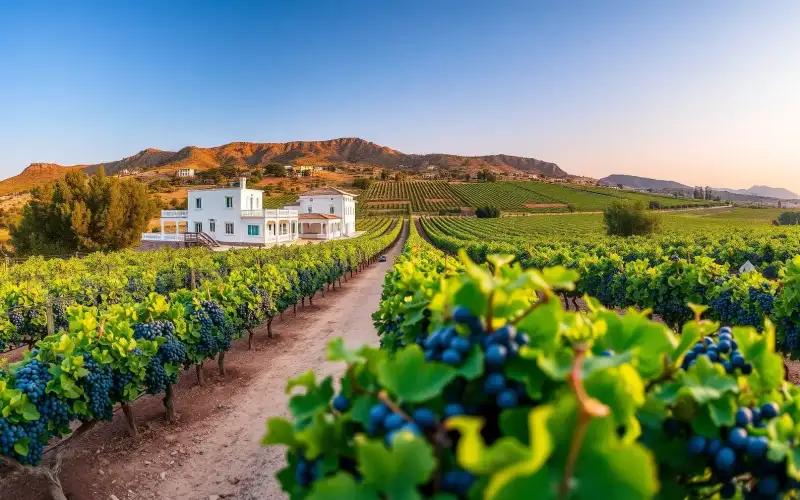
I arrived at Vouni Winery on a September morning when the Paphos hills were already warming up, and the first thing I noticed wasn't the wine—it was the smell. Not grapes yet, but the earth itself, dusty and expectant, the kind of scent that tells you something is about to happen. By October, that something would be everywhere: harvest season, when these three Paphos estates transform into living museums of Cypriot winemaking tradition.
For families like mine who visit Coral Bay each autumn, the wineries offer something different from beach days. They're quiet, unhurried places where you can actually understand what you're drinking, and where the architecture—old stone buildings, terraced vineyards, restored cellars—tells the story of the land better than any guidebook.
Why Autumn Matters for Paphos Wine Visits
Autumn in Paphos isn't just pleasant weather; it's the working season. Grapes begin ripening in late August, and by mid-September through October, the harvest is in full swing. This timing matters if you want to see wineries as they actually function, not as polished tourist stops. You'll encounter workers in the vineyards, smell fermentation in the cellars, and taste wines that are still being made rather than simply displayed.
The three estates featured here—Vouni, Vasilikon, and Tsiakkas—each handle harvest differently, which is precisely why visiting all three gives you a genuine sense of Paphos wine culture. None of them are industrial operations. All three remain family-run, which means the people pouring your wine often know every vine on their property.
Temperatures in October hover between 20–28°C, making vineyard walks comfortable without the punishing heat of summer. The landscape shifts too: green vines turn golden, the light angles differently through the leaves, and the whole region feels less like a tourist destination and more like somewhere real people actually work.
Vouni Winery: Modern Tradition in the Akamas Foothills
Vouni sits about 15 kilometres inland from Coral Bay, tucked into the foothills where the Akamas National Park begins to assert itself. The building itself is the first clue that this winery takes design seriously. Built in 2008, it's a contemporary structure that doesn't fight the landscape—pale stone, large windows, terraced levels that follow the slope of the land. From the tasting room, you can see across the valley to where the vines actually grow.
The estate produces around 150,000 bottles annually, which sounds industrial until you realise that's tiny by global standards. They focus on Cypriot varietals, particularly Xynisteri (a white that tastes of green apple and limestone) and Maratheftiko (a red with surprising structure). The harvest at Vouni typically runs from mid-September through October, and if you visit during this window, you can book a harvest tour that takes you into the vineyards with the actual pickers.
What impressed me most was their approach to temperature control. The cellar is built partially underground, using the earth's natural insulation rather than relying entirely on air conditioning. It's a small detail, but it speaks to a philosophy: work with the environment, not against it.
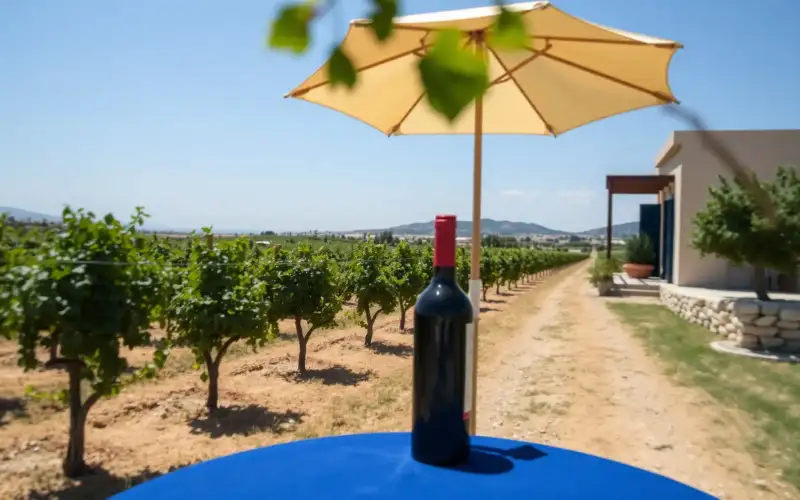
Tastings at Vouni are structured but not rigid. You're given five wines to work through, each paired with local cheese or bread. A tasting costs around €15 per person, and groups of four or more can book private sessions with the winemaker. The 2022 Xynisteri is worth trying—crisp, mineral, the kind of wine that tastes like the place it comes from. If you're visiting with teenagers, they can join the tasting room (non-alcoholic options available) while you work through the wines.
Vasilikon Estate: Family History and Experimental Winemaking
Vasilikon is different. Where Vouni feels contemporary, Vasilikon feels lived-in. The winery has been family-owned since 1988, and the current generation—now in their 40s—has spent their entire professional lives here. The main building is older stone construction, the kind of place where you can imagine harvest celebrations happening for decades.
The estate is smaller than Vouni, producing around 80,000 bottles annually, and they're more experimental. While they make excellent Xynisteri and Maratheftiko, they've also planted Cabernet Sauvignon and Syrah, blending international varieties with local tradition. Their 2020 Maratheftiko-Cabernet blend is unusual and worth seeking out—it has the earthiness of the local grape with the structure the Cabernet brings.
Vasilikon's harvest typically begins in early September and runs through mid-October. The estate offers harvest experiences where visitors can actually participate in picking (expect about three hours of work, €40 per person, includes lunch and wine). I did this in 2024, and while my basket-filling technique was laughable, the experience of being in the vineyard at dawn, hearing the conversations between the regular pickers, understanding the physical reality of wine production—that stays with you.
The tasting room is intimate, with perhaps eight seats at a time. Tastings cost €12 per person and include four wines. The staff here are genuinely knowledgeable; they're not reciting scripts but actually discussing their own decisions about fermentation times and barrel aging. If you're interested in the technical side of winemaking, ask for the longer tasting session (€18, includes six wines and more detailed explanation).
Tsiakkas Winery: Tradition Without Apology
Tsiakkas is the oldest of the three, established in 1947, and it feels it in the best possible way. The main building is traditional stone construction, with thick walls that keep the cellar cool naturally. There's no pretence here, no design-forward aesthetics—just a working winery that happens to welcome visitors.
The estate produces around 120,000 bottles annually, focusing almost exclusively on Cypriot varietals. Their Xynisteri is probably the most traditional example you'll find in the region—dry, mineral, with an almost austere quality that rewards food pairing. Their Maratheftiko has real depth, the kind of wine that improves over five to ten years in the bottle.
What makes Tsiakkas special is their commitment to old-fashioned methods. They still use some open-top fermentation tanks, still age certain wines in large oak barrels rather than small French oak (which imparts more obvious oak flavour). This isn't nostalgia; it's a deliberate choice about what they believe produces better wine.
Harvest at Tsiakkas runs from late August through October, and they offer straightforward vineyard tours (€8 per person, about 90 minutes) that show you the actual work. The tasting room is functional rather than fancy—long wooden tables, simple glasses, wines poured by people who have been doing this for years. A basic tasting of four wines costs €10 per person. There's also a restaurant on the property serving traditional Cypriot food (mains €12–18), which means you can spend an entire afternoon here without needing to go elsewhere.
Planning Your Winery Visits: Practical Details for Autumn 2026
All three wineries are within 20–30 minutes of Coral Bay by car, making them feasible day trips. If you're visiting in October, book ahead—harvest season brings both local interest and tour groups. Most wineries require advance booking for tastings and harvest experiences, particularly for groups larger than four.
The best approach is to visit one winery per day rather than trying to cram all three into a single outing. Tastings involve concentration; after three or four wines, your palate begins to fatigue, and you stop tasting accurately. Spacing visits across different days lets you actually absorb what you're learning.
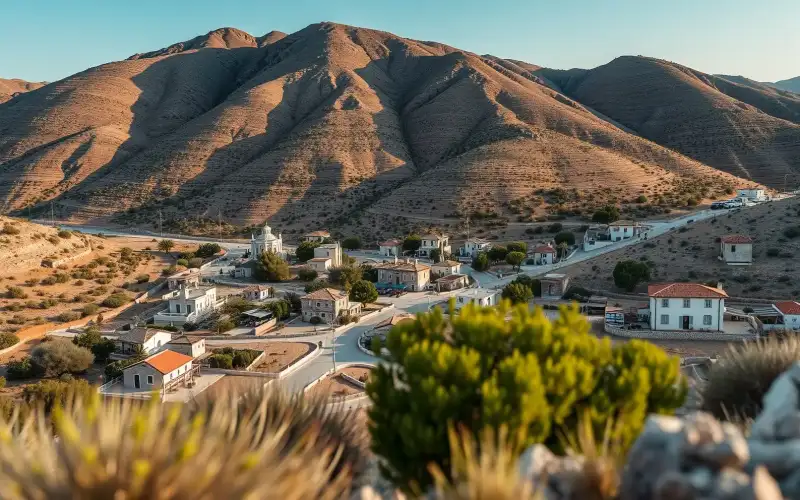
Driving between the three estates, you'll pass through villages like Pano Panagia and Kathikas, both worth brief stops. Kathikas has a small Byzantine church and a village square where you can buy local produce. Pano Panagia is quieter, with views across the Akamas peninsula. These villages aren't tourist destinations; they're places where people live and work. The tavernas serve actual local food, not adapted-for-tourists versions.
| Winery | Distance from Coral Bay | Annual Production | Tasting Cost | Best For |
|---|---|---|---|---|
| Vouni | 15 km | 150,000 bottles | €15 | Modern approach, harvest tours |
| Vasilikon | 18 km | 80,000 bottles | €12–18 | Experimental blends, hands-on harvest |
| Tsiakkas | 22 km | 120,000 bottles | €10 | Traditional methods, restaurant on-site |
What to Expect from Cypriot Wine
Cypriot wine has a reputation for being heavy and sweet, largely because of Commandaria wine, which is genuinely sweet and historically important but not representative of modern Cypriot winemaking. The wines you'll taste at these three estates are dry, food-friendly, and quite different from that stereotype.
Xynisteri, the white, tends toward crisp and mineral. It pairs beautifully with local cheese, seafood, and vegetable dishes. Maratheftiko, the red, has structure and earthiness—it's not a fruit-forward wine but rather something more savoury and complex. Both improve dramatically with food; tasting them alone in a tasting room is useful for understanding them, but tasting them with lunch is where they actually come alive.
The other varietals you'll encounter—Cabernet Sauvignon, Syrah, occasionally Grenache—are grown here because the Paphos climate actually suits them. The altitude (most vineyards sit between 300–600 metres) and the limestone-heavy soil create conditions where these international varieties develop differently than they do in their home regions. A Syrah from Vasilikon tastes distinctly Cypriot, not like a copy of a Rhône wine.
Beyond the Tasting Room
The real value of visiting these wineries in autumn isn't just the wine itself but the context. You're seeing where the grapes grow, understanding the labour involved in harvest, meeting the people who make these decisions about fermentation and aging. You're learning that wine isn't a finished product that appears in bottles but something that develops over months and years, shaped by decisions made in September.
If you're staying in Coral Bay or elsewhere in the Paphos area for several weeks, as many British travellers do, these three wineries offer genuine depth. You could visit each one, take a harvest tour at Vasilikon, have lunch at Tsiakkas, and actually understand something about Paphos wine culture rather than simply collecting tasting room experiences.
Autumn 2026 will bring harvest season to these three estates just as it has every year since they opened. The grapes will ripen, the pickers will arrive, the fermentation will begin. If you time your visit right, you'll be there to see it happen.


Comments (4 comments)