
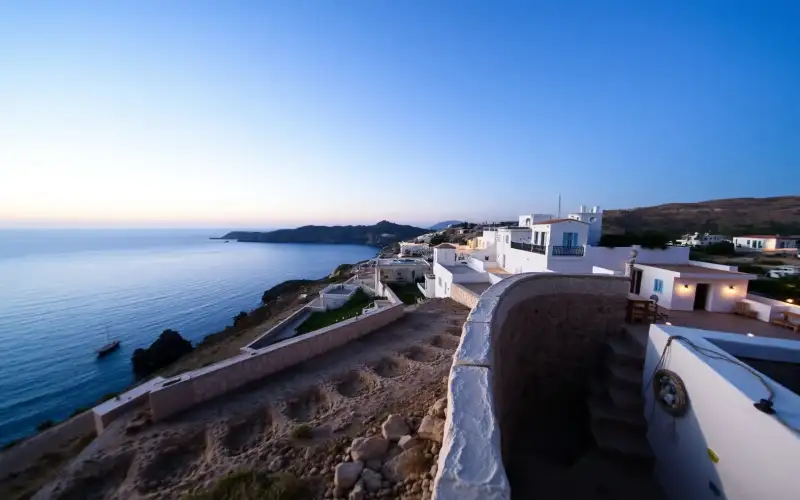
Last September, my daughter asked our hotel owner in Coral Bay why the owner's mother kept bringing us plates of homemade loukoumades at breakfast without being asked. "Because you have children," she said simply, "and feeding children is not a business—it is a responsibility." That moment, unprompted and entirely genuine, crystallised everything I'd come to understand about philoxenia—the Cypriot concept of hospitality that goes so far beyond what most travellers expect that it fundamentally changes how you experience the island.
Philoxenia isn't a marketing slogan or a hospitality protocol. It's a cultural value so embedded in Cypriot life that locals often don't realise they're practising it. The word itself comes from ancient Greek—philo (friend) and xenos (guest)—and it means treating guests as you would treat friends, or perhaps more accurately, treating strangers with the generosity you'd reserve for family. In the Paphos region, where tourism has grown steadily but hasn't yet obliterated the slower rhythms of village life, you can still find this philosophy alive in everyday interactions.
What Philoxenia Actually Means in Practice
If you've travelled to Cyprus before, you might have experienced a version of hospitality that felt transactional—polite, professional, but ultimately a service exchange. That's not philoxenia. Real philoxenia shows up when there's nothing commercial at stake, when a local spends time with you because they're genuinely curious about where you've come from, or when a taverna owner refuses payment for an extra dish because "the children must eat well."
In Paphos, this manifests in specific, observable ways. A family-run hotel might not have a formal kids' club, but the owner's wife will spend an hour helping your children identify local wildflowers on a beach walk. A village kafeneio (traditional coffee house) owner will adjust the volume of football commentary because he notices your toddler is startled by noise. A restaurant in Peyia or Tala won't rush you through dinner, even on a busy evening, because the concept of turning tables quickly contradicts the entire philosophy of sharing food and time.
The architecture of hospitality matters too. I've noticed that the best family hotels in the Paphos region—the ones that genuinely understand what families need—are often designed by owners who've raised their own children there. They know that a shallow pool matters less than a secure, shaded area where toddlers can play safely. They understand that families need flexibility in meal times, that children get tired and grumpy, and that a comfortable bed and quiet space are worth more than fancy amenities.
Where to Experience Genuine Philoxenia in Paphos
Village Tavernas Over Tourist Restaurants
The Paphos region has two distinct food landscapes. There are the seafront establishments in Paphos town itself, many of which cater primarily to package tourists and serve competent but forgettable food. Then there are the village tavernas—in places like Tala, Peyia, Kathikas, and the smaller settlements inland—where you'll find philoxenia in its purest form.
A taverna in Tala, roughly 15 kilometres northeast of Paphos town, might have a hand-written menu (if it has a menu at all). The owner will likely ask you what you like, then cook what they think you should eat rather than what you ordered. If you have children, portions will be generous. If you're still hungry, there will be no question of additional charges for bread or olives. The wine will be local and inexpensive—often from small family vineyards in the Akamas foothills. The owner will sit with you between courses and ask about your family, your home, your journey.
What makes this different from staged "authenticity" is that it's not performed for tourists. These tavernas are full of Cypriot families on weekends. The owner isn't adjusting their behaviour for visitors; they're simply operating according to the cultural values they've grown up with. You're not a guest in the formal sense—you're a temporary member of the community, and that distinction matters.
Boutique Family Hotels and Their Architecture of Care
The boutique hotel landscape in Coral Bay and the wider Paphos region has evolved significantly since 2020. Many newer properties have been designed by owners who explicitly reject the all-inclusive model, instead building smaller, more intimate spaces where families feel known rather than processed.
These hotels typically have 30-50 rooms maximum. They're often family-owned and operated, which means the owner's children might be the same age as yours. The breakfast is locally sourced where possible—honey from a nearby village, bread from a local bakery, fruit from family orchards. The staff aren't following a customer service manual; they're working in someone's home, which creates an entirely different dynamic.
What's particularly striking is how these hotels handle family infrastructure. Rather than a kids' club that exists to free parents for spa treatments, you'll find a small library of books in multiple languages, a secure garden area with age-appropriate play equipment, and staff who know your children's names and preferences by day two. One hotel in Coral Bay I visited in 2024 had no television in the family suites but instead had a carefully curated collection of board games and a small telescope for evening stargazing—a deliberate choice to encourage family interaction rather than screen time.
Community Events and Local Festivals
If you time your visit to coincide with a local festival or village celebration, you'll witness philoxenia at scale. The Paphos region hosts numerous events throughout the year—grape harvest festivals in September, winter solstice celebrations, Easter observances that involve the entire community.
These aren't tourist attractions dressed up as local events. They're genuine community gatherings where visitors are welcomed as guests in the truest sense. At a village festival in Peyia in October 2025, I watched locals spend more time ensuring visiting families had food and shade than enjoying the festivities themselves. Children were passed between adults like treasured objects. Strangers became friends over shared meals.
The Practical Etiquette of Receiving Philoxenia
How to Engage Respectfully
Experiencing philoxenia requires understanding that it's not a one-way transaction. When a local offers generosity, there's an implicit expectation of reciprocal respect and genuine engagement. This doesn't mean you need to spend money—quite the opposite. It means showing up authentically.
Learn a few words of Greek. Not fluently—locals are accustomed to English speakers—but enough to show you've made an effort. "Kalispéra" (good evening), "efharistó" (thank you), "ne" (yes), "óchi" (no). This small gesture communicates respect for the culture you're visiting.
Accept invitations. If a hotel owner suggests visiting a specific village or trying a particular restaurant, go. These recommendations aren't generic—they're personal. The owner is extending their own social network to you.
Eat slowly. Cypriot meals are designed to be lingering social events. If you rush through dinner to get back to your hotel, you're rejecting the fundamental purpose of the meal, which is connection. Sit for two hours. Talk to your family. Notice the light changing over the mountains.
Don't photograph everything. I notice many visitors documenting their meals and experiences compulsively. This creates a barrier between you and the present moment. Take a few photos if you want, but mostly just be there. The owner will notice, and it will matter to them.
Understanding the Cultural Context
Cyprus has a complex modern history. The island was divided in 1974, and that division still shapes daily life in ways that aren't immediately visible to tourists. Paphos, being on the western side, has a particular character—slightly removed from the more tourist-saturated areas around Limassol and Larnaca, but also shaped by decades of tourism development.
Philoxenia exists partly because Cypriot culture values family and community above individual advancement. This isn't quaint or romantic—it's a practical response to living in a small island nation with limited resources and complex political circumstances. When you're welcomed into a Cypriot home or business, you're being included in a social structure that prioritises collective wellbeing.
This also means that locals will be curious about your family. They'll ask personal questions that might feel intrusive if you're from a more reserved culture. "How many children do you have? Are you married? Why only two children?" These aren't rude—they're expressions of genuine interest in understanding your place in the human community.
Seasonal Considerations for 2026
Philoxenia operates year-round, but its expression shifts with seasons. Summer (June-August) brings package tourists and can dilute the experience, particularly in Paphos town itself. The real magic happens in shoulder seasons—April to May and September to October—when the weather is still excellent but the crowds are manageable.
Winter is underrated. November through February is quiet, the landscape is green, and locals have time to actually engage with visitors. A family hotel might offer significant discounts during this period, and you'll get far more personal attention. The trade-off is that some smaller tavernas close, and the sea is cool for swimming, though still swimmable for hardy souls.
Easter (Orthodox Easter, which falls on May 4 in 2026) is particularly significant. If you can time your visit around this period, you'll experience Cypriot culture at its most vibrant. The entire community comes together, and visitors are welcomed into celebrations that feel genuinely inclusive rather than staged.
Who Philoxenia Is Really For
This approach to travel—slow, community-focused, requiring genuine engagement—isn't for everyone. If you want all-inclusive resorts, organised activities, and minimal interaction with locals, Paphos has options, but they're not what this guide is about.
Philoxenia is for travellers who want to understand a place rather than simply consume it. It's for families who value time together over activity schedules. It's for people aged 40-70 who remember when travel meant something different, when you stayed in family-run hotels and ate where locals ate.
It's particularly valuable for families with children. Kids pick up on authenticity. They notice when adults are genuinely interested in them versus performing interest. They remember the taverna owner who taught them to say "kalispéra" more vividly than they remember a fancy resort activity.
The Verdict: Why Philoxenia Matters Now
In 2026, as travel becomes increasingly automated and algorithmic—as apps mediate our interactions and reviews replace personal recommendations—the experience of genuine human hospitality has become genuinely rare and genuinely valuable.
The Paphos region still offers this. It's not guaranteed; you have to seek it out, and you have to be willing to slow down. But when you find it—when you're sitting in a village taverna with your family, eating food prepared by someone who cooked it because they wanted you to eat well, speaking halting Greek to locals who are delighted by your effort, watching your children play unsupervised in a secure village square while adults chat nearby—you'll understand why this matters.
Philoxenia isn't a tourist experience to be purchased. It's a cultural value that you're invited to participate in, and that invitation changes everything about how you travel and what you take home from Cyprus.
Comments (3 comments)