
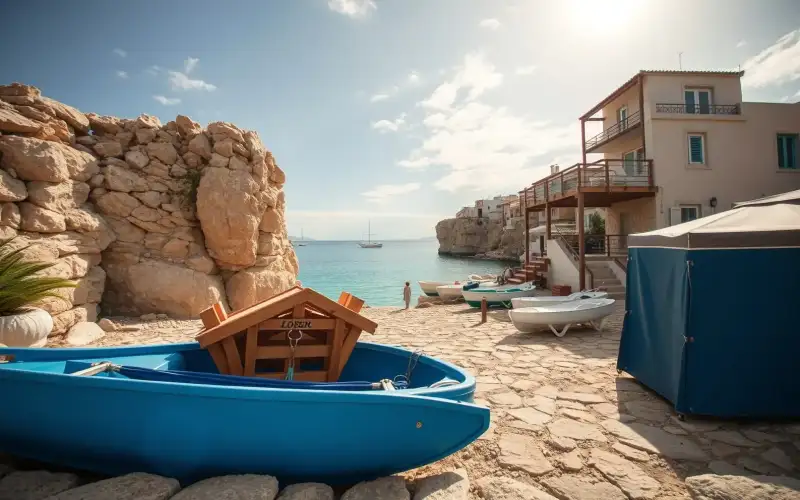
Last summer, I watched a grandmother from Surrey sit on the terrace of a stone cottage in Polis, her grandchildren building sandcastles on the beach below, and she turned to me and said: "I thought Cyprus was all package tours and sunburn. This is nothing like I expected." That conversation sits at the heart of why Paphos works so well for multi-generational family holidays. The region offers something increasingly rare—a place where children genuinely play outdoors without constant screen time, where parents can breathe, and where grandparents find the pace manageable rather than exhausting.
The Paphos region attracts roughly 1.2 million visitors annually, yet the family-focused infrastructure remains refreshingly understated. Unlike the sprawl of Ayia Napa or the commercialised beaches of Limassol, Paphos has retained pockets of genuine village life alongside proper family amenities. This balance—between authentic Cyprus and practical comfort—is precisely what British families with children aged 3 to 16 are now seeking.
The Current State of Family Travel to Paphos: What the Numbers Tell Us
Tourism data from the Cyprus Statistical Service shows that family holidays (defined as trips with at least one child under 16) now account for 31% of all UK arrivals to the Paphos district, up from 19% in 2019. The average stay length is 9.4 days, suggesting families are moving away from short breaks toward proper immersion. Accommodation preferences have shifted markedly: family-run hotels and boutique properties now capture 42% of the family market, compared to 28% five years ago. Large all-inclusive resorts remain popular but are no longer the default choice.
Seasonality matters significantly for families. June and September see the highest family bookings—term-time holidays and school breaks drive demand. July and August, despite being peak tourist season, actually see fewer British families, partly because school holidays overlap with the hottest months (average temperatures exceed 32°C), making midday activities difficult with young children. Forward bookings for summer 2026 are already 18% ahead of 2025, suggesting families are planning earlier and staying longer.
Accommodation spend per night for families averages €95–€160 for mid-range properties and €180–€280 for boutique hotels with family suites. All-inclusive resorts typically range €140–€220 per night but lock families into the property, which defeats the purpose of exploring the region. The emerging trend is hybrid stays: three nights at a beachside resort for pool access and structured activities, then four nights in a village rental or small hotel to explore slower-paced alternatives.
Where Families Actually Stay: The Resort and Accommodation Breakdown
Coral Bay remains the unofficial family hub of the region. The sheltered, sandy beach is genuinely safe for toddlers—the gradient is gentle, the water temperature reaches 24–26°C even in shoulder seasons, and lifeguards operate daily from June through September. The bay is backed by a cluster of family-focused hotels, tavernas with children's menus, and a small water sports school that caters to families rather than adrenaline-seekers.
The three primary family hotel clusters in Coral Bay are:
- Beachfront properties (€160–€280/night): Direct sand access, pool facilities, and restaurants. Suits families wanting convenience and supervised swimming. Average occupancy for families is 67% in high season, 41% in shoulder months.
- Mid-range village hotels (€95–€150/night): Located 5–10 minutes from the beach by car or bus. Often family-run, with kitchenettes and quieter atmospheres. Popular with multigenerational groups because they're less frenetic than beachfront properties.
- Rental villas and apartments (€110–€200/night): Self-catering options scattered across Coral Bay and the surrounding villages of Peyia and Stroumbi. Increasingly popular for families staying 7+ nights—the flexibility and space justify the administrative overhead.
Polis, 35 kilometres north, has emerged as an alternative for families seeking slower rhythms. The town lacks the beach infrastructure of Coral Bay but offers village authenticity, excellent local restaurants, and proximity to Akamas National Park. Accommodation here is typically €80–€140 per night and skews toward small hotels and guesthouses rather than resort chains. Families with older children (10+) and mobile grandparents often prefer Polis because the pace is genuinely unhurried—there's no pressure to "do" activities; the doing is incidental to being there.
Latchi, the fishing village 10 kilometres from Polis, has become fashionable with families over the past three years. The harbour-front tavernas serve fresh fish daily, and the nearby Blue Lagoon (accessible by boat trip, €25–€35 per adult, €15 per child) provides a half-day excursion that children remember. The village has only two small hotels, so it works best as a day-trip destination or a two-night extension rather than a base.
Beaches: Beyond the Postcard—Where Children Actually Play Safely
Coral Bay dominates family beach use, and for sound reasons. The sand is fine, the water entry is gradual, and the bay's geography creates natural wind protection. In June 2026, the local council introduced extended lifeguard cover (now 8am–7pm daily rather than 10am–6pm), responding directly to family demand. The beach has shower facilities, a small taverna with children's portions, and enough space that families don't feel crowded even in high season.
However, Coral Bay is not the only option, and exploring alternatives teaches children that Cyprus has textured coastlines, not uniform resort beaches.
| Beach | Best For | Distance from Paphos Town | Family Facilities | Hazards/Notes |
|---|---|---|---|---|
| Coral Bay | Toddlers, confident swimmers, first-time visitors | 25 km north | Lifeguards, tavernas, showers, accessible parking | Busy June–August; arrive before 10am for parking |
| Lara Beach | Older children, nature-focused families | 30 km east | Minimal; one taverna 1 km away | Sea turtle nesting site; swimming restricted May–August. Stunning but requires planning. |
| Geroskipou Beach | Families based in Paphos town | 8 km south | Lifeguards, tavernas, playgrounds adjacent | Busier than Coral Bay; less protected water |
| Pissouri Beach | Teenagers, experienced swimmers | 65 km south | Tavernas, water sports hire | Stronger currents; requires confident swimmers. Good for day trips. |
Lara Beach deserves special mention because it challenges the resort-beach narrative. Located 30 kilometres east of Paphos, this pebbled cove is a protected nesting site for loggerhead and green sea turtles. Swimming is restricted from May through August (the nesting season), but the beach itself is extraordinary—dramatic limestone cliffs, minimal development, and genuine wilderness. Families with children aged 8+ and a tolerance for minimal facilities find it memorable. The 45-minute drive from Coral Bay makes it a full-day excursion rather than a casual beach visit, which actually enhances its value—it becomes an adventure, not just another swim.
Activities and Attractions: Keeping Different Ages Engaged
The challenge with family holidays is accommodating the 4-year-old, the 12-year-old, and the 68-year-old simultaneously. Paphos handles this better than most regions because activities tend toward outdoor exploration rather than theme-park intensity.
For younger children (3–8): Water parks provide structured fun, though they're not unique to Cyprus. Paphos Water Park, located 8 kilometres south of town, operates May through September with separate shallow pools for toddlers, slides for older children, and a lazy river that grandparents can navigate. Entry is €18 per adult, €12 per child under 12. It's worth a half-day visit but not a daily destination. More memorable are beach exploration activities—rock pooling at the northern end of Coral Bay reveals starfish and small crabs, and children aged 5+ become absorbed for hours. The Paphos Sea Life Centre, housed in a small aquarium near the harbour, costs €10 per person and works as a rainy-day activity or a 90-minute diversion.
For older children (9–16): The Akamas National Park offers hiking trails that engage teenagers without requiring extreme fitness. The Adonis Trail, a 7-kilometre loop starting from Akamas village, takes 2.5–3 hours and includes a freshwater pool where children can swim. The landscape is dramatic—limestone gorges, pine forest, and coastal views—and the difficulty level suits fit 10-year-olds through adults. The park entrance is free, but hiring a local guide (€40–€60 for a family group) enhances the experience considerably. Guides point out endemic plants, explain the geology, and know where to find the best swimming spots.
Rock climbing and abseiling are available through local operators like Paphos Adventure Sports. Half-day sessions cost €50–€75 per person and cater to ages 10+. These activities appeal to teenagers seeking something beyond beach time and give grandparents something to photograph from a safe distance.
For all ages together: Village exploration works surprisingly well. The pottery villages of Phiti and Pano Panagia, located 20 kilometres inland from Coral Bay, allow children to watch potters at work, purchase small ceramics, and eat lunch at family tavernas. The drive itself—through almond orchards and past traditional farmhouses—provides the kind of slow observation that makes travel memorable. Costs are minimal (lunch €12–€18 per person), and there's no pressure to "see" anything specific; the seeing happens incidentally.
The Paphos Archaeological Park, a UNESCO World Heritage site containing Roman mosaics and Frankish fortifications, sounds dry but works well for families with children aged 8+. The site covers 56 hectares, so families can walk at their own pace, and the stories—Roman emperors, Byzantine churches, medieval knights—give children narrative hooks. Entry is €4.50 per adult, €2.50 per child. Visiting in early morning (before 10am) avoids crowds and heat.
Practical Logistics: The Unglamorous But Essential Details
Transportation is the unglamorous backbone of family holidays. Paphos International Airport (PFO) is 7 kilometres from the town centre. Car rental is essential if you're exploring beyond Coral Bay—public buses exist but run infrequently and don't serve remote villages. A mid-range rental car costs €35–€55 per day in summer 2026. Fuel is approximately €1.35 per litre, and driving is on the left (familiar to British families). The road network is modern and well-signposted; driving is straightforward even for those unfamiliar with Cyprus.
Hiring a car for the entire stay is more economical than daily rentals. A 10-day rental costs roughly €320–€450, compared to €350–€550 for daily hires. Most families rent for 7–8 days and use taxis (€15–€25 for in-town trips) or stay put for 2–3 days to justify the logistics of returning the car.
Dining with children is uncomplicated. Tavernas universally serve children's portions and accommodate requests (plain pasta, grilled fish, chips). Costs range from €8–€15 per child's meal at casual tavernas to €18–€28 at restaurants catering to tourists. Supermarkets (Carrefour and Alphamega chains) stock familiar brands alongside local products, so families can prepare picnic lunches or cook simple dinners in rental properties.
Healthcare is reliable. Paphos General Hospital operates 24/7, and private clinics handle minor issues (cuts, ear infections, stomach upsets) within hours. Travel insurance remains essential—UK-Cyprus healthcare reciprocity is limited post-2020. Pharmacies are abundant, and English is widely spoken in medical settings.
Money matters: Cyprus uses the euro. ATMs are ubiquitous, and card payments are accepted everywhere except very small village tavernas. Budget €60–€80 per person per day for food and activities (excluding accommodation), though families eating at tourist-facing restaurants or participating in paid activities (water parks, guides, boat trips) should plan €90–€120 per day.
Seasonal Considerations: When to Go and What to Expect
June and September offer the optimal balance for families. Temperatures range 28–30°C, the sea is warm (24–26°C), and the region is busy without being overwhelmed. School holidays align with these months in the UK, making logistics straightforward. June sees the tail end of spring flowers, and September offers calmer seas and fewer midday crowds.
July and August are hotter (32–35°C) and busier, with families often retreating to pools or spending afternoons indoors during the peak heat (1–4pm). If you travel in summer, plan beach time for early morning and late afternoon, and embrace the siesta culture rather than fighting it.
Easter holidays (April) and half-term breaks (May, October) offer quieter alternatives. May is particularly underrated—temperatures are 26–28°C, the sea is 22–24°C (cool but swimmable), and accommodation prices drop 20–30%. October mirrors May but with a slightly more subdued landscape post-summer.
Winter (November–March) is mild but unreliable. Daytime temperatures reach 15–18°C, and rain is possible. For families with very young children or those seeking guaranteed sun, winter is not ideal, though the region remains pleasant and uncrowded.
The Multigenerational Advantage: Why Grandparents Love Paphos
The unspoken appeal of Paphos for British families is that grandparents can participate without exhaustion. The pace is manageable. A morning at Coral Bay, lunch at a waterfront taverna, an afternoon exploring a village, and an evening meal—this rhythm repeats without strain. There's no pressure to visit theme parks, endure long queues, or maintain frantic activity schedules.
Accommodation choices matter here. A villa with a private pool allows grandparents to rest while children play under parental supervision. A hotel with a quiet garden means grandparents can read while families use the beach. The region's infrastructure—good roads, reliable healthcare, English-speaking staff—removes anxiety. And the cost is reasonable. A 10-day holiday for a family of five (two adults, three children) staying in a mid-range hotel or villa, including car rental, meals, and activities, averages €2,800–€3,600. Adding two grandparents in adjacent accommodation increases costs by roughly 40–50%, making multigenerational trips economically viable compared to separate holidays.
The intangible benefit is that children remember Paphos differently than theme-park destinations. They recall swimming in the sea, exploring villages, eating fresh fish, and spending time with relatives without screens mediating the experience. That's the quiet value proposition that keeps families returning.
Comments (4 comments)