
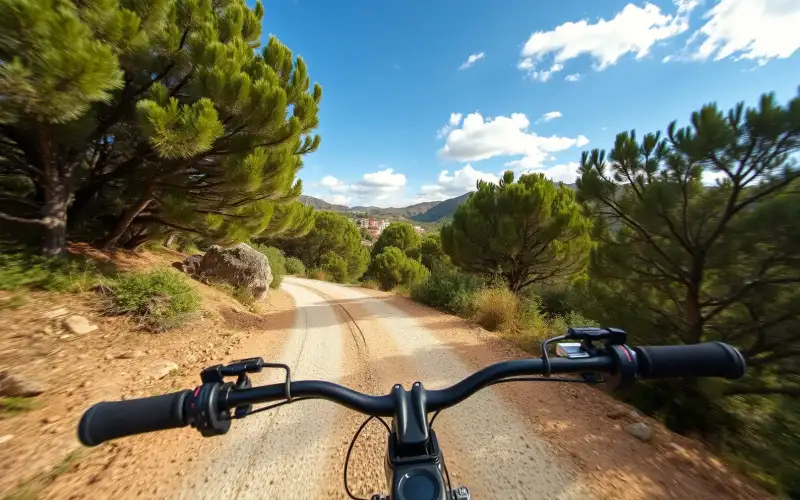
I spent a morning last May watching a group of Italian cyclists emerge from the cedar mist near Stavros tis Psokas, their legs trembling after five hours on the forest floor. One of them turned to me and said, in broken English, "This is not Cyprus. This is the Alps." He was wrong, of course—but only slightly. The Paphos Forest, particularly the Cedar Valley routes that wind through its heart, delivers something rarer than Alpine scenery: genuine Mediterranean mountain biking without the crowds, the infrastructure, or the price tag of mainland Europe.
The forest sits inland from the resort sprawl, a two-hour drive from Paphos town but a world away from the beach-bar mentality. Cedar Valley itself, centred around the Stavros tis Psokas area at roughly 860 metres elevation, offers cycling that demands respect. These aren't gravel-and-wine-tasting routes. They're proper mountain terrain where bike handling, fitness, and navigation matter.
What Makes Paphos Forest Cycling Different?
The Paphos Forest covers approximately 9,300 hectares of protected woodland. Unlike the dry, scrubby hills that dominate much of Cyprus's interior, this region receives genuine rainfall—up to 900mm annually in the higher zones—which means the trails stay relatively firm even in winter, and the landscape stays green when the rest of the island turns ochre.
The cedar groves themselves are the draw. Cedrus libani brevifolia, the endemic Cypriot cedar, only grows here and in the Troodos Mountains. They're gnarled, ancient-looking trees that create a canopy unlike anything else on the island. When you're riding through Cedar Valley proper, the light filters through these thick branches in a way that makes you forget you're cycling at all—until the next technical descent reminds you.
Elevation matters here. The forest floor sits between 600 and 1,200 metres, which means cooler temperatures year-round. In July, when the coastal areas hit 38°C, you might find 26°C in the upper reaches. This makes summer riding viable, though spring (April–May) and autumn (September–October) remain the sweet spots.
Cedar Valley: The Main Route
The Cedar Valley loop, centred on Stavros tis Psokas, is the flagship ride. It's a roughly 25–28km circuit that takes 3–4 hours depending on your fitness and how often you stop to recover or admire the view.
Difficulty rating: Intermediate to Advanced. This isn't a beginner's route. You need solid bike handling, reasonable fitness, and comfort with rocky, rooty sections. The descent from the northern ridge back towards the main lodge involves tight switchbacks and loose scree.
The ride begins at the Stavros tis Psokas lodge itself, a functional stone building that serves basic food and cold drinks. Park here. The initial climb heads northeast through open cedar woodland, gaining roughly 200 metres over the first 4km. The trail is mostly doubletrack—wide enough for a jeep, but rutted and rocky. Your front suspension will earn its keep.
By kilometre 6, you're at the ridge line. The view opens up: you can see across the Akamas Peninsula to the sea, and inland towards the Troodos. The next section is rolling singletrack, occasionally technical, occasionally flowing. This is where the ride gets fun. The terrain alternates between tight tree corridors and open meadows where the cedar gives way to scrub oak and pine.
The descent comes around kilometre 18. It's steep—roughly 150 metres drop over 2km—and requires concentration. The trail is narrow, rocky, and in places quite exposed (not cliff-edge exposed, but exposed enough that you'll want to stay focused). Brake control matters more than speed here. Walk it if you need to. There's no shame.
The final 8km is a gentle, mostly downhill roll back to the lodge through classic cedar forest. Your legs will feel it, but your mind will be elsewhere.
Alternative Routes: Variety Within the Forest
If Cedar Valley is your main event, several shorter loops offer variety without the commitment:
- Livadi Ridge (12km, 2 hours, Intermediate): A rolling route that stays at 900–950m elevation, mostly singletrack through mixed forest. Less dramatic than Cedar Valley but more technical in places. Good for acclimatisation or a second ride if you're spending two days in the area.
- Smigies-Kaminaria Loop (18km, 2.5 hours, Intermediate): Heads south from Stavros towards the Smigies picnic area, then climbs to Kaminaria ridge. More open views, less tree cover. The climb is steady rather than steep.
- Paphos-Polis Forest Road (35km, 4–5 hours, Intermediate): A longer traverse that connects the forest's western and northern edges. Mostly fireroad and doubletrack, less technical but more endurance-focused. Good for gravel bikes as well as mountain bikes.
What Bike Do You Need?
This is where many visitors get it wrong. You don't need a full-suspension downhill rig. But you do need a proper mountain bike.
Hardtail with front suspension (80–100mm travel) works fine for most routes. The trails aren't so steep or rocky that you need rear suspension, and a hardtail is lighter and more efficient on the climbs. Full suspension (120–140mm front, 100–120mm rear) is nice to have but not essential.
Tyre choice matters. You want something with decent grip and puncture resistance. The forest floor is rocky but not super-sharp. A 2.1–2.3 inch tyre in a semi-aggressive tread pattern is ideal. Tubeless setup is worth considering if you're serious about riding here regularly—the rocky terrain occasionally punches holes in tubes.
Gearing should allow for climbing. The forest doesn't have sustained 20% grades, but the rolling terrain means you'll be in the middle ring frequently. A 1x drivetrain with a 30–32t chainring and 11–46t cassette is fine. A 2x setup (compact crankset, 11–36t cassette) gives you more flexibility if you're less fit or carrying luggage.
Bring proper brakes. Hydraulic disc brakes are standard now, but make sure they're set up well before you arrive. Rim brakes won't cut it on the longer descents—you'll cook them.
Practical Essentials for Forest Riding
The Paphos Forest is not a manicured park. It's genuine wilderness, and you need to prepare accordingly.
Water and nutrition: Carry at least 2 litres of water. There are no taps on the routes. The lodge at Stavros tis Psokas sells bottled water and basic snacks, but don't rely on it. Bring energy bars, nuts, or sandwiches. A puncture at kilometre 20 with no food or water becomes a serious problem quickly.
Navigation: GPS is essential. Download offline maps before you go—mobile signal is spotty at best. The trails are reasonably well-marked with paint blazes, but in the dense cedar sections, it's easy to miss a turn. A Garmin or phone with maps.me or Komoot is non-negotiable.
Weather and timing: Start early. The forest gets dark early due to the tree canopy, and you don't want to be navigating technical terrain in fading light. Aim to be back at the lodge by 4pm in autumn, 5pm in summer. Weather can change quickly in the mountains. A light waterproof jacket is always worth carrying, even if the morning looks clear.
Bike repair kit: Carry a spare tube, tyre levers, a small pump, and a multi-tool. The nearest bike shop is in Paphos town, roughly 90 minutes away. A puncture or dropped chain here means you're either walking or waiting for help.
| Route | Distance (km) | Duration | Difficulty | Best Season |
|---|---|---|---|---|
| Cedar Valley Loop | 25–28 | 3–4 hours | Intermediate–Advanced | April–May, Sept–Oct |
| Livadi Ridge | 12 | 2 hours | Intermediate | Year-round |
| Smigies-Kaminaria | 18 | 2.5 hours | Intermediate | April–May, Sept–Oct |
| Paphos-Polis Forest Road | 35 | 4–5 hours | Intermediate | April–May, Sept–Oct |
When to Ride: Seasonal Considerations for 2026
The forest is rideable year-round, but timing changes the experience significantly.
Spring (April–May): This is the prime window. Temperatures are warm but not scorching (22–28°C at elevation). Trails are dry after winter rains. Wildflowers bloom in the meadows. The downside: it's also when most visitors come. The lodge gets busy on weekends.
Summer (June–August): Cooler than the coast, but still warm. The forest canopy keeps things pleasant. Trails can be dusty. Midges and flies are more active in the early morning and late afternoon. Riding at midday, when insects are less active, means dealing with heat. It's manageable but requires discipline with water intake.
Autumn (September–October): Underrated season. Temperatures cool as the month progresses. Crowds thin out. The light is softer, and the forest takes on golden tones. Trails are still dry from summer. October brings occasional rain, which can make things slippery, but also clears the dust.
Winter (November–March): Possible but challenging. Rainfall is frequent, and trails become muddy and slippery. Temperatures drop to 10–15°C at elevation. Daylight hours are short. If you're an experienced rider and don't mind mud, it's quieter and moody. Most casual riders should avoid.
Getting There and Logistics
Stavros tis Psokas lodge is the main hub for Cedar Valley riding. It's roughly 45km from Paphos town, heading inland through Tsada and Kannaviou. The drive takes about 90 minutes on winding mountain roads. There's no public transport to the lodge itself, so you'll need a car or rental vehicle.
The lodge offers basic accommodation (simple rooms, €50–70 per night) and serves lunch and drinks. It's functional rather than luxurious, but that's part of the appeal. It's also the only facility in the forest, so if you're planning a full day of riding, you're dependent on what they have.
Bike rental in Paphos town is limited. A few shops rent basic mountain bikes (€25–35 per day), but quality varies. If you're serious about riding, bring your own bike or rent from a larger city like Larnaca or Nicosia before driving to Paphos.
Fuel up in Paphos town before heading inland. The last petrol station is in Kannaviou, and there's nothing in the forest itself.
What to Expect: The Reality of Forest Riding
Cedar Valley and the wider Paphos Forest deliver genuine mountain biking. The trails are not polished. Rocks shift. Tree roots catch your wheel. The descent on the Cedar Valley loop will test your nerve. But that's the point. This isn't a resort experience dressed up as adventure. It's the real thing.
The isolation is part of the draw. On a weekday in May, you might see three other riders all day. The silence between the cedars is complete. Your breathing and your chain are the only sounds. For someone escaping the noise of a busy life, that matters.
Fitness matters more than equipment. A fit rider on a basic hardtail will have a better day than an unfit rider on a £3,000 full-suspension machine. The climbs are relentless but not extreme. The technical sections demand focus rather than bravery. If you can ride singletrack confidently and climb steadily, you can do these routes.
The forest doesn't care about your experience level or your bike's price tag. It cares whether you respect it.
That respect starts with preparation. Know your route. Carry water. Start early. Tell someone where you're going. Bring a repair kit. Check your brakes. These aren't dramatic requirements—they're basic sense.
Why This Matters for Slower Travellers
The Paphos Forest offers something increasingly rare: a place where you can spend a full day doing something genuinely physical, in genuine wilderness, without crowds or commercial distraction. The cedar groves are old. The silence is real. The effort is honest.
For travellers in their 40s, 50s, and 60s who've come to Cyprus for the slower side of things—the villages, the nature, the quiet—cycling here makes sense. It's not a resort activity. It's not something you do between drinks. It's something you prepare for, do properly, and remember.

Comments (4 comments)