
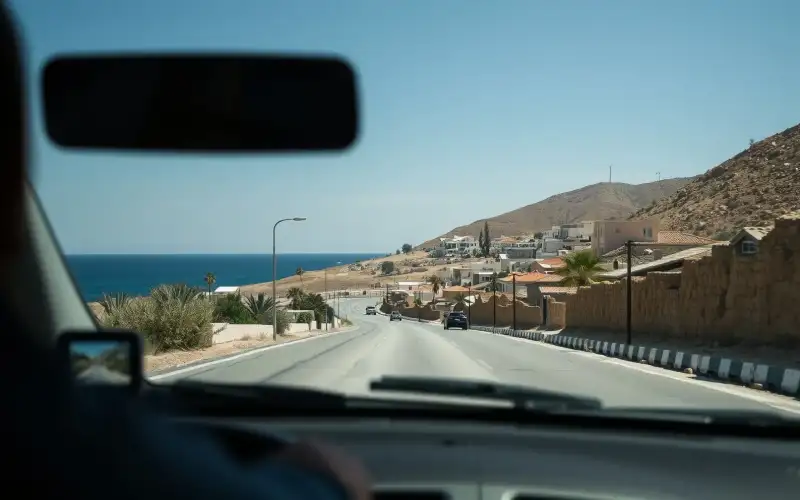
I watched a retired accountant from Surrey grip the steering wheel of his Hyundai i10 so hard his knuckles turned white. He'd just merged onto the Paphos ring road at 8 a.m., and a local in a battered Mercedes was flashing him from behind—not aggressively, just insistently—because he was sitting in the middle lane doing exactly the speed limit. "But the sign says 50," he muttered. The Mercedes swept past, horn blaring a cheerful farewell. Welcome to driving in Cyprus.
The left-hand rule lulls British visitors into a false sense of security. Yes, you'll find the steering wheel on the right side of the car. Yes, you'll drive on the left. But Cyprus's road culture operates on entirely different principles than the M25 or the A303. The rules exist, officially, but they're treated more as suggestions—waypoints in a much larger conversation between driver and road. Understanding this distinction is the difference between a relaxing week of coastal drives and a white-knuckled ordeal that makes you question every life choice that led to renting a car in Paphos.
The Problem: Familiar Rules, Unfamiliar Chaos
British drivers arrive in Cyprus expecting a straightforward transition. Left-hand traffic. Metric speed limits. Roundabouts. All things we know. The rental company hands over the keys, you adjust the mirrors, and off you go toward your first village taverna. By the time you hit your first roundabout—usually somewhere near Paphos town, where three converge within a kilometre—the illusion shatters.
The core problem isn't mechanics. It's culture. Cyprus's road system is technically modern, with decent signage and reasonably maintained asphalt. But it operates under an unwritten code that prioritises momentum, local knowledge, and a certain Mediterranean fatalism about consequences. Traffic lights are treated as advisory. Lane markings are decorative. Roundabouts are free-for-alls where size of vehicle matters more than right of way. A Cypriot driver will merge across three lanes without signalling because they've been driving that route for thirty years and they simply know where everyone is—a sixth sense that doesn't extend to rental cars with GB stickers on the back.
Add to this the physical challenges: the mountains around Akamas are crossed by narrow switchback roads with hairpin turns and no crash barriers. Village lanes in places like Polis or Latchi are barely wide enough for two cars, yet locals navigate them at speed because they've been doing it since they were teenagers. The road surface deteriorates unpredictably. Potholes appear overnight. Speed bumps are unmarked and aggressive. And then there are the other drivers—a mix of locals who know every shortcut, tourists who are equally lost, and heavy trucks that follow no apparent rules.
For British visitors accustomed to orderly driving, speed cameras, and predictable road behaviour, this is genuinely disorienting. You're not in danger of crashing because you don't understand which side of the road to use. You're in danger because the environment itself is chaotic, and your instinct to follow rules makes you predictable in a system where unpredictability is the norm.
Why This Matters for Your Paphos Holiday
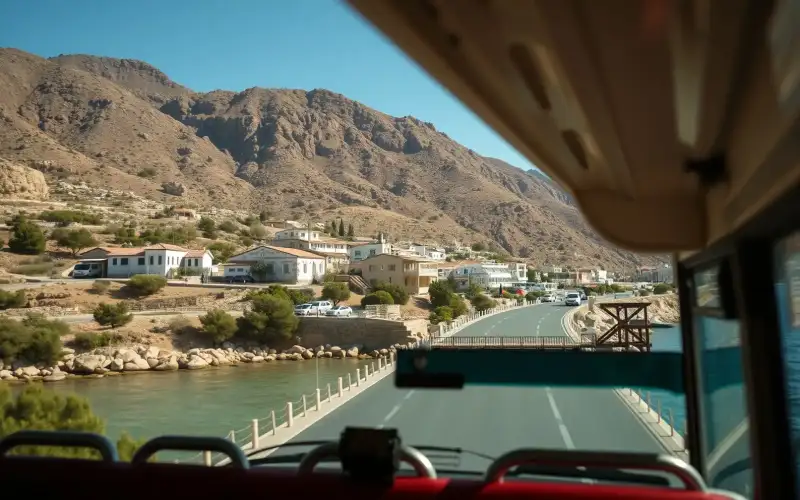
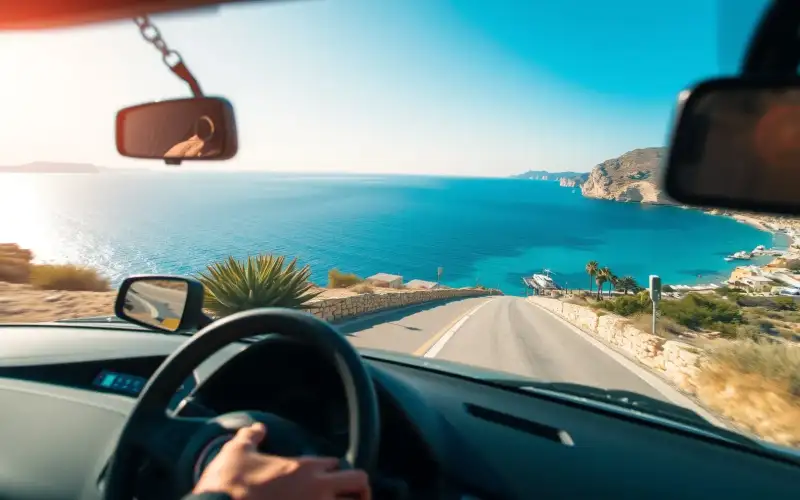
Getting behind the wheel in the Paphos region isn't just about reaching your hotel. A car gives you access to the slow-travel Cyprus that most package tourists never see. The mountain villages around Akamas—Panagia, Drouseia, Simou—are only properly reachable by car. The coastal drives from Coral Bay toward the Akamas Peninsula are stunning but require confident handling of narrow, winding roads. The tavernas in Polis worth visiting are down lanes that Google Maps barely acknowledges.
But this freedom comes with responsibility. A single accident—even a minor one—ruins a week. Rental car insurance in Cyprus is expensive and often has high excess clauses. The local hospital in Paphos is competent but crowded. And more importantly, driving stressed and uncertain means missing the whole point of being here. The landscape demands your attention. The light at sunset over the Akamas is worth experiencing, not white-knuckling through it.
The other factor is time. British visitors often arrive on a Friday afternoon, pick up a car, and immediately attempt a drive to Latchi or a mountain village. Jet lag, unfamiliar roads, and Cypriot traffic combine into a recipe for tension. Understanding what you're actually facing—not the sanitised version in guidebooks, but the real conditions—lets you make sensible decisions about when to drive, where to go, and how to pace your week.
Solution One: Understand the Actual Rules (Not Just the Official Ones)
Start with the legal framework. Cyprus's official driving rules are available from the rental company, and you should read them. Speed limits are 50 km/h in built-up areas, 100 km/h on open roads, and 120 km/h on motorways (the A6 from Paphos toward Limassol). Seatbelts are mandatory. Mobile phone use is illegal while driving. You drive on the left. All of this is enforced, sometimes, and fines are steep—a speeding ticket can cost €200 or more.
But the real rules are unwritten. Here's what actually happens on Cypriot roads:
- Roundabouts operate on a first-come, first-served basis. Technically, you should give way to traffic already on the roundabout. In practice, locals merge into roundabouts with confidence, and everyone adjusts. If you hesitate, you'll be there for five minutes. Enter with purpose, use your indicators (even though locals often don't), and assume that the car next to you might change lanes without warning.
- Speed limits are suggestions for cautious drivers. Locals routinely do 120 km/h in 100 km/h zones. Police enforce limits inconsistently, often focusing on tourist-heavy routes near Paphos town. On mountain roads, speed becomes irrelevant—the road itself dictates pace.
- Lane discipline doesn't exist. Drivers weave between lanes, park illegally, and treat solid white lines as optional. This isn't aggressive; it's just how things work. Don't take it personally when someone cuts you off.
- Pedestrians and cyclists appear without warning. Village lanes have no pavements. A cyclist might be in the middle of the road, a child might dart out from behind a parked car. Slow down in populated areas.
- Other vehicles will flash their lights at you. This usually means


Comments (4 comments)