
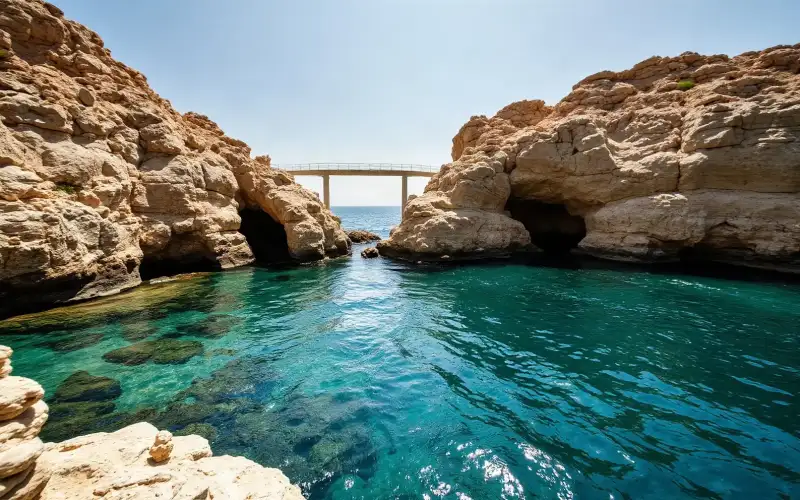
I first stumbled into Cove Three on a February morning in 2009, following a goat track that wasn't on any map. The water was still cold—barely 15°C—but so clear I could count the pebbles ten metres down. A local fisherman appeared from nowhere, nodded at my wet suit, and said nothing. That's when I realised the real Paphos coastline wasn't in the guidebooks.
The stretch between Coral Bay and Agios Georgios is perhaps the most underexplored section of the Akamas Peninsula's accessible shore. Most visitors either camp at Coral Bay's busy northern end or drive straight to the ancient harbour at Agios Georgios, missing an entire chain of coves that offer everything from turquoise snorkelling water to natural shade and genuine solitude. Over thirteen years of mapping these spots, I've learned which ones reward the effort, which require caution, and which ones change character entirely depending on the season and swell direction.
1. Pebble Cove (The Starting Point)
If you're coming from Coral Bay car park, Pebble Cove is your gateway. It sits roughly 400 metres south of the main beach, accessible by a straightforward coastal path that hugs the cliff edge. The walk takes eight minutes at a normal pace, though the path narrows considerably in the final stretch. Wear proper shoes—not flip-flops. The limestone underfoot is sharp, and there's no forgiveness if you slip.
The cove itself is small, maybe 30 metres across, and completely pebbled. The shingle is coarse and uncomfortable to lie on directly, so bring a mat or beach towel folded into a cushion. What makes Pebble Cove worth the walk is the water clarity and the overhang of rock on the western side. By 10 a.m. in summer, that overhang provides genuine shade—not the dappled kind, but proper shadow that drops the temperature noticeably. The seabed drops quickly here, reaching 8 metres within 20 metres of shore. Snorkelling is productive in calm conditions; I've recorded sightings of dusky grouper, painted comber, and the occasional amberjack working the deeper edge.
Access is fine from May to September. In winter, northwesterly swells wrap around the peninsula and deposit significant shore break here, making entry treacherous. The cove also catches afternoon wind funnelling down from the Akamas ridge, so plan to leave by 2 p.m. if you want a calm swim back.
2. The Twins (Snorkeller's Paradise)
Continue south along the same path for another 12 minutes, and you'll spot two small coves separated by a rocky outcrop. Locals call them The Twins, though they're unmarked on any official map. The eastern cove is shallower and more sheltered; the western one has deeper water and more dramatic rock formations. Most people prefer the eastern twin for swimming, but the western twin is where you'll find the best snorkelling.
The rock that divides them creates a natural reef structure that attracts small fish schools. Wrasse are abundant year-round, and in late spring (May–June), you'll often see juvenile amberjack and small barracuda patrolling the deeper channels. The seabed here is mixed—sand and pebbles with scattered rocks—so entry is easier than at Pebble Cove. Water clarity is typically 12–15 metres even in midsummer, and sometimes better.
The eastern twin has a small cave system at its southern end, carved into the cliff face. It's only accessible at low tide and only if you're comfortable scrambling over wet rocks. I wouldn't recommend it for anyone over 65 or with mobility concerns, but younger visitors often explore it. There's nothing inside except a small sandy pocket and some interesting barnacle formations.
Parking is still at Coral Bay, and the total walk is about 20 minutes. The path becomes rougher here—more exposed limestone, fewer flat sections. Bring water. There's no shade except the cave, and the afternoon sun is relentless in July and August.
3. Narrow Passage Cove (The Photographer's Choice)
Beyond The Twins, the coastline becomes more dramatic. A narrow ravine cuts down to the shore—barely wide enough for one person to walk through—creating a cove that's almost completely sheltered from wind. This is Narrow Passage Cove, and it's where I've taken most of my own landscape photographs over the past decade.
The walls of the ravine are striped with different geological layers: red iron oxide, pale limestone, darker volcanic rock. The light in here changes constantly as the sun moves, and by late afternoon, the western wall glows almost orange. For photographers, this is essential viewing. For swimmers, it's a mixed bag.
The cove itself is small—maybe 25 metres across—and the seabed is rocky and uneven. Entry requires care; wear water shoes if you have them. The water is cold here, even in August, because the ravine creates shade for most of the day and the deeper water (dropping to 12 metres quickly) doesn't warm up. However, the clarity is exceptional, often exceeding 15 metres. Snorkelling is worthwhile, particularly along the eastern wall where a small rocky reef hosts wrasse, damselfish, and occasionally cuttlefish.
The walk here from Coral Bay takes 25–30 minutes. The path becomes noticeably more challenging in the final section, with some scrambling required. The cove is accessible year-round, but the ravine narrows further in heavy swells, and the entrance can become dangerous. I avoid this spot in winter entirely.
4. Sand Pocket (The Rarest Commodity)
Most of the coves between Coral Bay and Agios Georgios are pebbled or rocky. Sand is rare. Sand Pocket, about 35 minutes from Coral Bay by foot, is the only cove in this stretch with a genuine sand beach—maybe 15 metres of it, accumulating in the centre of a small bay.
The sand here is coarse and dark, deposited by winter storms and replenished annually. It's comfortable to lie on and makes for easy entry into the water. The seabed shelves gradually, which is ideal for swimmers who prefer shallow water. Snorkelling is less interesting here than in the rocky coves; the sand and mud don't attract as many fish, though you'll still find wrasse and the occasional flatfish.
What makes Sand Pocket special is its accessibility for people with mobility concerns. If you can manage the 35-minute walk, you can actually swim here without negotiating rocks or sharp shingle. I've guided several visitors in their sixties and seventies here specifically for this reason.
The cove faces southwest and catches afternoon sun reliably, but it also catches afternoon wind. By 3 p.m., the water can become choppy. The western wall has a small overhang that provides some shade, though not as much as Pebble Cove. Bring water and snacks; there's nothing here except rock and sand.
5. The Arch (Landmark Navigation)
Continuing south, the coastline becomes more rugged. A distinctive rock arch, carved by millennia of wave action, marks the boundary between the mid-section of the coast and the approach to Agios Georgios. The cove beneath the arch—confusingly, also called The Arch by locals—is one of the most visually striking spots on this entire stretch.
The arch itself is roughly 8 metres high and 6 metres wide, and it frames the cove perfectly when viewed from certain angles. The water beneath the arch is deep, dropping to 15 metres within metres of shore, and the current here can be surprisingly strong. I don't recommend swimming directly under the arch unless you're a confident swimmer and the sea is genuinely calm. The rocks are slippery, and the surge can be unpredictable.
However, the cove to the east of the arch is excellent for snorkelling. The rocky seabed creates a natural fish habitat, and visibility is typically 12–15 metres. I've recorded dusky grouper, painted comber, brown meagre, and various wrasse species here. In late spring, small pelagics—jacks and barracuda—pass through regularly.
The walk from Coral Bay is about 40 minutes, and the path here is genuinely challenging. There's significant scrambling, and one section requires you to navigate a narrow ledge with a drop on one side. This isn't a walk for anyone with vertigo or mobility limitations. The cove is accessible year-round, but I avoid it in winter when swell is high and the ledge becomes genuinely dangerous.
6. Agios Georgios Approach (The Penultimate Cove)
As you approach Agios Georgios, the landscape changes. The cliffs become lower, the path becomes easier, and the coves become less dramatic. The final unnamed cove before you reach the ancient harbour—I call it Agios Georgios Approach—is worth mentioning because it's the easiest walk in this entire sequence and offers reliable snorkelling.
This cove faces northwest and is sheltered from southerly swells. The seabed is mixed rock and sand, and entry is straightforward. Visibility is typically 10–12 metres, slightly less than the more remote coves, probably because it's closer to the harbour and gets more foot traffic. Snorkelling here is productive but not exceptional. You'll see wrasse, damselfish, and the occasional small grouper, but the dramatic species are rarer.
What makes this cove useful is its accessibility and its proximity to Agios Georgios. If you're planning to visit the ancient harbour and want to combine it with swimming, this is your spot. The walk from Coral Bay is about 50 minutes, and the path is relatively straightforward for most of the route.
7. Agios Georgios Harbour (The Historic Finale)
Agios Georgios itself isn't technically a swimming cove, but it's worth including because it's the natural endpoint of this coastal walk and because the water here is historically and archaeologically significant. The ancient harbour was used by Phoenician traders and later by Byzantine merchants. The water remains clear and deep, and the surrounding ruins add a layer of context to the journey.
Swimming here is possible but not ideal. The harbour floor is rocky and uneven, and there's always some boat traffic. However, if you're interested in snorkelling among history, this is the place. The seabed drops quickly to 8–10 metres, and visibility is typically 10–12 metres. You won't see many fish—the deeper water and boat activity discourage them—but the sense of place is powerful.
The walk from Coral Bay to Agios Georgios takes approximately 55 minutes at a normal pace, with stops for photographs. It's a genuine coastal trek, not a casual stroll.
Seasonal Conditions and Planning
The accessibility and safety of these coves change dramatically with the season. Spring (April–May) is arguably the best time to explore this coastline. The water temperature is rising (reaching 18–20°C), the path conditions are good, and the wind is relatively calm. Summer (June–August) brings warm water (24–27°C) and clear skies, but also afternoon winds and crowds at Coral Bay. The afternoon wind funnels down from the Akamas ridge, making conditions choppy by 2–3 p.m. I always recommend starting your walk early—by 8 a.m.—if you're going in summer.
Autumn (September–October) is excellent. The water is still warm (20–23°C), the wind is calmer, and the tourist season is winding down. Winter (November–March) is challenging. Northwesterly swells wrap around the peninsula, making several coves dangerous. The water temperature drops to 14–16°C, requiring a wetsuit for comfortable swimming. However, winter visibility is often exceptional—sometimes exceeding 18 metres—because the water is colder and there's less algal activity.
What to Bring and How to Prepare
This isn't a casual beach day. You're walking for up to an hour on rough terrain and swimming in remote locations. Preparation matters.
- Water shoes or sturdy trainers: The limestone is sharp, and flip-flops won't survive. I've seen three people with cut feet in the past year alone.
- Water bottle: At least 1.5 litres. There's no fresh water along this entire stretch. In summer, dehydration is a real risk.
- Sun protection: High SPF sunscreen, a hat, and sunglasses. The sun reflects intensely off the limestone and water.
- Snorkelling gear: If you're interested in underwater exploration, bring your own mask, fins, and snorkel. Rental shops in Paphos town are 20 minutes away by car.
- Wetsuit (winter and early spring): The water is cold from November to April. A 3mm suit is sufficient for most seasons.
- Dry bag: To protect your phone, keys, and wallet. There's nowhere to leave valuables.
Sea Conditions and Safety
The water here is generally clear and calm from May to September, but conditions change rapidly. Before you start your walk, check the swell forecast. Websites like Magic Seaweed provide detailed swell predictions for the Paphos area. If the swell is above 1 metre, I'd recommend skipping The Arch and Narrow Passage Cove entirely.
The current here is generally weak, but it can become strong around The Arch and in deeper coves. If you're snorkelling and you feel the current pulling you, exit the water immediately. Don't fight it. The rocks are sharp, and the coves are remote enough that help would take time to arrive.
Mobile phone signal is unreliable along much of this stretch. The Coral Bay area has reasonable coverage, but once you're south of Pebble Cove, signal becomes patchy. Tell someone where you're going and when you expect to return.
Getting There and Parking
All of these coves are accessed from Coral Bay. The car park at Coral Bay is well-signposted and costs €3 per day (as of 2026). During summer weekends, it fills by 10 a.m., so arrive early. There's a small taverna at Coral Bay if you want to grab food before or after your walk, though prices are inflated compared to Paphos town.
If you're coming from Paphos town, the drive to Coral Bay takes about 25 minutes via the coastal road. If you're staying in the Akamas area or Paphos, Coral Bay is the logical starting point for this walk.
Bonus: Kayak Access
If you're not comfortable walking, or if you want to explore multiple coves in a single day, kayaking is an option. Several operators in Coral Bay rent single and double kayaks for €15–25 per hour. The paddle from Coral Bay to Agios Georgios takes about 90 minutes at a leisurely pace and covers roughly 3 kilometres. From the water, the coves look entirely different—you see the full scale of the cliffs and the geological layering that's invisible from the shore.
Kayaking is best in calm conditions (May–September, ideally morning hours). In winter or when swell is present, I wouldn't recommend it. The coastline has few safe landing spots, and if the sea picks up, you're exposed.
The advantage of kayaking is that you can reach all seven coves without the physical strain of walking, and you can spend more time snorkelling at each location. The disadvantage is that you're tethered to the kayak rental times and you miss the intimate experience of the coastal path.
Final Notes
These coves exist in a state of deliberate obscurity. They're not protected by law or formal designation, but they're also not widely advertised. That balance is fragile. If these spots become too popular, the experience changes. The water quality can suffer, the wildlife becomes stressed, and the sense of discovery evaporates. If you visit, treat these places with care. Take all rubbish with you, don't collect shells or stones, and respect the few other people you encounter. This coastline has survived millennia of human use; it deserves to survive a few more.
I've spent over a decade mapping these coves, and I still find something new on most visits. A different fish species, a seasonal change in the water colour, a new perspective on the geological formations. That sense of discovery—of finding something genuine and untouched—is what these coves offer. It's rare in modern travel, and it's worth protecting.
Comments (0 comments)
No comments yet — be the first!