
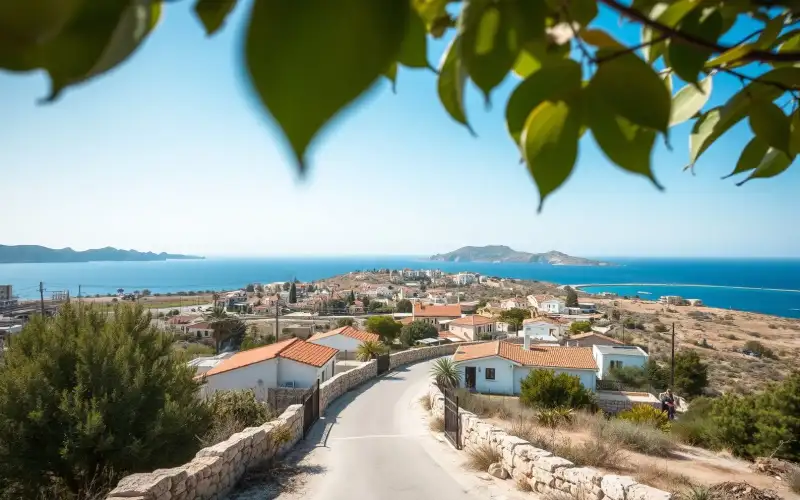
It was the last week of March, and my youngest had her hands full of something purple. Not grapes, not lavender — just a fistful of wild anemones she'd pulled from the verge of the Aphrodite Trail, roots and all, with the cheerful destructiveness of a six-year-old who doesn't yet understand Leave No Trace. I gently persuaded her to put them back. She cried briefly, then spotted a tortoise, and the anemones were forgotten entirely. That, in essence, is spring in the Paphos region: sensory overload of the most benign kind.
We've been coming to Coral Bay every year for nearly a decade now, and spring — specifically that sweet window between mid-March and late May — remains our favourite season by a considerable distance. The summer crowds haven't arrived. The light is extraordinary. The hills above Peyia are still green rather than scorched. And the Akamas Peninsula, just twenty minutes up the road from our usual base, is doing something genuinely spectacular with wildflowers.
Why Spring Changes Everything in Paphos
People who know Cyprus only in July think of it as a hot, dry, slightly dusty island. They're not wrong about July. But they've missed the point entirely. The Paphos region in spring is a different proposition — lush, flower-strewn, manageable in temperature, and far more interesting to walk through than the parched landscape of high summer.
The transformation begins in late February with the first cyclamens pushing through the rocky soil, and it accelerates through March as the hillsides fill with colour. By April, the Akamas is at its absolute peak: orchids, anemones, poppies, wild tulips, asphodel, and the extraordinary Paphos Fritillary — a butterfly found nowhere else on earth — fluttering through the cistus scrub. May softens things slightly as the heat builds, but the higher villages around Pano Panagia and the Troodos foothills stay cool and green well into the month.
For families, for walkers, for anyone who prefers their travel at a contemplative pace, this is the season that rewards patience and curiosity in equal measure.
What the Weather Actually Does: March, April and May
Let me give you the honest version, because I've packed wrong enough times to have learned from it.
| Month | Average High (°C) | Average Low (°C) | Sea Temp (°C) | Rain Days |
|---|---|---|---|---|
| March | 18–20 | 10–12 | 17–18 | 6–8 |
| April | 22–24 | 13–15 | 18–19 | 3–5 |
| May | 26–28 | 17–19 | 21–22 | 1–2 |
March is genuinely variable. We've had glorious sunny days where we sat outside at the Elia Restaurant in Coral Bay in t-shirts at lunchtime, and we've had days of low cloud and a sharp wind off the sea that made the Akamas trails feel almost autumnal. Pack layers. A lightweight waterproof is not paranoia in March — it's common sense.
April is the sweet spot. Daytime temperatures in the low-to-mid twenties, evenings that are cool but not cold, and rain that's increasingly rare. The sea at 18–19°C is swimmable for the hardier among us — my husband goes in from April, I wait until May, and neither of us judges the other. The light in April has a particular quality: long golden afternoons that seem to last longer than physics should allow.
May edges toward summer proper. By late May, the coastal areas around Paphos and Coral Bay can feel genuinely hot in the middle of the day, and the wildflowers at lower altitudes are fading. But the sea is properly warm, the evenings are perfect, and if you head up to the villages above 500 metres, you'll find temperatures that are still entirely comfortable for walking.
Akamas Wildflowers: Where to Go and When
The Akamas Peninsula is a protected nature reserve — no development, no hotels, no beach bars — and in spring it becomes one of the most biodiverse landscapes in the entire Mediterranean. Cyprus has around 1,900 species of flowering plant, and a remarkable proportion of them seem to concentrate themselves on the Akamas in March and April.
The Aphrodite Trail
The most famous walk on the Akamas, and justifiably so. The trail starts from the Baths of Aphrodite — a shaded grotto about 45 minutes' drive north of Coral Bay on the coast road — and climbs through pine and juniper forest to a ridge with views over the Blue Lagoon and the Fontana Amorosa bay. The full loop is around 7.5km and takes two to three hours at a relaxed pace. In late March and April, the verges are thick with anemones, wild cyclamen, and Judas trees in full pink bloom. The orchids — particularly the bee orchid and the pyramidal orchid — tend to appear from mid-April onward in the shadier sections of the trail.
A practical note: the car park at the Baths of Aphrodite gets busy by 10am in April. We always aim to arrive by 8:30am, walk the trail, and be back at the car by 11am before the tour groups arrive. The small café at the start sells decent coffee and cold water, which matters more than you'd think at the end of the return descent.
The Smigies Picnic Area and Nature Trail
Less visited than the Aphrodite Trail, and in some ways more rewarding for wildflower spotting. The Smigies area sits on the western flank of the Akamas, accessed via a rough track from Neo Chorio village (about 20 minutes from Coral Bay). The 3km nature trail here winds through low maquis scrub and open rocky ground — exactly the habitat that Cyprus's endemic flowers prefer. This is where I've had my best sightings of the Paphos Fritillary butterfly, always in the third week of April, always in the sunny clearings between cistus bushes. The trail is relatively flat and entirely manageable with children.
Lara Bay in April
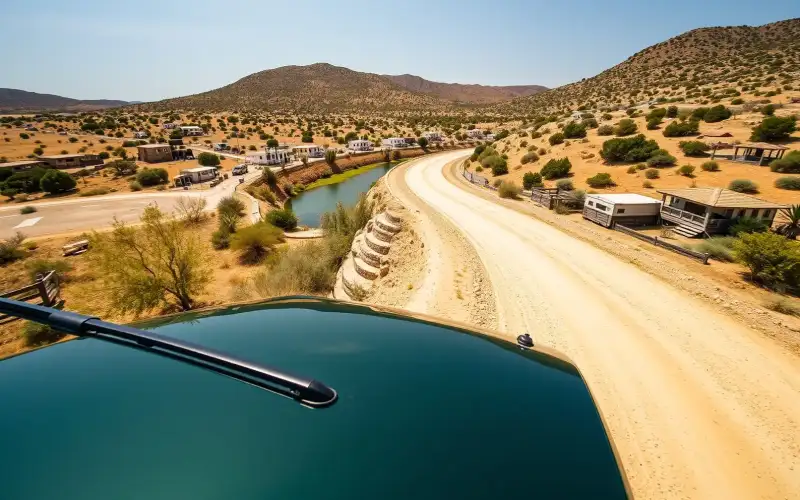
Lara Bay is primarily known as a nesting beach for green and loggerhead turtles, but the track down to it — navigable in a standard hire car in dry conditions, though a 4x4 is more comfortable — passes through some of the most flower-rich scrubland on the peninsula. We drive slowly, stop frequently, and treat it as a linear wildflower walk from the car. The beach itself is beautiful and almost entirely deserted in April. Swimming is cold but bracing. The turtles won't nest until June, but the habitat protection means the surrounding vegetation is spectacularly undisturbed.
The Villages That Come Alive in Spring
One of the things I've come to love about spring in the Paphos region is what it does to the villages. In summer, the inland villages can feel slightly ghost-like in the middle of the day — everyone sensibly retreating indoors from the heat. In spring, village life happens outdoors, and it's a pleasure to witness.
Droushia and the Laona Plateau
Droushia sits at around 700 metres on the Laona Plateau, the high ground above the Akamas, and in spring it's surrounded by almond blossom (February into March), then wildflower meadows that persist well into May. The village has a handful of renovated stone houses available as holiday lets, a small taverna that serves lunch most days, and views west toward the sea that are genuinely arresting on a clear afternoon. The drive from Coral Bay takes about 35 minutes on winding but perfectly manageable roads.
Kathikas and the Wine Villages
Kathikas is the kind of village that makes you want to move to Cyprus permanently. A cluster of pale stone houses around a church square, a vine-shaded taverna (Arsinoe, which serves excellent meze and local Xynisteri wine), and a surrounding landscape of vineyards and olive groves that in April is a particularly vivid shade of green. It's about 25 minutes from Coral Bay and sits at around 600 metres — warm enough for lunch outside, cool enough for a proper walk afterward.
The villages of Pano Arodes and Ineia, a few kilometres further along the ridge, are equally rewarding and even quieter. The Laona Project has been working with these communities for years to preserve traditional architecture and agricultural practices, and the results are visible in the quality of the built environment — beautifully maintained vernacular stone buildings rather than the concrete additions that have disfigured some parts of the island.
Pano Panagia: The Highest Village
At nearly 1,000 metres, Pano Panagia is the birthplace of Archbishop Makarios III, and there's a small museum to him in the village square. But the reason to come in spring is the landscape: the surrounding hills are covered in pine forest and wildflower meadows, and the temperatures are genuinely alpine in feel — cool, clear air, views that extend on a good day to the coast far below. The drive from Paphos town takes about 45 minutes and passes through increasingly dramatic scenery. There's a taverna by the church that does a very good kleftiko on Sundays.
What to Pack: The Honest List
After years of getting this wrong, here's what actually works for a spring trip to the Paphos region:
- Layers, not bulk: A lightweight merino base layer, a mid-layer fleece, and a packable waterproof jacket covers you from a cool March morning to a warm April afternoon without filling your bag.
- Proper walking shoes: The Akamas trails are rocky and uneven. Trainers are manageable in dry conditions but miserable if there's any mud. Low-cut hiking shoes with a decent sole are the minimum I'd recommend.
- Sun protection from day one: Even in March, the Cypriot sun at midday is stronger than most British visitors expect. SPF 30 minimum, a hat, and sunglasses are not optional.
- A field guide: The Collins Wild Flower Guide works well for Cyprus, though for the Akamas specifically, the Cyprus Wildlife Society produces a useful local guide available at the Paphos Forest Department office near the Baths of Aphrodite.
- Cash: Many village tavernas and the Smigies car park honesty box still operate on cash only. A €20 note goes a long way in the villages.
- A refillable water bottle: The tap water in most Paphos villages is perfectly drinkable. Staying hydrated on the trails is more important than it feels in the relatively mild spring temperatures.
Practical Matters: Getting Around in Spring 2026
The honest truth about the Paphos region is that it rewards having a hire car. The Akamas is entirely inaccessible by public transport, and the village roads — while perfectly manageable in a standard vehicle — aren't served by any regular bus service. The OSYPA bus network covers the coastal strip between Paphos town and Coral Bay (Route 615, running roughly every 30 minutes from Paphos Bus Station), but for anything inland or on the peninsula, you need wheels.
Car hire in Cyprus in spring 2026 is considerably cheaper than in summer — expect to pay around €25–35 per day for a compact car from one of the local operators at Paphos Airport, compared to €50–70 in July and August. Book in advance if you're coming over Easter week, which in 2026 falls in mid-April (Orthodox Easter is on 12th April 2026): the island gets busy with Cypriot families returning from abroad, and hire car availability tightens considerably.
The Akamas in April is one of those places that makes you feel quietly fortunate to have found it before everyone else does. It won't stay undiscovered forever — the pressure for development on the peninsula has never entirely gone away — but for now, in spring, it remains something rare: a wild European landscape that still feels genuinely wild.
Accommodation in spring tends to be excellent value. The big resort hotels along the Coral Bay strip offer their lowest rates of the year in March and early April, and the boutique village properties — the renovated stone houses in Droushia and Kathikas, the small family-run hotels in Peyia — are at their most available. We've stayed at the same apartment complex in Coral Bay for years, but increasingly I find myself drawn to a few nights in one of the Laona villages, where the mornings are quiet enough to hear the birds and the evenings smell of wood smoke and wild herbs.
My daughter, now nine, still picks up tortoises when she finds them — gently, and she puts them back. The anemones she's learned to photograph rather than uproot. Spring in the Akamas has been quietly educating her for years, and I suspect it's doing the same for me.
The Best Spring Walks: A Quick Reference
| Trail | Distance | Difficulty | Peak Season | Best For |
|---|---|---|---|---|
| Aphrodite Trail (Akamas) | 7.5km loop | Moderate | Late March–April | Orchids, sea views, families |
| Smigies Nature Trail | 3km loop | Easy | April | Butterflies, endemic flowers |
| Avakas Gorge | 4km return | Easy–Moderate | March–May | Geology, shade, drama |
| Droushia Ridge Walk | 5km loop | Easy | April–May | Village views, meadow flowers |
| Pano Panagia Forest Trails | Various | Easy–Moderate | April–May | Pine forest, altitude, cool air |
Avakas Gorge deserves a special mention: it's a narrow limestone canyon about 15 minutes' drive south of the Baths of Aphrodite, accessible from a car park on the Agios Georgios road. The walk into the gorge follows a seasonal stream bed (dry by May, but still passable) between walls that rise to 30 metres. In March and April, the gorge floor is lush with ferns and shade-loving plants, and the acoustics — birdsong amplified by the rock walls — are extraordinary. It takes about two hours at a gentle pace and is suitable for older children who don't mind scrambling over a few boulders.
Spring in the Paphos region isn't a compromise between the seasons. It's the main event — the time when the landscape is at its most generous, the light at its most beautiful, and the island still spacious enough to feel like yours. Come in April if you can. Arrive before the tour buses. Walk slowly. Look down at the ground occasionally, because that's where the best things are.
Comments (6 comments)