
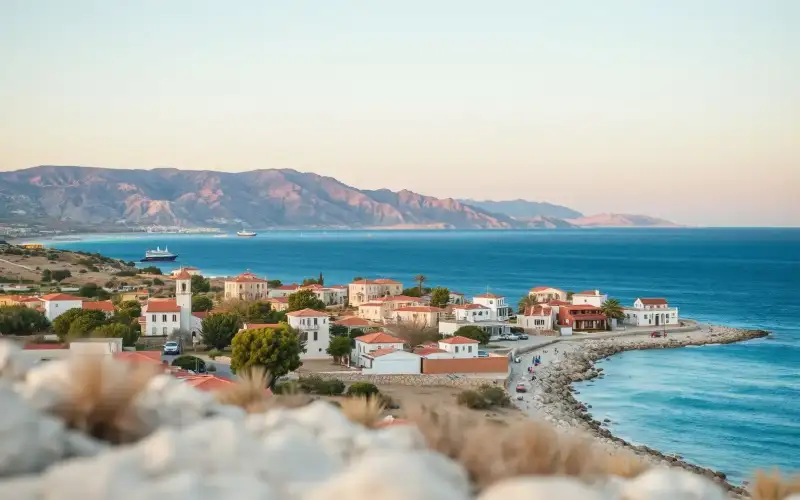
On a Tuesday morning in late May, the car park behind Coral Bay beach was already half full by nine o'clock. A couple from Cheshire were setting up sun loungers with the practised efficiency of people who had done this exact thing for the past eleven years running. When I asked why they kept coming back rather than trying somewhere new, the answer was immediate: "Because it works." That, in essence, is Coral Bay's entire pitch.
Situated roughly 11 kilometres north of Paphos town centre along the B7 coastal road, Coral Bay — or Korallia Bay if you want the Greek — sits at the southern edge of the Akamas Peninsula. It is not a hidden gem. It does not pretend to be. What it offers instead is a near-perfect concentration of the things that make a Cyprus holiday function: a genuinely good beach, a walkable strip of restaurants and bars, reliable accommodation at a range of price points, and a location that doubles as a launchpad for some of the island's most dramatic landscapes.
The Beach: What the Numbers Actually Tell You
Coral Bay beach stretches for approximately 600 metres in a gentle horseshoe shape, facing almost due west. That westerly orientation is more significant than most visitors realise. It means the beach catches afternoon sun right up until sunset — a meaningful advantage over the south-facing beaches closer to Paphos harbour, which lose direct light behind the headland by mid-afternoon in summer.
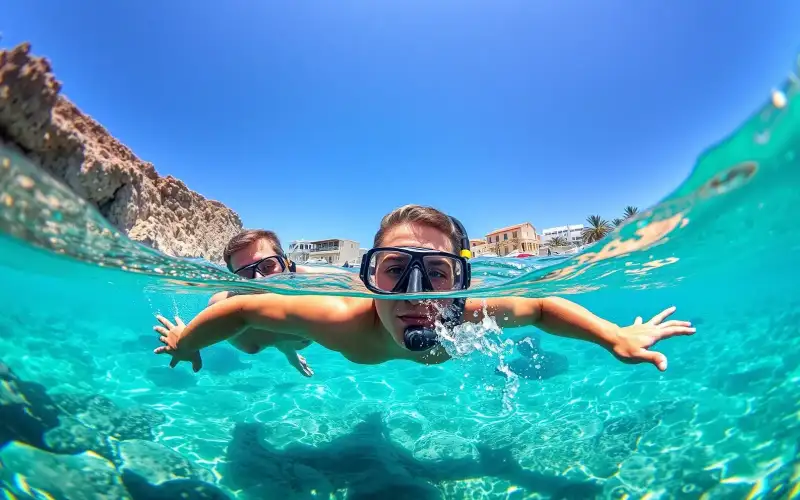
The sand is a pale, coarse-grained limestone mix that stays relatively cool underfoot even in July. Water clarity here consistently earns a Blue Flag designation, and the sea floor shelves gently enough that families with young children can wade out 20 or 30 metres without the water reaching adult waist height. In 2026 the beach retains its Blue Flag status — the 34th consecutive year for this stretch of coastline, which is worth stating plainly because it is not something every resort on this island can claim.
"The sea temperature at Coral Bay hits 26–27°C by late July and holds there through September. For British swimmers used to the Irish Sea, it is a genuinely transformative experience."
Sunbeds and parasols are available through the standard Cypriot beach concession system: expect to pay around €8–10 per sunbed per day in 2026, with parasols typically included in pairs. There is no obligation to hire — the western third of the beach nearest the car park remains free-access public space, though it gets crowded from late June onwards.
Beach Facilities at a Glance
- Blue Flag status: confirmed for 2026
- Sunbed hire: approximately €8–10 per unit, per day
- Water sports: jet ski hire, pedalo rental, banana boat rides all available on-beach
- Lifeguard cover: daily from 10:00 to 17:30, June through September
- Accessible boardwalk: runs the full length of the promenade
- Showers and changing facilities: free, located at the northern and southern ends
- Nearest pharmacy: a 3-minute walk up the main street, open daily until 20:00
Where to Stay in Coral Bay: A Realistic Breakdown
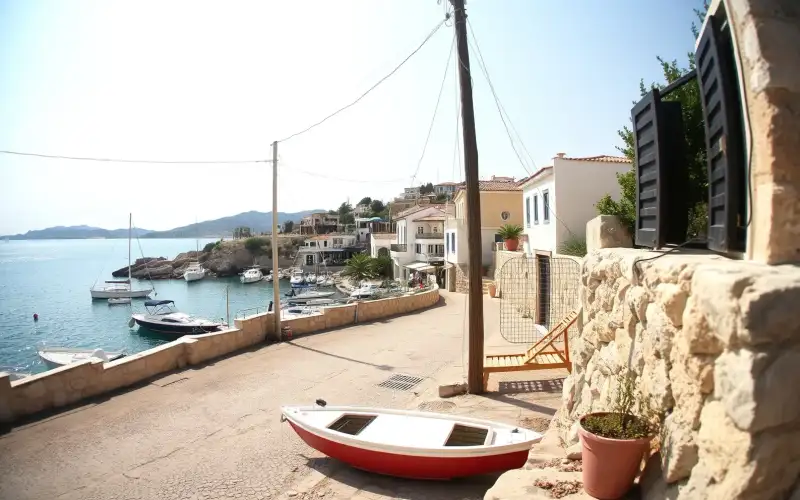
The accommodation picture at Coral Bay is more varied than first impressions suggest. The dominant visual is the large all-inclusive hotel — and there are three of them within easy walking distance of the beach — but the village also has a healthy stock of apartment complexes, boutique studios and a handful of genuinely characterful small hotels that rarely appear on the first page of search results.
Large All-Inclusive Hotels
The Coral Beach Hotel and Resort is the anchor property and, with around 400 rooms, the largest. It sits on its own private cove just north of the main beach, which means guests get a slightly quieter swimming experience but are a 10-minute walk from the taverna strip. The property has undergone significant refurbishment in recent years and the pool complex is genuinely impressive. Expect to pay £90–£140 per person per night on a half-board basis in peak July and August, depending on room category and departure date.
For families prioritising animation programmes and kids' clubs, the Azia Resort and Spa sits slightly inland from the bay but runs a shuttle to the beach. It is a more design-conscious property than its competitors — the thalassotherapy pool and the wine list in the main restaurant both punch above what you might expect from a large resort. Rack rates in 2026 run from around £110 per person per night in peak season.
Apartments and Studios
This is where Coral Bay offers genuine value. The village has dozens of small apartment complexes — typically 20 to 40 units — built in the 1990s and 2000s, many of which have been quietly updated and are let directly by Cypriot owners through platforms like Airbnb and Booking.com. A one-bedroom apartment sleeping two, within a five-minute walk of the beach, can be found for £60–£85 per night in July 2026. Two-bedroom units sleeping four typically run £90–£120.
The advantage beyond price is the kitchen. Cyprus supermarkets are excellent — the Papantoniou supermarket on the main Coral Bay road stocks local halloumi, fresh vegetables, Commandaria wine and a reasonable selection of Cypriot mezze components. Self-catering for two or three meals a day is not a hardship here.
Boutique and Small Hotels
The category that is genuinely underserved in Coral Bay, though not entirely absent. A few smaller properties — typically 15 to 30 rooms — offer a more personal experience without the infrastructure of the large resorts. Look for properties in the residential streets one or two blocks back from the sea; they are quieter, often have private pools and are sometimes run by families who have been in the hospitality business here for two or three generations. Prices are comparable to the apartment market: £75–£110 per night for a double room with breakfast in peak season.
| Accommodation Type | Approx. Peak Rate (per night) | Best For |
|---|---|---|
| Large all-inclusive hotel | £90–£140 per person | Families, couples wanting everything on-site |
| Boutique / small hotel | £75–£110 per room | Couples, quieter experience |
| Self-catering apartment | £60–£120 per unit | Families, longer stays, budget-conscious |
Where to Eat: The Coral Bay Restaurant Scene in 2026
The promenade strip at Coral Bay runs for about 400 metres and contains, at last count, somewhere between 25 and 30 food and drink establishments. That density means there is genuine competition, which keeps quality surprisingly honest. The tourist-trap dynamic that afflicts some Cypriot resort strips is less pronounced here — partly because a significant proportion of the clientele are return visitors who know what a proper kleftiko should taste like.
For Traditional Cypriot Food
Latchi Fish Tavern has been a fixture at the northern end of the strip for over 20 years. The meze here runs to 18 or 19 small dishes — including a grilled halloumi that arrives at the table with a char pattern that suggests someone is paying attention — and costs around €22–€25 per person in 2026, excluding drinks. Go for lunch rather than dinner to avoid the queues.
For kleftiko specifically — slow-cooked lamb sealed in a clay pot, the dish that Cyprus does better than anywhere else on the planet — Theo's Steak House and Taverna on the main approach road has been producing a reliable version for years. Order it 24 hours in advance if you can; the best kleftiko in Cyprus is never a same-day decision.
For Seafood
The proximity to the small fishing harbour at Latchi, 20 minutes north by car, means fresh fish arrives in Coral Bay daily. Several restaurants on the strip buy directly from Latchi boats. Grilled sea bass (lavraki) and red mullet (barbounia) are the ones to order when they are listed as fresh rather than frozen — the menu will usually tell you, and any restaurant worth eating at will answer the question directly if you ask.
Wine at Coral Bay: A Brief Digression
This matters more than most guides acknowledge. Cyprus has a serious indigenous wine culture, and the Paphos wine region — specifically the villages of the Laona-Akamas appellation — produces some genuinely interesting bottles. At Coral Bay restaurants, look for wines from Vouni Panayia winery, about 40 minutes' drive into the Troodos foothills. Their Alina white, made from the native Xynisteri grape, is one of the more elegant expressions of Cypriot viticulture: crisp, mineral, with a faint saline quality that suits grilled fish perfectly. Expect to pay €18–€24 for a bottle at restaurant prices in 2026.
"Commandaria — Cyprus's ancient dessert wine, arguably the oldest named wine in continuous production anywhere in the world — deserves more attention than the average British tourist gives it. Order a small glass with your dessert. It costs almost nothing and it is extraordinary."
Day Trips from Coral Bay: Using the Location Properly
This is where Coral Bay's geography becomes its strongest selling point. The village sits at the threshold of the Akamas Peninsula, which is the most ecologically significant wilderness area in Cyprus — a 230-square-kilometre tract of limestone gorges, endemic flora and nesting sea turtle beaches that has been protected from development since the 1980s.
The Akamas Peninsula
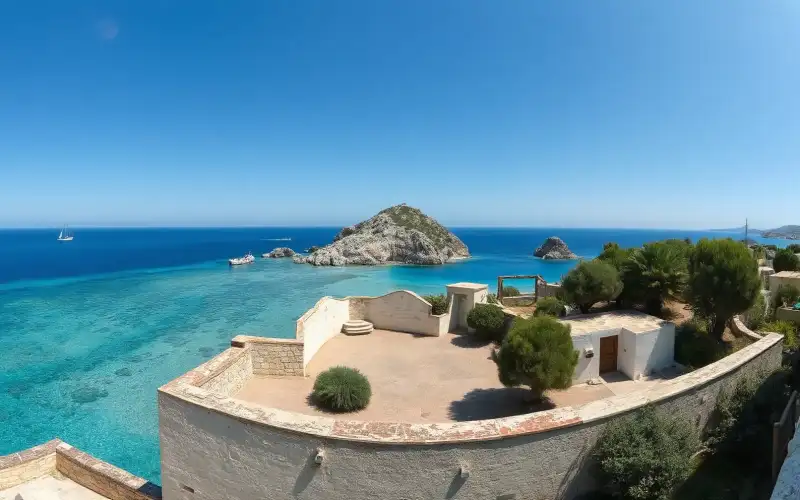
The two most-visited points within the Akamas are the Blue Lagoon at Lara Bay and the Avakas Gorge. The Blue Lagoon is accessible by boat from Latchi harbour — various operators run daily trips from around €25–€30 per adult, including snorkelling equipment. The water colour in the lagoon, a function of the white limestone seabed and the depth, is the kind of thing that makes people reach for their phones even if they have sworn off social media for the week.
Avakas Gorge requires a car and a willingness to walk on uneven terrain for about 45 minutes each way. The gorge itself is narrow enough in places that you can touch both walls simultaneously, and the light filtering through the limestone walls at midday is extraordinary. Take water. The path is not difficult but the heat in July and August is not trivial.
Paphos Town
The Paphos Archaeological Park — a UNESCO World Heritage Site containing some of the best-preserved Roman mosaics in the Mediterranean — is 11 kilometres south of Coral Bay. The number 615 bus runs between Coral Bay and Paphos town centre roughly every 30 minutes during the day, making this a viable car-free excursion. The mosaics depict scenes from Greek mythology in extraordinary detail; the House of Dionysus alone justifies the €4.50 entry fee several times over.
The Troodos Wine Villages
For a full-day excursion, the drive from Coral Bay into the Troodos foothills takes about an hour and passes through a landscape that most visitors to Cyprus never see: terraced vineyards, Byzantine churches, villages where the coffee shop has been run by the same family since the 1960s. Omodos and Lefkara are the most visited of the wine villages; Arsos and Vasa are quieter and, in my experience, more rewarding. Several of the smaller wineries in these villages offer informal tastings without appointment — pull up, knock on the door, and you will usually find someone willing to pour.
Practical Information for 2026
Getting to Coral Bay from Paphos International Airport takes approximately 25–30 minutes by taxi, depending on traffic. In 2026, expect to pay €30–€38 for the journey. Rideshare apps operate in Cyprus but coverage is patchy; pre-booking through your hotel or a reputable local transfer company is more reliable.
The number 615 bus connects Coral Bay to Paphos Harbour (Kato Paphos) and runs daily from roughly 06:30 to 22:00, with a frequency of approximately every 30 minutes during peak hours. The single fare is €1.50. The journey takes around 25 minutes depending on stops. This is genuinely useful for evenings in Paphos town when driving is inadvisable.
Car hire is available from several local companies with offices in Coral Bay village — rates in 2026 start at around €30–€40 per day for a small automatic, though booking in advance through an international broker typically secures better rates. Cyprus drives on the left, which removes one layer of adjustment for British visitors.
The village has a small medical centre, two pharmacies, a post office and a branch of the Bank of Cyprus with an ATM. Mobile coverage is good across all major UK networks on roaming. The nearest hospital is in Paphos town — the Paphos General Hospital on Neofytou Nikolaidi Avenue, about 15 minutes by car.
When to Go
The conventional answer is May, June or September — shoulder season pricing with reliable sunshine and sea temperatures above 22°C. July and August are the peak months: hotter, more crowded, more expensive, but also the period when the beach is at its most energetic and the full range of water sports and boat trips is running. October remains underrated — the sea holds its summer warmth into mid-month, the crowds thin sharply after the first week, and the light on the Akamas headland in the late afternoon has a quality that is genuinely difficult to describe without sounding like a wine writer who has had too much Commandaria.

Comments (8 comments)